








This route feels like a slow arc through story-soaked Yorkshire, from medieval streets and abbey ruins to high moorland and solid little market towns. You start in York, walking the walls and losing yourself among crooked lanes in the shadow of the Minster, then swing out to the coast where the cliffs suddenly sharpen and the North Sea takes over. Flamborough’s chalk headlands, Bridlington’s harbour and Scarborough’s twin bays give you three very different takes on seaside life, before Whitby folds in its own mix of gothic ruins, fish and chips, whaling history and Dracula-tinted atmosphere.
From there you climb inland onto the North York Moors, trading promenades for heather, stone and big, weather-heavy skies. The roads lift and twist, dales and ridges opening and closing around you, until you drop back into the gentler vale towns on the far side. Easingwold, Thirsk and Northallerton aren’t showpieces so much as anchor points – proper working market towns where people are busy living their lives. By the time you’ve looped through them, it feels like you’ve seen a full cross-section of this corner of England, from cathedral city to cliff edge to purple moor and back to wide, settled farmland.
York feels like a city that’s been edited and re-edited for nearly two thousand years and somehow kept all the best lines. You arrive through ordinary suburbs and then suddenly the walls appear, curving around a dense knot of medieval streets and that enormous Minster rising over the rooftops. Walk from the station and you cross the Ouse, boats nudging at the quays, before diving into lanes where crooked timber-framed buildings lean in close and the cobbles remember every hoof and boot.
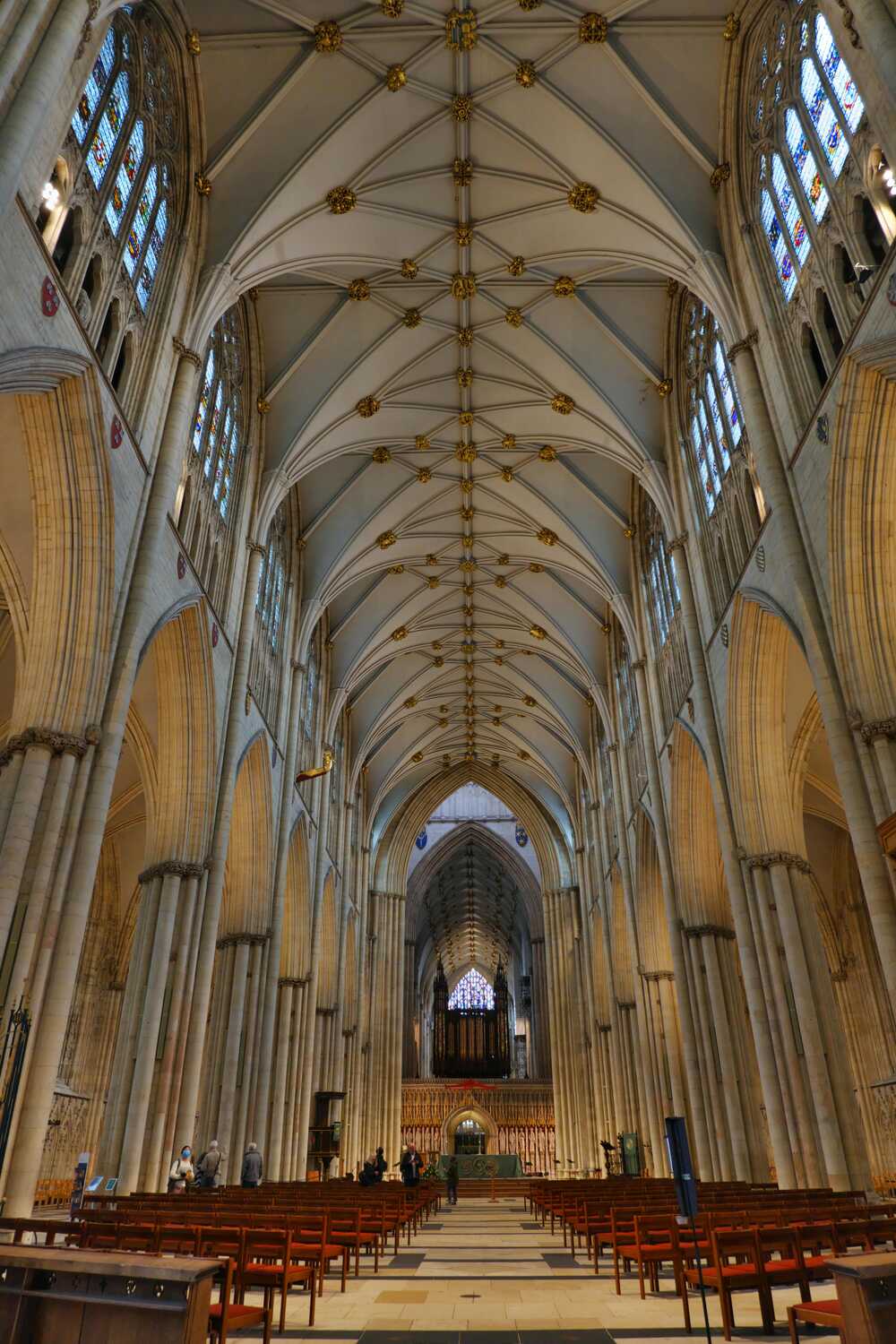
You might circle part of the walls first, looking down on gardens, secret courtyards and church towers, then drop into the Shambles and its tangle of tiny shops and overhanging fronts. The Minster pulls you in sooner or later bells, stained glass and stonework that seems too intricate to have been carved by human hands. In between, there are snatches of Viking, Roman and railway history everywhere you turn. York is a rich, compact starting point, easy to walk and easy to get lost in, in the best possible way.
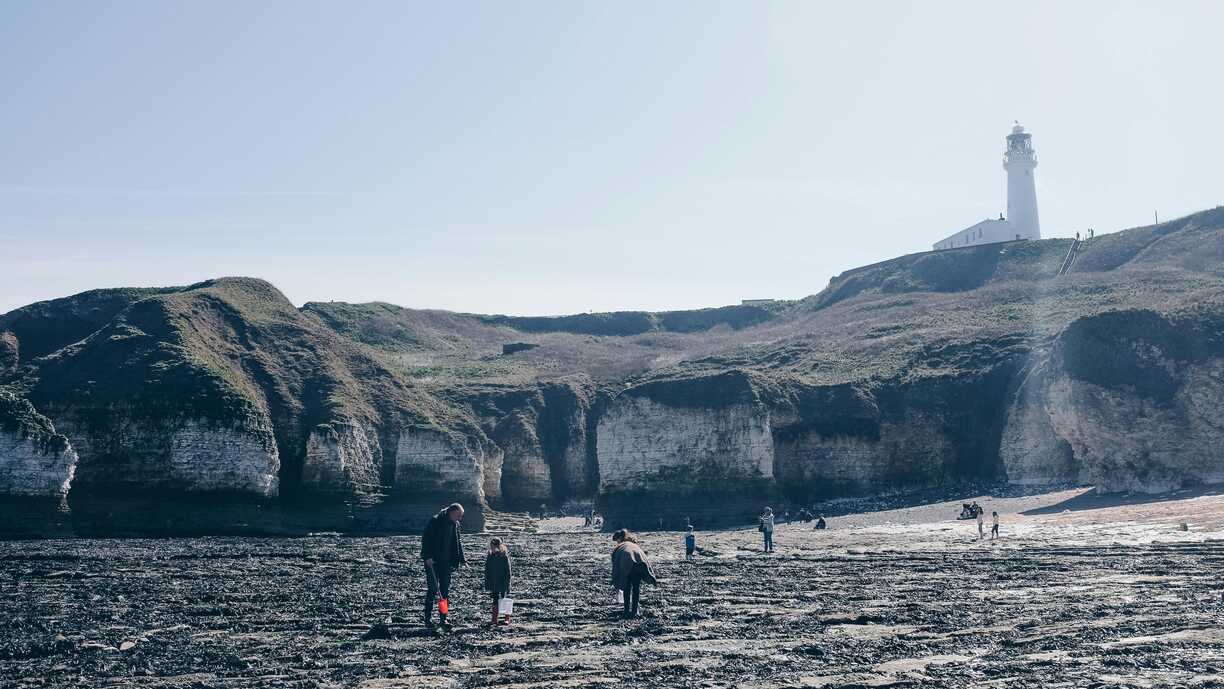
Flamborough feels like the coastline suddenly decided to go dramatic. You drive out through fields and tidy villages and then the land simply ends in sheer white chalk cliffs, gulls spiralling on the wind and the sea gnawing at the base far below. The lighthouse stands clean and bright against the sky, a solid marker on a headland that’s been steering ships for generations.
Walk the clifftop paths and the views keep opening chalk stacks freckled with nesting birds, tight coves where the water glows an impossible green, arches carved by waves that never stop working. In late summer the air can be thick with kittiwakes and puffins out by the reserve, the cliffs dotted like moving punctuation. Down at North Landing or South Landing you can drop closer to the water, feel the echo of waves in the rock and smell seaweed drying on the stones. It’s a wild-feeling corner of the Yorkshire coast, close to towns but with its own, very elemental mood.
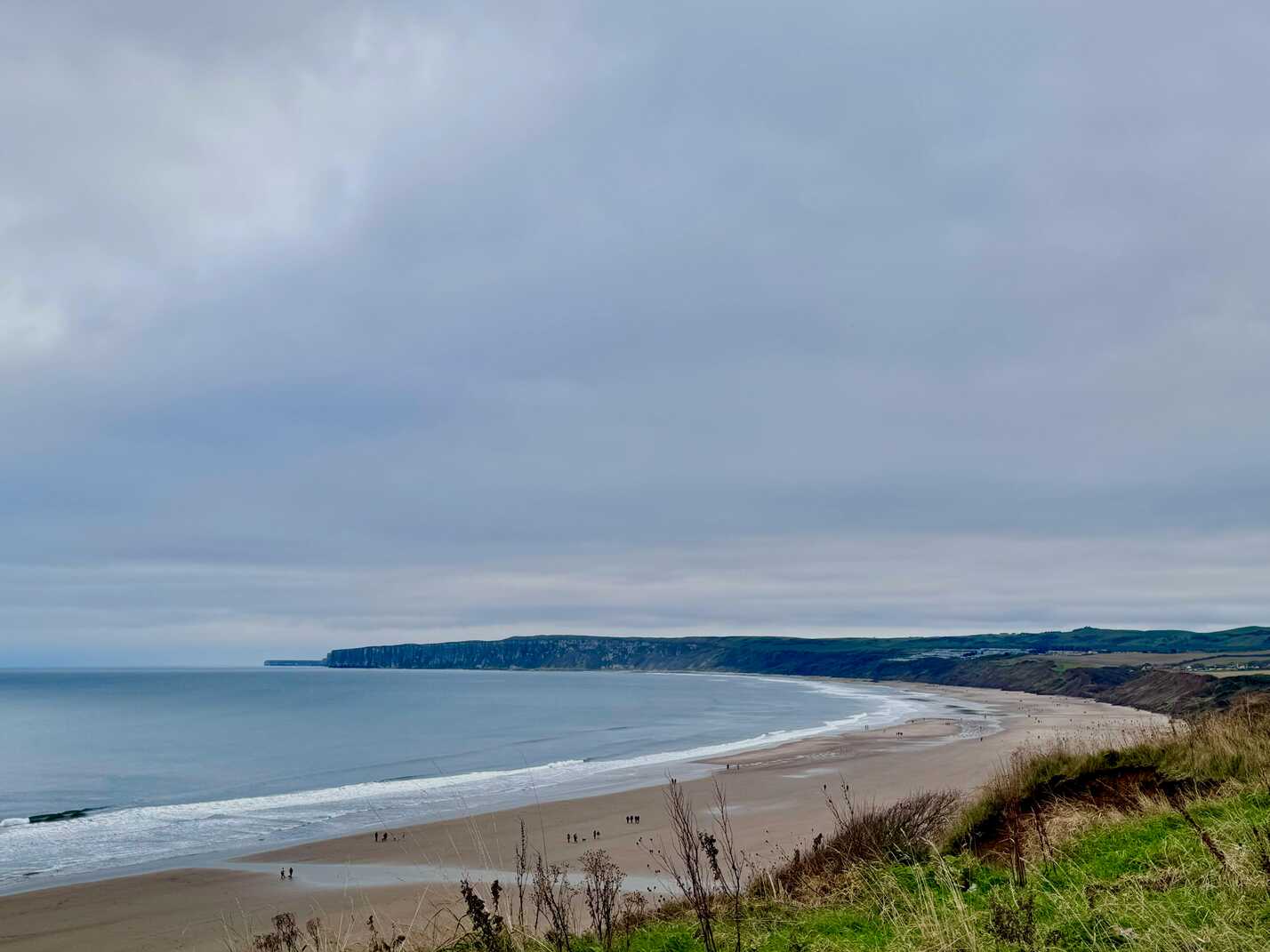
Bridlington has that classic British seaside rhythm promenades, piers and the steady lap of waves on a long, curving beach. You roll in and find two sides to it: the older harbour, a snug, working space full of fishing boats, pots and gulls arguing over scraps; and the wide South Beach, a generous run of sand backed by a long prom and strings of bright beach huts.
Wander the harbour area first and you’ll catch the smell of fish and diesel, ropes creaking, the clink of metal on metal as crews sort their gear. Then follow the front towards the newer stretch: deckchairs, ice-cream kiosks, children engineering elaborate sandcastles, dog walkers pacing the tideline under big skies. There’s something faintly nostalgic in the funfairs and seafront cafés, but Bridlington is still very much alive, not a museum. It’s an easy place to park up, stroll, and let the sea breeze strip away whatever the drive here shook loose in your head.
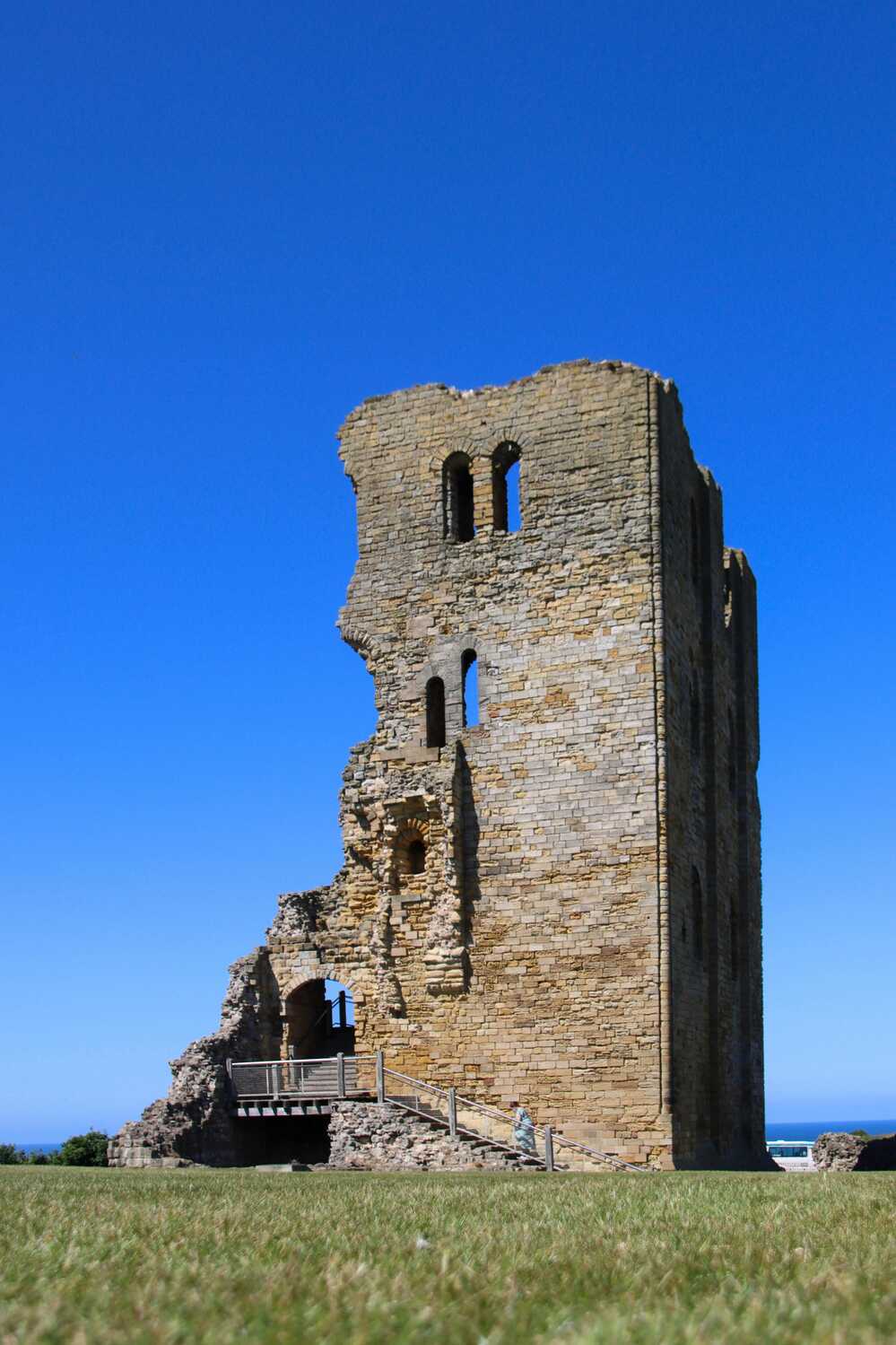
Scarborough feels like two resorts stitched together by headland and history. You arrive to find a town wrapped around both North and South Bays, each with a different personality: one wilder and more exposed, the other more sheltered and traditional, with arcades, donkeys and a long curve of sand. High above, the ruined castle sits on its promontory, watching both sides like it’s still waiting for fleets to appear on the horizon.
Take the cliff lift or zig-zag paths down to the seafront and the smells and sounds hit you at once salt, chips, candyfloss, the crash of waves under the sea wall, the low rumble of rides on the front. Wander round to the harbour and you’ll see fishing boats and pleasure craft cheek by jowl, stacks of pots and nets reminding you this is a working port as well as a holiday town. Scarborough has been entertaining people for centuries, and you can feel that layered into its streets: a slightly faded grandeur, a lot of noise and colour, and real charm when you slow down and look.
Whitby gathers itself around the mouth of the Esk, a tangle of red roofs, narrow yards and cobbled streets split by the swing bridge. You park up and wander towards the harbour, fishing boats and little pleasure craft sitting quietly as gulls patrol the rails. The smell of proper fish and chips is never far away, drifting from doorways up the hilly lanes.
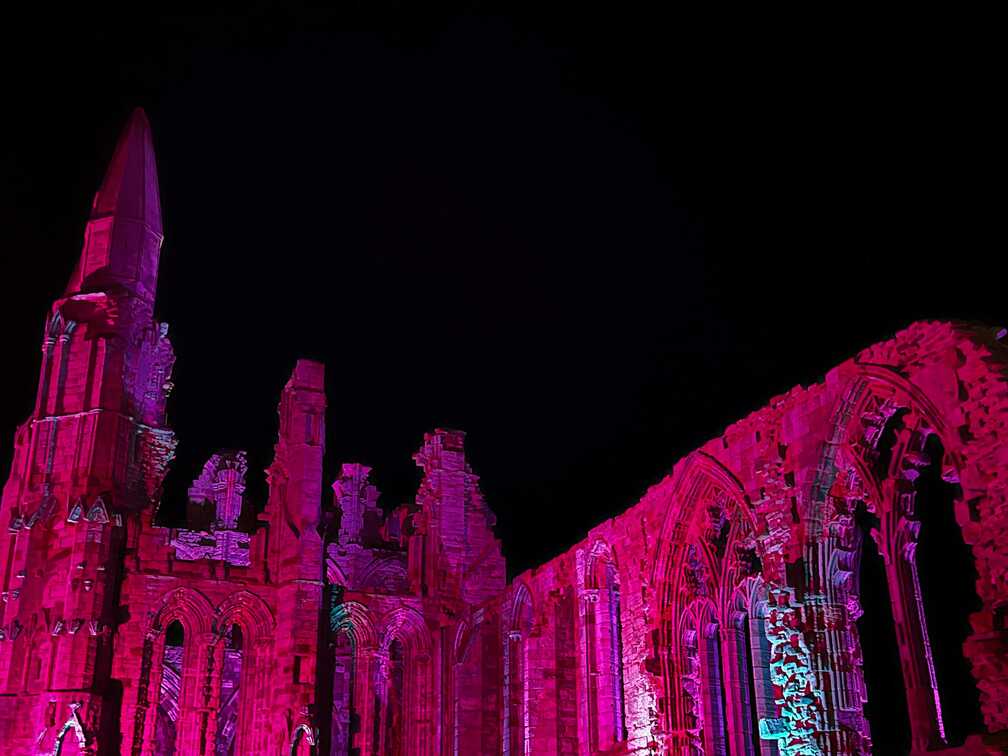
Look up and the ruin of Whitby Abbey sits high on the clifftop, reached by that long run of 199 steps that puts a pleasant burn in your legs. Up there, wind whipping your coat, you get big views along the coast and over the town, and it’s easy to see why this spot drew monks, whalers, shipbuilders and later, Bram Stoker’s imagination. Back down at street level, you can browse jet shops, hunt for fossils on the nearby beaches, or just watch the tide breathe in and out under the bridge. Whitby feels like history and sea mist have soaked right into the brickwork.
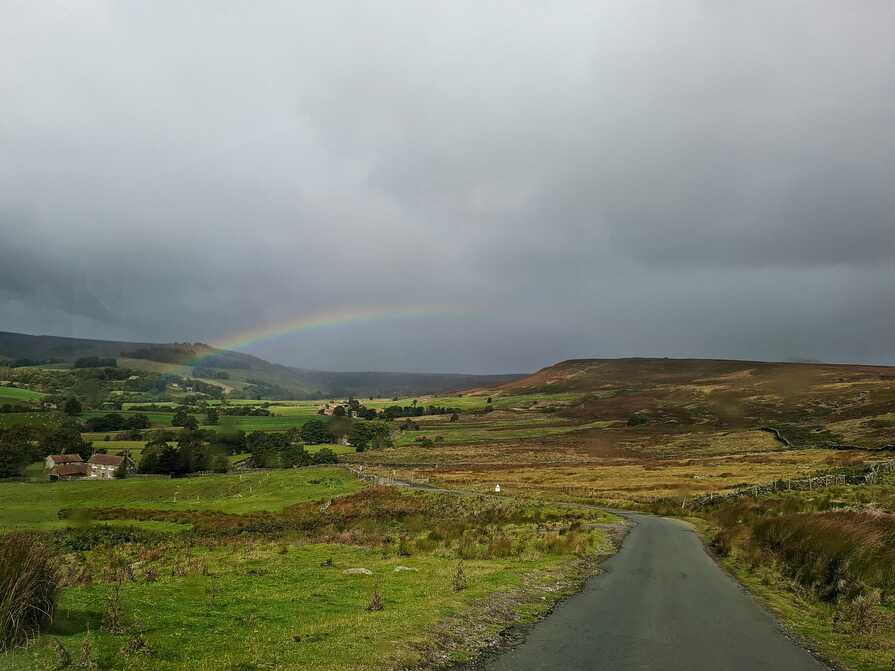
The North York Moors open out like a vast, heather-covered sea once you leave the coast and climb. Roads narrow and start to snake, flanked by drystone walls and sudden drops into deep, green dales. In late summer, the moorland turns a solid wash of purple, broken only by tracks, grouse calls and the occasional stand of dark conifers. On other days it can be all muted browns and greys, sky and land bleeding into each other at the horizon.
You might pull into a lay-by and just listen wind in the grasses, distant sheep, the faint click of cooling engine. Villages hunker in valleys with stone houses, smoky chimneys and small pubs; up on the tops, it feels like there’s nothing between you and the weather. Old railways, crosses and boundary stones hint at long use, while steam trains still chug through some of the valleys, whistling under high moorland bridges. The Moors are less about one big sight and more about the atmosphere of the whole, that sense of being high, exposed and oddly peaceful.
Easingwold is one of those quietly confident market towns that doesn’t try too hard, and doesn’t need to. You roll off the main road and find a broad market place at its heart, ringed with brick and stone buildings, independent shops, cafés and pubs all facing inward like they’re watching over the space. On market days, stalls fill the centre with produce, plants and bits of kit you didn’t know you needed.
It’s very much a place for everyday life, schoolchildren cutting across the square, locals nipping into the bakery, dog walkers pausing for a chat. You can grab a coffee and sit outside, watching the traffic trace slow loops around the market cross, or wander off down side streets where old houses lean in over narrow pavements. Easingwold makes a gentle re-entry point after the wilder edges of the Moors and coast, giving you that settled, small-town Yorkshire feel before you move on.
Thirsk sits in the flat, fertile Vale of Mowbray, a proper North Yorkshire market town with a wide central square and a church tower anchoring the skyline. You pull in and find a place ringed with butchers, greengrocers, old-fashioned shopfronts and newer bits stitched together in a way that still feels human-sized. Market days bring stalls and a hum of conversation; on quieter days, the square belongs to parked cars and the odd cluster of benches.
There’s a strong veterinary and racing thread here, this is James Herriot country and you can feel that in the small museum dedicated to his life and the racecourse just outside town. But you don’t need to lean on any of that to enjoy it. Thirsk is built for dawdling: a potter round the shops, a pint or a tea in one of the pubs, a quick wander to the church and back. It’s a useful, grounded stop where the horizon stretches wide again and the Dales and Moors feel equidistant.
Northallerton has the feel of a county town that quietly gets on with things. The high street is long and straight, the sort of place where markets have been held for centuries, now lined with a mix of chain stores, independents, banks and cafés. On market days, stalls run down the middle, selling everything from cheese to hardware, turning the street into a busy corridor of chatter.
You can stroll its length in no great hurry, ducking into alleyways that lead to car parks, courtyards and the odd hidden garden. There’s an understated solidity to the place civic buildings, old coaching inns, a bit of Georgian here, a bit of Victorian there. It’s not a chocolate-box stop, but it’s firmly rooted, the kind of town where you can restock, watch real local life happening around you, and feel the geography of this part of Yorkshire Moors to one side, Dales to the other, Teesside and Durham not so far north all implied in the constant flow of traffic through its centre.
This route ties together York’s walled city, the chalk cliffs of Flamborough and Bridlington, the classic seaside towns of Scarborough and Whitby, the high heather tops of the North York Moors, and then drops back through Easingwold, Thirsk and Northallerton on the edge of the Dales. It’s basically a full “greatest hits” line for Yorkshire in one sweep: Roman and medieval history in York, big North Sea horizons on the coast, steam-railway and moorland edges in the middle, and softer market-town England at the end.
Start in York by actually walking the walls and cutting through the lanes around the Minster rather than just hitting one museum and leaving. The route out to the coast gives you a big change of mood: Flamborough Head and the cliffs near Bridlington are good early leg-stretchers with lighthouse views, sea birds and short coast-path loops.
Further north, Scarborough gives you the arc of South Bay and castle ruins on the headland, while Whitby is your “proper” harbour town stop – Abbey steps, narrow lanes, piers and moody clifftop walks straight out of town. Crossing the North York Moors National Park, you can mix fast lay-by viewpoints with short heather moor walks, or dip to places like Goathland or Grosmont if you want a taste of the heritage railway scene.
On the way back inland, Easingwold, Thirsk and Northallerton bring it down in scale again – market squares, pubs, independent shops and easy evening strolls that feel very different to the coast and moors you’ve just driven through.
You’re basically never far from something decent on this line. In York, you’ve got everything from proper coffee and pastries to solid pubs and bistros – easy to treat it as your “big food” stop at either the start or end. Out on the coast, there are reliable fish and chip shops in Bridlington and Scarborough, with seafront cafés and pubs if you want to sit and watch the water.
Whitby is the one to actually aim for: harbour-side fish and chips, smokehouses, and smaller restaurants up the side streets if you want something less tourist-heavy. Once you’re inland again, Easingwold, Thirsk and Northallerton all have classic market-town pubs and tearooms – good for simple meals without needing to book weeks ahead.
For camping and vans, you can build a nice stepping-stone pattern along the route: sites within easy reach of York for a first or final night, then coastal campsites around Flamborough / Bridlington and Scarborough / Whitby to give you sunset and early-morning beach access. Up on the edges of the North York Moors there are farm sites and small holiday parks that keep you within a few minutes’ drive of the high moor roads. Around Thirsk and Northallerton you’ll find quieter inland sites if you want to finish the route somewhere calmer than the coast.
If you’re in hotels or B&Bs, York is the obvious “treat night” city, coastal guesthouses in Scarborough and Whitby put you right above the water, and smaller inns around Easingwold, Thirsk or Northallerton give you an easy final stop with a pub downstairs and a short walk back to bed.
TopStops is built to be used like a shared guidebook, not a strict itinerary.
Browse the routes to see how others have travelled an area, check the map for regularly recommended stops, and get a feel for the journey with photos, highlights, and quick info on each place. When you’re ready, follow the route yourself or adapt it to your own trip.
If you discover a spot we’ve missed, submit it. The best community suggestions get added to the map, so every route slowly improves with real travellers’ input.
Do you know somewhere we should feature in our route? Message us and we’ll get it added.