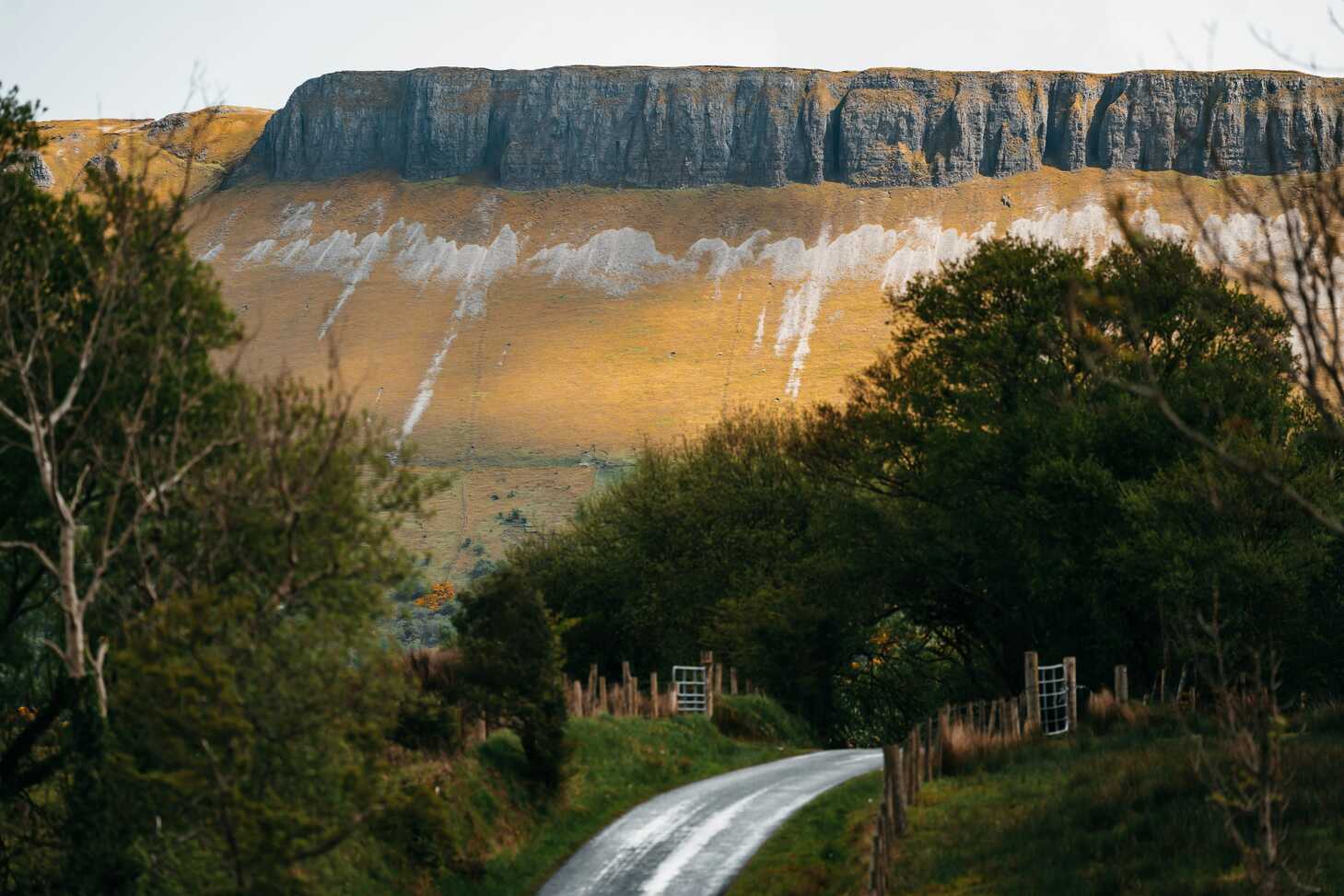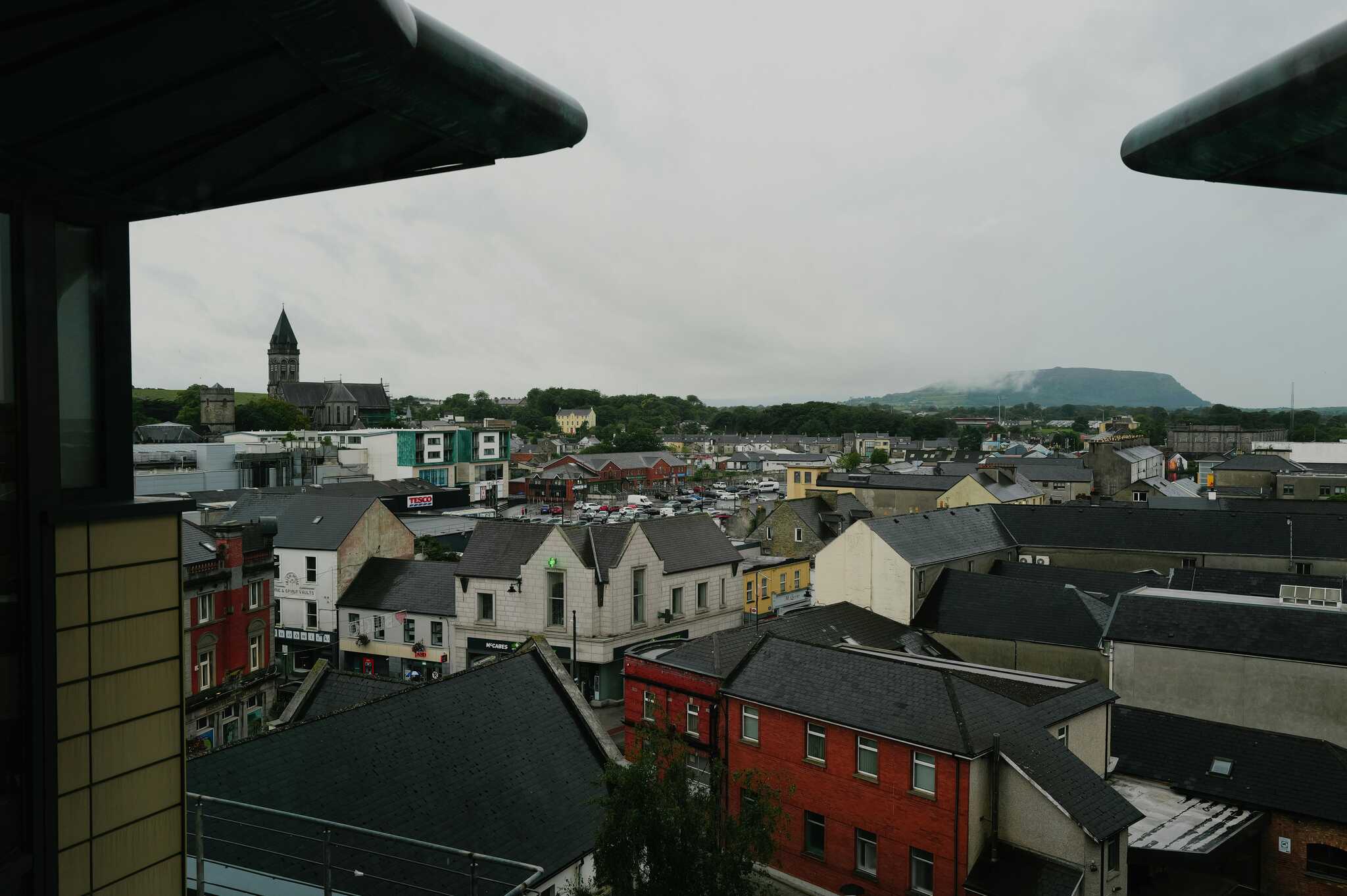










This route slips from soft lake country into some of the wildest Atlantic-facing coastline in Ireland. You begin in Belcoo on the Fermanagh border, where loughs, low hills and quiet roads set a gentle pace, then drop south to Manorhamilton with its ruined castle and backdrop of Leitrim uplands. Sligo pulls you out to the coast, a small city that feels shaped by water on every side – the Garavogue River, the sweep of the bay, and Benbulben hanging in the distance like a stone curtain.
From there the Atlantic starts to dominate. Easky is all surf, stone walls and wave-battered shoreline. Ballina opens onto the broad mouth of the Moy, a salmon town with bridges and old warehouses facing the tide. Downpatrick Head, Carrowteige and Fallmore then take you into the raw cliffs and headlands of North Mayo, where sea stacks, sea spray and lonely townlands make the land feel thin against the ocean. You finish in Bangor Erris, back among bogs, lakes and big skies, with the sense that you have traced a quiet arc from inland borderlands to the harsh, beautiful edge of Europe.
Belcoo sits snug beside Lower Lough MacNean, a village stretched along the water with cottages, shopfronts and pubs looking across to the far shore. The border here is more a line on a map than a feeling in the air. What you notice instead is the stillness of the lough, the way trees and houses reflect in its surface and how quickly the main road gives way to small lanes and fields.
A short walk over the bridge brings you technically into another jurisdiction, but everything still feels of a piece - water, low hills and the soft hum of local life. You can stroll the shoreline, watch anglers work the banks and listen to the muted sound of traffic passing through. Belcoo is a gentle starting point, a place that eases you into the journey without drama.
Manorhamilton gathers in a shallow valley where roads from several directions fold together. The ruined castle sits above the town, its walls and towers open to the sky, a reminder that this quiet place has seen its share of trouble and importance. Modern houses and shops cluster around it, but the castle still feels like the anchor.
Walk the streets and you catch glimpses of hills and forestry beyond the roofs. There is a steady, everyday rhythm here - school runs, deliveries, people chatting in doorways. A quick detour up to the castle ruins gives you views over the town and the surrounding landscape, a patchwork of fields, woodland and moor. Manorhamilton feels like a small hinge between Fermanagh’s lough country and the wider sweep of Sligo and the coast.
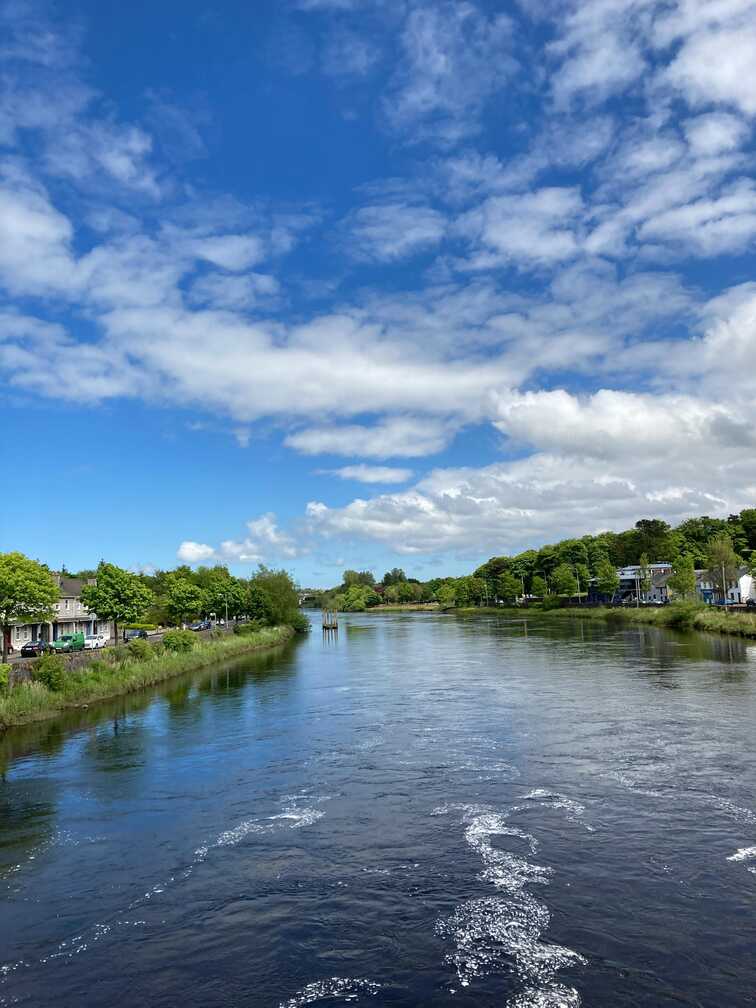
Sligo is where the route shakes out its shoulders a bit. The town wraps itself around the Garavogue River as it runs into the bay, bridges and quays tying the two sides together in a tight, walkable knot. Cafés, pubs and shopfronts line the streets, and there is often music or busking in the air, especially in the evenings.
Look up from the river and Benbulben looms on the horizon, flat topped and unmistakable. A short spin takes you to beaches like Strandhill or Rosses Point if you want sand and surf, but even if you stay in town you feel water everywhere - the river flowing past, the harbour beyond, the smell of the sea on the wind. Sligo is a lively pause, a chance to stock up, eat well and soak up a bit of culture before the coast turns wilder again.
Easky leans into the Atlantic in a long line of houses and walls, the river cutting through to meet the sea under an old stone bridge. On the shoreline, a ruined castle and a stout Martello tower watch the waves, their silhouettes sharp against the horizon. Surfers pick clean lines off the reef when the swell is right, black figures bobbing in cold water while white spray explodes along the rocks.
The village itself feels modest and low key, with a couple of pubs and shops serving locals and the steady trickle of visitors who know this stretch of coast. Walk the pier or the paths near the towers and you get a real sense of exposure. The sea is close, loud and relentless. Easky marks the point where the Atlantic really starts to take charge of the journey.
Ballina spreads along the River Moy as it widens and relaxes towards the sea. Bridges stitch the two banks together, old warehouses and newer buildings lining the quays. The town is known for salmon, and the weirs and pools around the ridge pool often hold anglers working the current, rods angled over churning water.
Away from the river there is a solid grid of streets with shops, cafés and pubs that feel geared to local life first, visitors second. The meeting of fresh and salt water is never far away in the sound and smell of the place. Ballina feels like a proper town on the edge of something larger, a useful and characterful stop before you commit to the emptier headlands of North Mayo.
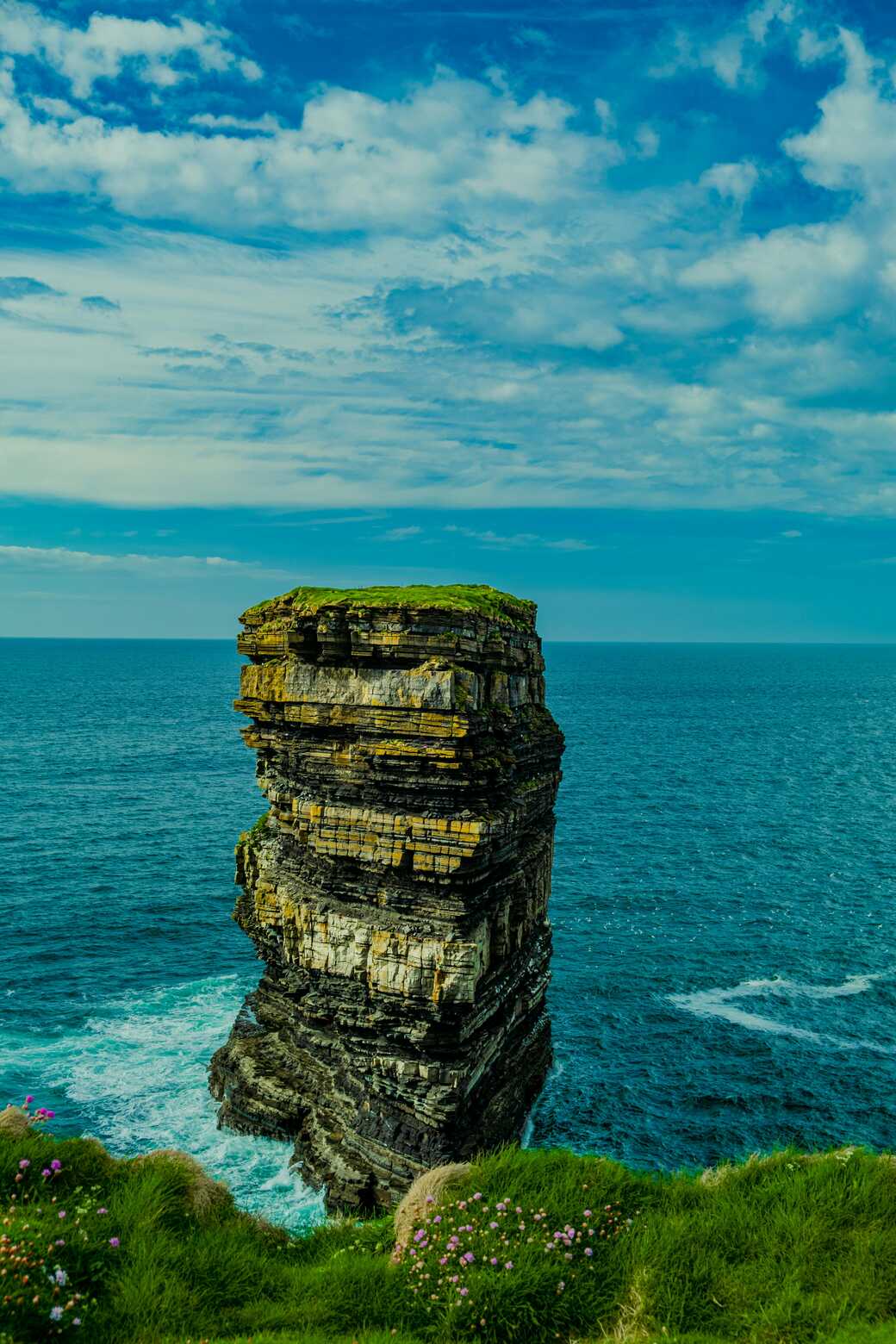
Downpatrick Head is raw drama. You park near the edge and walk across short grass towards the cliffs until the land simply stops and the Atlantic drops away beneath you. The sea stack of Dún Briste stands just offshore, a sheer column of layered rock with grass on top, separated from the mainland by a narrow, surging channel. Birds work the cliff faces and the wind carries spray high above the waves.
Old wartime lookout buildings and the small St Patrick’s cross add human notes to a scene dominated by rock and water. In howling weather the place feels almost violent, the sea booming into caves below. In calmer conditions it is easier to pick out the colours and patterns in the cliffs. Either way, Downpatrick Head is one of those stops that stays with you long after you leave.
Carrowteige feels like the end of a small road and the beginning of a very big view. The village is scattered across low hills, white houses set against the deep greens and browns of bog and pasture. From here a network of cliff walks leads out towards some of the most quietly spectacular coastline in Ireland - Sralagagh, the Children of Lir cliffs, and long views towards distant headlands and islands.
The Atlantic here feels less packaged than at better known sites. Paths are simple, the signage modest, and most of the time you will share the views with only a handful of other walkers. You hear the wind, the sea below, and little else. Carrowteige gives you wildness without fuss, a place where the whole weight of the ocean is visible and very close.
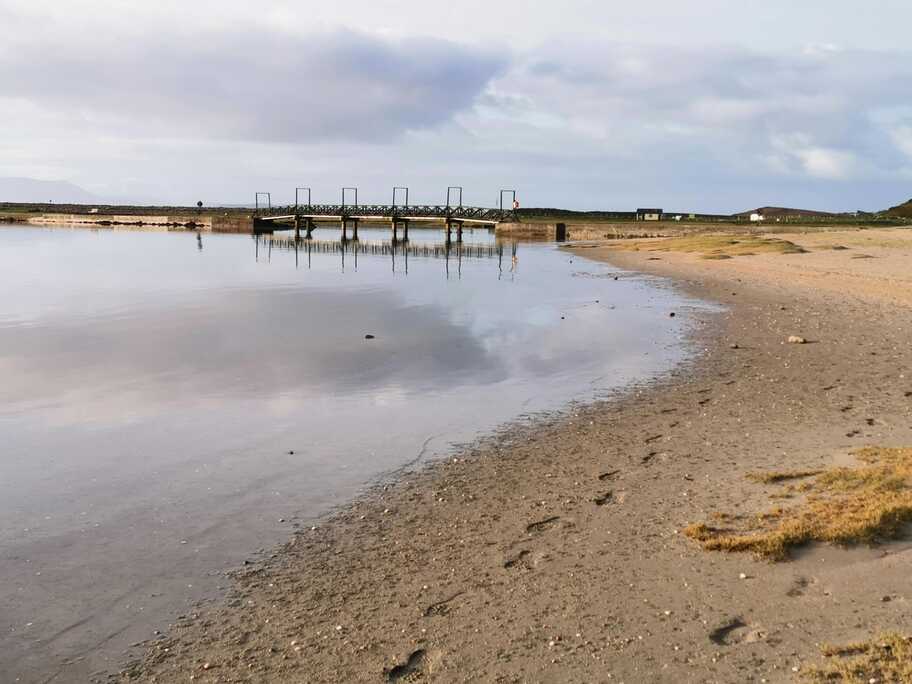
Fallmore lies near the tip of the Mullet Peninsula, a loose scatter of houses, fields and small lanes surrounded on three sides by water. Beaches here are often bright and empty, with pale sand, clear shallows and long views across to scattered islands. On a clear day the colours can be startling - turquoise water in the shallows, deep blue further out, and the white of breakers cropping along more distant shores.
The land feels low and open, with very little between you and the weather. Old graveyards, piers and tracks speak of long, quiet use of this edge of the county. Fallmore is not a place of big visitor infrastructure. It is a place to park, walk down to the shore and feel the sense of space and end-of-the-road calm settle over you.
Bangor Erris gathers again at the meeting of roads and rivers, a small village tucked into the bog and low hills of North Mayo. Arriving here after the cliffs, islands and long beaches of the route, you feel the landscape fold back in on itself slightly. Lakes lie in wide, flat basins, wind farms turn slowly on distant ridges and the roads run long and straight between cut peat and heather.
The village itself is compact - a few streets, a bridge, shops and pubs that serve as refuges when the weather has had its way with you. It feels practical and unpretentious, a working community at the edge of a big, sparsely populated area. Ending here gives the route a quiet, grounded finish. You have moved from border lakes to exposed coast and back into bogland again, the Atlantic always somewhere just beyond the next rise.
This route gently escalates from inland calm to full Atlantic drama. You start among loughs and low hills at Belcoo and Manorhamilton, then meet a burst of energy in Sligo, where river, bay and mountain align. Easky gives you your first proper dose of wild shoreline, with ruined towers and reef breaks, before Ballina blends salmon river culture with the wider pull of the sea.
The North Mayo section is where things really sharpen. Downpatrick Head’s sea stack and cliffs feel like the coastline stripped back to its essentials – rock, water and sky. Carrowteige adds long, quiet cliff walks where you can see headlands stepping away into the haze, while Fallmore and the Mullet show you bright, empty beaches at the very edge of the land. Ending in Bangor Erris ties it together, bringing you back to bog, wind and long views inland.
Around Belcoo, take a short walk along the lakeshore paths and over the border bridge to feel how gently the landscape straddles two counties and two jurisdictions. Between there and Manorhamilton, detour if you like into the Leitrim hills for a small forest or waterfall walk. In Manorhamilton, explore the castle ruins and wander the streets for a sense of how modern life has grown around old stone.
In Sligo, stroll the riverside, explore the town centre and, if you have time, take a side trip out to one of the beaches at Strandhill or Rosses Point for a walk in the wind. Easky is perfect for an hour or two on the shoreline – watch surfers, explore around the Martello tower and castle, and pick your way along the rocks when the tide allows.
At Ballina, spend time on the Moy, watching anglers and walking the quays and bridges. Downpatrick Head deserves a focused visit – walk out to the cliff edge viewpoints, explore the wartime lookout and take your time with the views of Dún Briste. From Carrowteige, choose one of the marked loops along the cliffs for a half day walk. At Fallmore, simply walk the beach and watch the light change on the water. Finally, near Bangor Erris, consider a short drive to one of the nearby lakes or towards Ballycroy National Park if you want more big, open bogland under your boots.
Food on this route is about a mix of small town staples and village pubs. Belcoo and Manorhamilton offer simple cafés and pubs where you can grab breakfast, lunch or a straightforward evening meal, often with hearty plates suited to a day on the road. In Sligo, your options widen considerably – coffee shops, bakeries, traditional pubs and restaurants clustered around the centre and along the river. It is a good place to plan a longer, more leisurely meal.
Easky and the villages along this stretch of coast tend to have more limited choices but make up for it in character. Look for local pubs and small cafés serving chowder, fish dishes and homemade baking whenever they are open. Ballina gives you another broad spread of options, from takeaways and casual cafés to more formal restaurants, many with fresh fish and seafood on the menu.
Towards the North Mayo headlands, eating can become more about timing. Plan to eat in Ballina or one of the larger villages before heading out, then use the cafés or pubs you find in places like Carrowteige and along the Mullet Peninsula as welcome extras rather than guaranteed stops. Bangor Erris at the end of the route works well for a solid pub meal and a pint after a day of fresh air, even if the choice is smaller than in the bigger towns.
You can tackle this route as either a series of one night hops or by planting yourself in one or two bases. Belcoo or nearby Belcoo/Blacklion country makes a quiet first night if you want to wake beside a lough. Manorhamilton also has small guesthouses and B and Bs if you prefer a slightly larger centre early on.
Sligo is a strong candidate for a night or two, with hotels, guesthouses and self catering options that put you within easy reach of both the town and its nearby beaches. Ballina works as a midway base if you want to explore North Mayo without moving accommodation too often, offering a decent range of hotels and B and Bs as well as good road links in all directions.
Out on the coast, you will find smaller guesthouses and B and Bs around Easky, Carrowteige and on the Mullet Peninsula, often in very quiet settings with big views. These suit travellers who like remote nights and dark skies. Bangor Erris rounds things off with a handful of places to stay that feel rooted in the local community. Staying here at the end gives you a calm, grounded finish after the drama of the cliffs and headlands.
TopStops is built to be used like a shared guidebook, not a strict itinerary.
Browse the routes to see how others have travelled an area, check the map for regularly recommended stops, and get a feel for the journey with photos, highlights, and quick info on each place. When you’re ready, follow the route yourself or adapt it to your own trip.
If you discover a spot we’ve missed, submit it. The best community suggestions get added to the map, so every route slowly improves with real travellers’ input.
Do you know somewhere we should feature in our route? Message us and we’ll get it added.