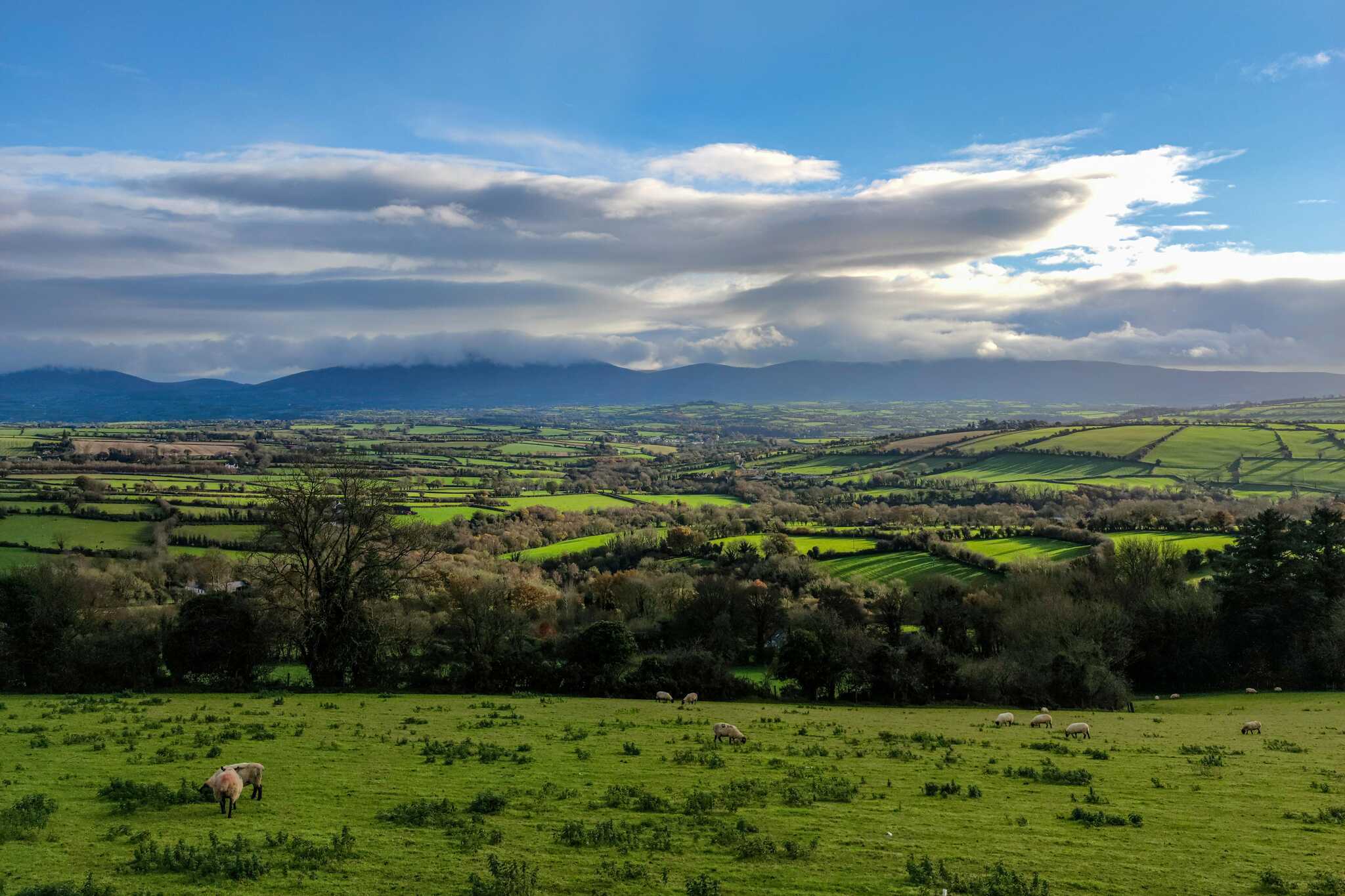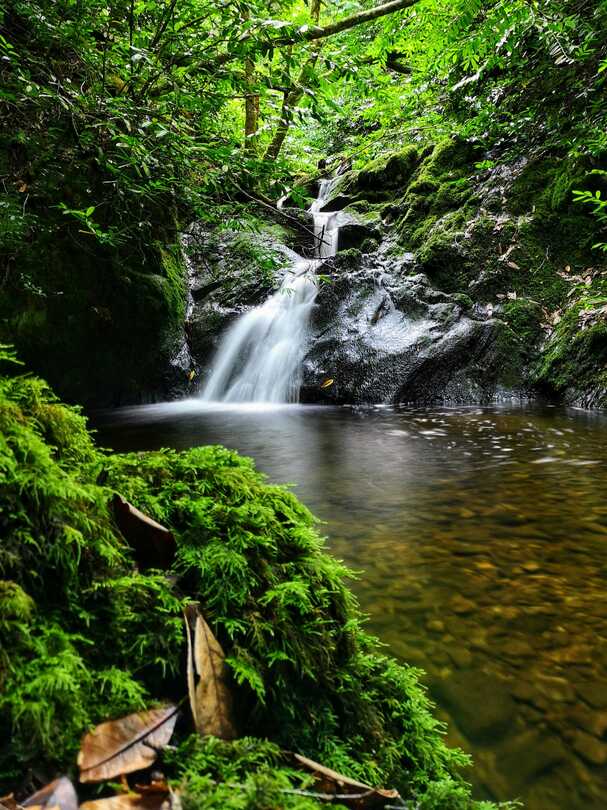









This route feels like a slow bend through the riverlands of Kilkenny and Carlow, with the hills and forests of the south east always hovering on the edge of your view. You begin in Kilkenny among castle walls, medieval streets and riverside walks, then follow the Nore downstream through a string of quieter places. Kells and Jerpoint Abbey bring towers, cloisters and the sense of older worlds clinging close to the water. Thomastown, Inistioge and Graiguenamanagh deepen that river mood, all bridges, trees and stone buildings gathered tightly along the Nore and Barrow.
From there you drift into Carlow country, where the Blackstairs and Mount Leinster sit quietly on the skyline. Borris, Bagenalstown and Myshall are small pauses of shopfronts and church spires between fields and wooded slopes. Altamont Gardens folds in a dose of curated beauty, all lakes, lawns and old trees. Towards the end, Bunclody, Clonegall and Shillelagh carry you along the borderlands of Wexford and Wicklow before Tullow and Carlow town bring you back to something more urban again. It is a gentle route, but a layered one, full of rivers, ruins and low hills that reveal themselves slowly as you move.
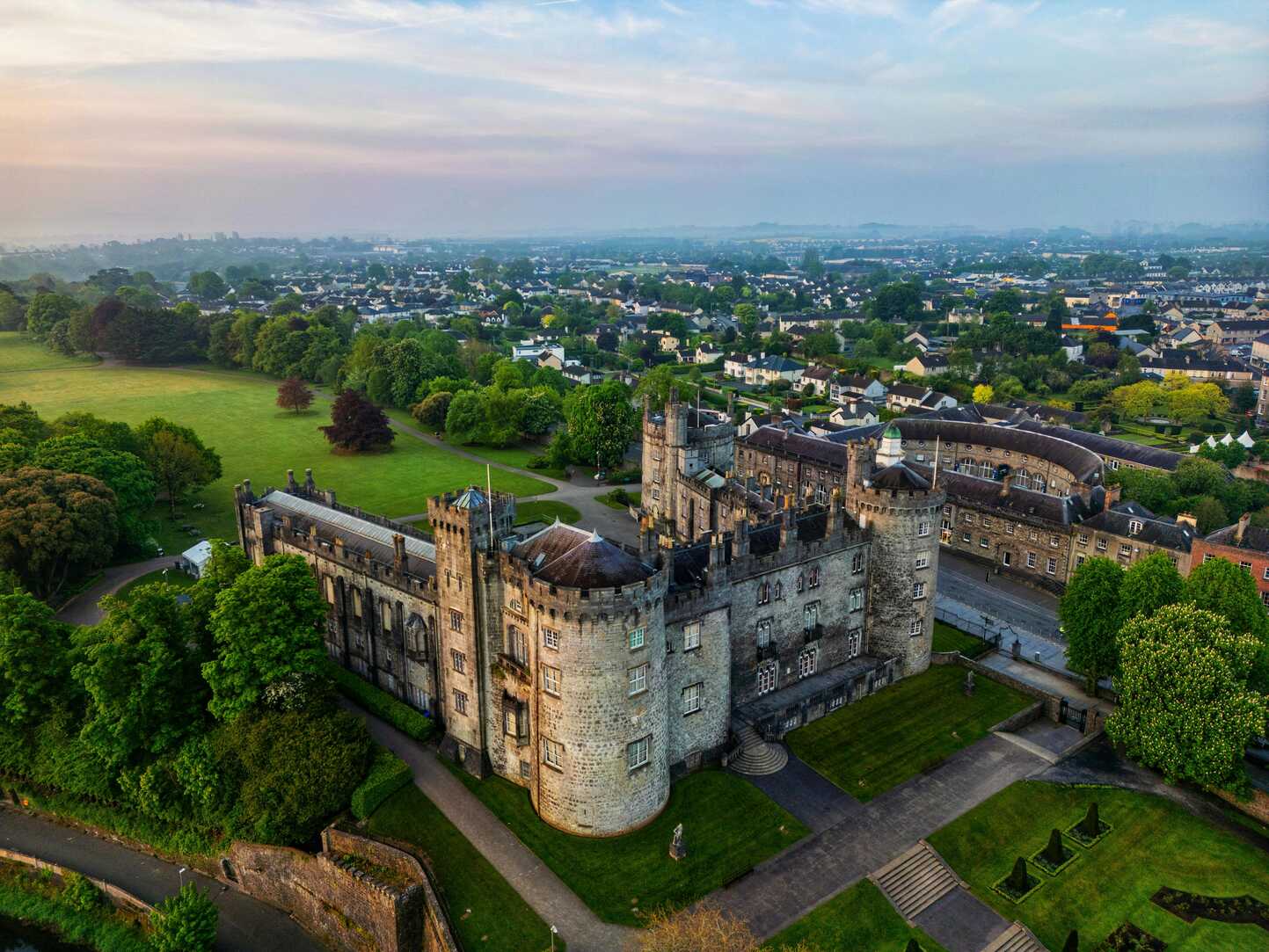
Kilkenny feels like a compact city that has grown around its river and castle in one continuous story. You arrive over the Nore and the castle dominates the first view, a solid mass of stone sitting above lawns and trees. From there the streets climb and twist, lined with medieval remnants, old townhouses and shopfronts that have clearly seen several generations come and go. The Medieval Mile links much of it together, a string of churches, towers and narrow lanes that rewards a slow wander.
Down by the river, paths under trees give you quieter angles on the castle and bridges. Cafés and pubs spill out onto pavements, and it is easy to duck off a busy street into a calm courtyard or church interior. Kilkenny has enough life to feel lively at any time of year, but it still carries a strong sense of its own history in the details underfoot and overhead. As a starting point it sets the bar high, giving you both atmosphere and all the practical things you need before the road narrows and slows.
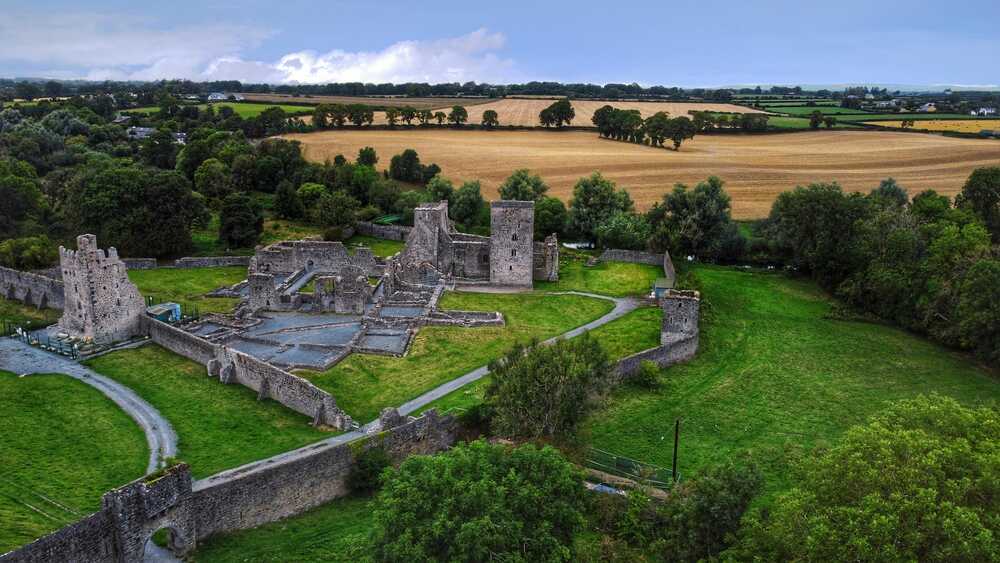
Kells sits quietly in the countryside, but its priory stretches along the river with a scale that surprises you. You leave the main road and drop towards the King’s River, then find towers, walls and fragments of buildings scattered along the bank like the bones of a small fortified town. Sheep graze between them, birds nest in the stonework and the sound of the river runs steadily in the background.
Walking the site feels informal and open. You wander through gateways and under crumbling arches, climb low banks and peer into roofless chambers where grass has taken over. The village itself is modest and calm, but the priory hints at how significant this place once was. It is easy to imagine markets, prayers and arguments carried out under the same sky. Kells gives you a more spacious, rough edged contrast to the neat formality of Kilkenny. It pulls you closer to the river and to the quieter side of medieval Kilkenny.
Jerpoint Abbey has a different feel, more compact and focused, like a stone puzzle set just off the main road. You walk in from a small car park and suddenly cloisters, arches and a sturdy tower unfold in front of you. The abbey sits slightly above the surrounding fields, its walls picked out by lichen and softened by centuries of weather, but the shapes are still strong and clear.
Inside the cloister walk you can trace intricate carvings on the pillars, faces and figures that seem to look back at you from another age. The church and tower draw your eyes upwards, while doorways invite you into side chapels and chambers that now open directly onto sky. From the edges of the site you can look out over farms and hedgerows and feel how the abbey once anchored this landscape. Jerpoint is not huge, but it is dense with detail. If you slow down and let your eyes adjust, there is a lot to see in the stone itself.
Thomastown gathers itself along the Nore, the river and the old mill buildings giving it a grounded, slightly industrious feel. You cross the bridge and the town rises in short, steep streets lined with shops, pubs and houses that have grown comfortably into their curves. The river is always close. Slip down a side path and you can stand on the bank watching water curl past weirs and piers, reflections broken by the current.
The town has long been a place where craft and making matter. Small galleries and workshops sit in among everyday businesses, and you can easily combine a coffee stop with a look at local art or ceramics. Across the river, the remains of Grennan Castle keep a watchful presence, just enough ruin to hint at older power. Thomastown feels like a good midpoint between big sights and small villages. It has enough going on to feel lively, but it is still very much a place where normal life runs alongside whatever you are doing as a visitor.
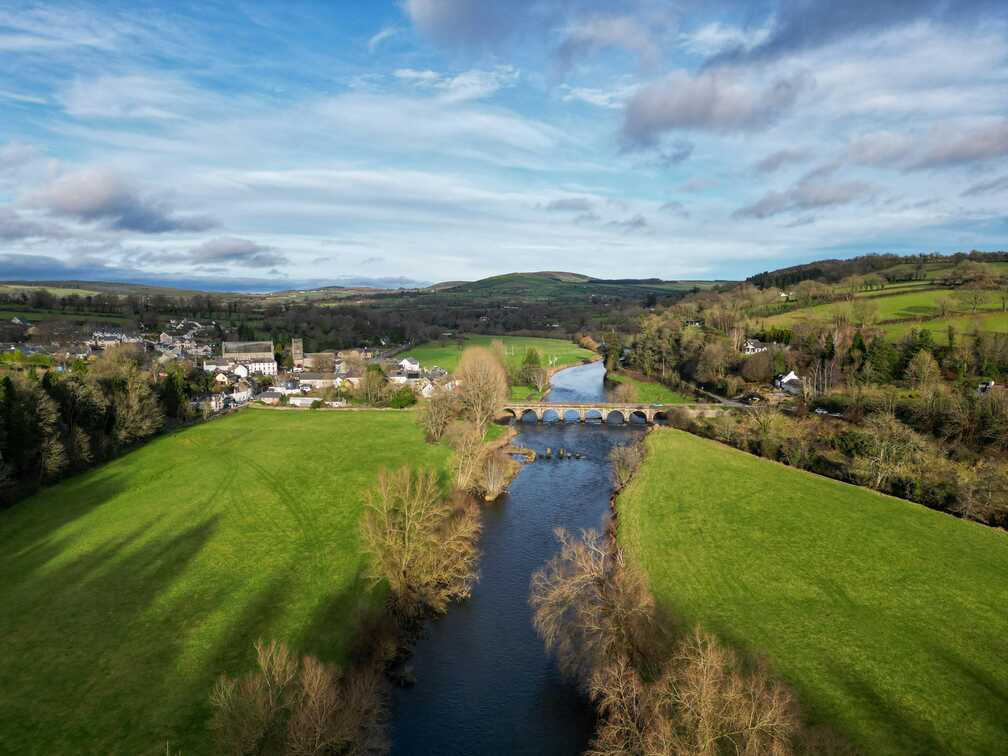
Inistioge sits in a bend of the Nore that feels almost deliberately picturesque. You roll in under trees and suddenly the village square opens in front of you, framed by neat houses and the spire of the church. Just beyond, a long stone bridge strides across the river in a confident run of arches, reflections stretching down into the water on still days.
It is a place that invites strolling rather than box ticking. You can loop from the square down to the river, cross the bridge, then follow paths into the woods and up to Woodstock Gardens if you want bigger views and longer walks. Back in the village, small cafés and pubs offer easy places to sit and watch the pattern of local life, which tends to move at a pleasantly unhurried pace. Inistioge feels leafy and enclosed, a soft green pause on the route that makes you slow down whether you planned to or not.
Graiguenamanagh leans right up against the Barrow, its streets and houses tucked in under a steep hillside with the river at its feet. The abbey church and the broad stone bridge set the tone. They are strong, solid shapes that make clear how long this place has been watching the water flow past. On the quays, boats moor up side by side, and the towpath of the Barrow Way stretches invitingly away in both directions.
You can walk or cycle that path for as long as your legs allow, moving between trees, fields and occasional locks while the river keeps you company. Back in town, cafés and pubs give you views over the water, and the abbey interior offers cool stone and coloured glass. Up on the hillside, houses and small lanes climb steeply, offering glimpses back over roofs, river and wooded banks. Graiguenamanagh feels like a proper river town. The Barrow is not just a backdrop here, it is the main line everything else is drawn around.
Borris sits under the long ridge of the Blackstairs, a main street of stone houses and painted shopfronts that feels quietly self contained. As you drive in you pass the old railway viaduct stepping across the valley in a sequence of arches, and the bulk of Borris House hidden behind tall trees and high walls. The village itself is compact. A few minutes on foot takes you from one end to the other.
What makes it special is the way it sits in its landscape. From the bridge outside the village you can look back at the viaduct, the river and the hills all in one sweep. On a clear day Mount Leinster rises behind it all, a darker weight on the skyline. Short drives from Borris take you onto narrow, twisting roads that climb into the mountains, with hairpin bends and sudden views back over green patchwork fields. It feels like a place balanced between river valley and high ground, grounded and slightly grand at the same time.
Bagenalstown, or Muine Bheag, spreads itself along the Barrow in a more low lying way. The town centre sits just above the river, with tree lined riverside walks and moorings that make the water feel like part of the everyday rather than a distant view. The streets above hold neat terraces, shopfronts and a sense of order that reflects its planned eighteenth century roots.
Stroll down to the river and you can watch barges and cruisers settle in beside the bank, ducks working the shallows and the current slipping steadily under the bridge. The canal like calm of the Barrow here gives the town a gentle rhythm. It feels friendly and functional rather than theatrical, which can be a relief after more obviously pretty stops. Bagenalstown is a good place to stretch your legs and reset before you turn your attention towards the smaller roads and villages closer to the hills.
Myshall is one of those small villages that feels like it belongs to the fields and hills around it. You arrive on a quiet main street with a few houses, a church, a pub and not much more. The outline of Mount Leinster and the Blackstairs range sits close behind, giving the place a strong backdrop even when there is not a lot of movement in the street itself.
Walk a little and you notice small details. Well kept gardens, old stone walls, the occasional view between buildings where the land lifts sharply away. Nearby you have the Adelaide Memorial Church of Christ the Redeemer, an unexpectedly ornate slice of Gothic style in a rural setting, and a reminder of the personal stories tied into this landscape. Myshall feels calm and residential. It works best as a gentle pause where you can tune into the quieter tones of Carlow rather than somewhere you tick off a list of sights.
Altamont Gardens feel like a secret that the locals are happy to share. You come in past a house with old world character, then find yourself drawn down lawns and paths towards a lakeside framed by mature trees. The atmosphere is relaxed. Beds are carefully planted but not stiff. Old yews, roses and herbaceous borders sit alongside wilder corners and long views out to distant hills.
From the lake, paths drop into a riverside glen where the Slaney runs under overhanging branches and the air feels a few degrees cooler. Stone steps, little bridges and shaded tracks make it feel like you are wandering through a storybook landscape rather than a set piece garden. There is usually a quiet bench somewhere close when you want to sit and watch the water. Altamont is an easy place to spend longer than you intended. It brings together many of the things this route has been circling around: water, trees, big skies and soft green shapes rolling away into the distance.
Bunclody sits on the Slaney where Wexford and Carlow meet, a small town with a river at its heart and forested slopes close by. The main street runs gently uphill from the water, lined with traditional shopfronts, cafés and pubs. At the bottom, the river slips under bridges flanked by trees, and on bright days the surface reflects sky and branches in quick, shifting patterns.
The town has a modest, easy going feel. You can pick up supplies, grab a coffee, then be on a forest walk or a hillside road within a few minutes of driving. The surrounding countryside lifts quickly towards Mount Leinster and the Blackstairs, so views open and close as you move. Bunclody is a good hinge point between the deeper Carlow interior and the borderlands that follow. It gives you a taste of both wooded hill and river valley in a space that never feels overwhelming.
Clonegall feels like a village that could almost have stepped out of a period drama. It is small, with stone cottages and tidy gardens along a short main street, but it has a surprisingly grand neighbour in the form of Huntington Castle at its edge. Trees and high walls hint at the estate before you see the house itself, and the whole place carries an air of quiet age.
The meeting of counties here gives it a slightly in between character. You are close to Wexford, within reach of Wicklow, yet still firmly in Carlow country. Walk through the village and the pace is slow. Birds in hedges, the occasional car passing, maybe voices drifting from an open door. Short walks along lanes and over small bridges connect you back to the Slaney and to the fields around. Clonegall works as a gentle, slightly romantic pause on the route, somewhere you can imagine candles in windows and long stories told by firelight.
Shillelagh is tucked into a dip of hills and forest, a village that gives its name to the famous walking stick, which suits the setting. You arrive on a tree edged main street with a scattering of houses, a church and a pub or two, the surrounding landscape close enough that it feels like it could flow in at any moment. Woods press in from the edges, and beyond them the slopes of south Wicklow rise towards more open country.
The village makes a good base for drives and walks into those forests and hills. Lanes lead quickly into green tunnels of overhanging branches, and tracks head out towards routes like the Wicklow Way. In town, life is quiet and local. You are more likely to share the street with a farmer’s jeep than a tour bus. Shillelagh nudges the route into a slightly different register, hinting at the larger mountain country to the north while still keeping one foot in the gentler farmland of Carlow and Wexford.
Tullow stretches along the Slaney in a way that feels open and workmanlike. You cross the river on a solid bridge and the town unfolds along a main street with shops, pubs, churches and schools, all geared to serving a wide rural area. The river is never far away. Paths and green spaces beside it give you room to walk, sit and watch the water without leaving town.
It is a place where history sits quietly in the corners. Old churches, memorials and nearby estates like Altamont create a subtle frame, but Tullow itself feels very much alive and current. Market days, school runs and local sport are what really shape the rhythm here. For you, it can be a practical stop for fuel, food and a short riverside stroll. It is also where the route begins to gather itself for the final run into Carlow town, keeping the Slaney as a constant thread.
Carlow brings you back into a larger town, though it still sits comfortably on the banks of the Barrow and Burrin. You arrive to find wide bridges, riverside parks and the stump of Carlow Castle guarding a bend in the water. The centre spreads out in streets that mix older buildings with newer shops and cafés, giving you plenty of choice for a final meal or a bit of browsing.
Walk the riverfront and you can trace the way water has shaped the town. Towpaths, moorings and walkways line the banks, and on fine days people fish, jog or sit along the grass. Turn back into town and the streets feel busy but not frantic, with student life from the local institutes adding some energy. Carlow is a tidy end point for this route. It has enough scale to feel like a destination, yet it still carries the same river focused character that has run quietly through almost every stop along the way.
This route feels like a slow meander through the river valleys and small towns of Kilkenny and Carlow, with just enough big-ticket history to frame it. You start in Kilkenny, all castle walls, medieval lanes and riverside walks, then follow the Nore out through Kells, Jerpoint Abbey and Thomastown where mills, monasteries and old bridges track the water. Inistioge and Graiguenamanagh deepen that river mood, one thatched and leafy, the other wrapped around church towers, quays and the Barrow.
From there you drift into Carlow territory. Borris, Bagenalstown and Myshall sit in the shadow of the Blackstairs and Mount Leinster, each village or town a small pause of shopfronts, churches and pubs between stretches of farmland and wooded slopes. Altamont Gardens folds in a dose of landscaped beauty, all lakes, groves and long views to the hills. Bunclody, Clonegall and Shillelagh carry you along the borderlands of Wexford and Wicklow, all small streets and forested edges, before Tullow and Carlow town itself bring you back to a more urban scale. It is a route that stays mostly gentle, but it layers river, history and low hills in a very satisfying way.
In Kilkenny, start with the classic triangle. Walk from Kilkenny Castle along the river, then cut back through the Medieval Mile past Rothe House and St Canice’s Cathedral if you want a hit of history and tower views. When you leave town, Kells and Jerpoint Abbey give you quieter, older echoes. Kells Priory is one of Ireland’s largest medieval monastic sites, spread along the King’s River with towers and walls you can wander among, while Jerpoint Abbey’s cloister carvings reward a slow lap for anyone who enjoys stonework and atmosphere.
Thomastown and Inistioge are perfect for gentle loops on foot. In Thomastown you can follow the Nore, duck into small galleries and explore the remains of Grennan Castle across the river. Inistioge invites you to stroll its village square, wander down to the bridge, then climb into Woodstock Gardens for woodland walks and formal terraces above the river. Graiguenamanagh shifts the focus to the Barrow. You can walk or cycle sections of the Barrow Way towpath, rent a kayak or simply sit on the quay watching the water slide past the old abbey and bridge.
Further on, Borris offers views of the Blackstairs from its old stone bridge and streets, and you can detour towards Borris House or up into the hills if you fancy a drive with hairpin bends and rewarding viewpoints. Altamont Gardens is a must linger stop, with lakeside walks, a formal lawn, old trees and long sightlines to the distant mountains. Towards the end, small places like Bunclody, Clonegall and Shillelagh are best enjoyed slowly on foot, taking in their churches, bridges and forest edges, before finishing with a wander along the Barrow and through the streets of Carlow, perhaps taking in the ruined castle stump and the riverside park.
Kilkenny is your best bet for choice at the start. The city has everything from casual cafés and bakeries to bistro style spots and traditional pubs serving good, solid plates, so it is worth timing either a lunch or a first evening there. As you follow the Nore south, places like Thomastown and Inistioge offer smaller cafés and pub food, ideal for mid-morning coffee or a simple lunch before or after walks at Jerpoint, Kells or Woodstock.
Graiguenamanagh has a handful of riverside cafés and pubs where you can sit outside on a fine day, looking over the Barrow with a bowl of soup or a sandwich. Borris, Bagenalstown and Tullow carry the more everyday side of eating on this route. Think hearty pub meals, carvery lunches and small-town restaurants rather than fine dining, which fits the mood of the journey.
Near Altamont Gardens you are in picnic territory unless you time your visit around a café stop in one of the nearby towns, so it is worth having a few snacks or a packed lunch in the car. Towards the northern end, Bunclody and Carlow both work well for evening meals. Bunclody is more compact and village-like, while Carlow has a broader spread of restaurants, hotel bars and takeaways if you want options without overthinking it.
You can do this as a two-base route or hop night by night. Kilkenny makes an obvious first base, with hotels, B&Bs and guesthouses in easy walking distance of the castle and old streets, which lets you enjoy the city after day visitors have gone. If you want something quieter, Thomastown, Inistioge or Graiguenamanagh all have small guesthouses, village inns and riverside stays that put you closer to the Nore and Barrow without losing access to Kilkenny.
Further along, Borris and Bagenalstown are good for a more local feel. Expect small hotels, traditional pubs with rooms and countryside B&Bs on the edges of town. Around Altamont Gardens and Myshall you are in classic rural territory, so farm stays and country-house style B&Bs come into play, often with views towards Mount Leinster and snug sitting rooms for cooler evenings.
Towards the end, Bunclody and Carlow give you different flavours of a final stop. Bunclody offers small-town charm and quick access to forest walks and the Slaney valley. Carlow has the widest range of accommodation on the route, from modern hotels on the edge of town to older guesthouses near the centre. Finishing there makes onward travel simple, whether you are heading back towards Dublin, over to the coast or south again for the next leg.
TopStops is built to be used like a shared guidebook, not a strict itinerary.
Browse the routes to see how others have travelled an area, check the map for regularly recommended stops, and get a feel for the journey with photos, highlights, and quick info on each place. When you’re ready, follow the route yourself or adapt it to your own trip.
If you discover a spot we’ve missed, submit it. The best community suggestions get added to the map, so every route slowly improves with real travellers’ input.
Do you know somewhere we should feature in our route? Message us and we’ll get it added.