









This route feels like a gentle climb from sea level into the green heart of Wicklow, then out again to the soft edges of Dublin. You begin in Arklow with the Irish Sea in front of you, then move up to Brittas Bay where dunes, marram grass and a long bright strand give you room to breathe. From there you swing inland into a world of riverside gardens and wooded estates. Mount Usher, Avoca and Avondale wrap you in trees, flowers and slow, looping paths where the loudest sounds are usually water and birds.
Further in, the valleys tighten and the hills rise. Glendalough pulls you into one of Ireland’s most atmospheric glens, all lakes, monastic ruins and steep slopes. The road over Sally Gap lifts you straight onto high bog and open sky, with views that reach for miles in every direction. Glencree folds you back into forest and stream, where the landscape feels more intimate again. Finally, Powerscourt gives you grand terraces and long views to the Sugarloaf before you ease down towards Enniscree Lodge on Wellington Lane, tucked among trees at the quiet meeting point of Dublin and Wicklow.
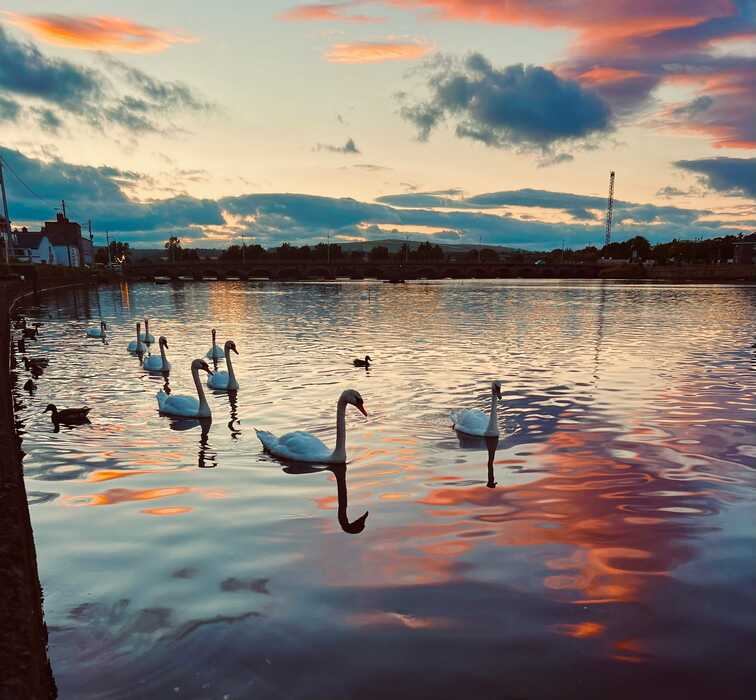
Arklow sits at the point where river, harbour and sea all meet. You arrive over bridges and past working quays, with the River Avoca sliding steadily towards the Irish Sea on one side and the town’s main streets on the other. It feels practical and lived in. Fishing boats, small commercial craft and pleasure boats all share the water, while everyday shops and cafés line the streets behind.
If you walk the waterfront you can watch the tide turn in the river mouth and feel the wind harden as you move closer to the open sea. A short stroll brings you to the beach, where shingle and sand run out beside low dunes and concrete sea walls. It is not a showy resort, but there is something satisfying about starting here. You get the taste of salt in the air, the sense of movement along the coast and an easy place to stock up before you head towards quieter stops.
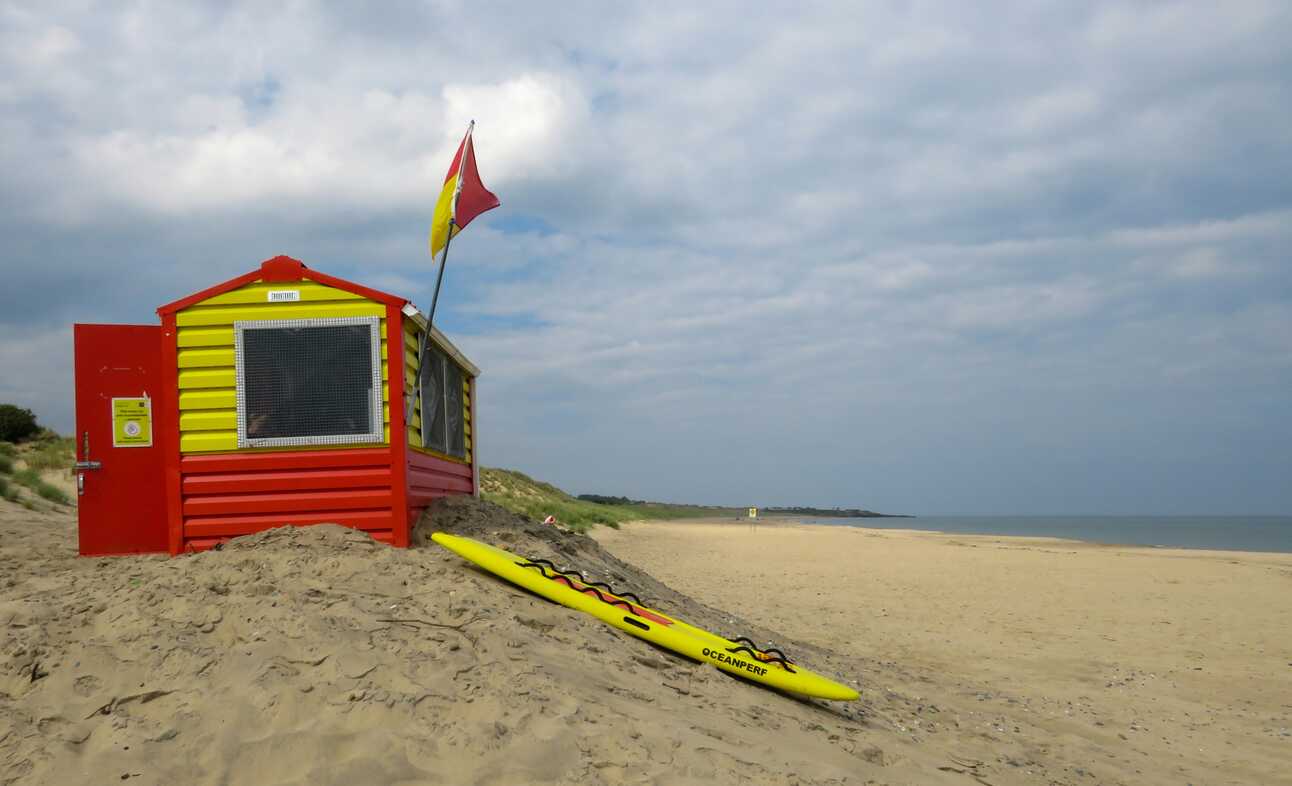
Brittas Bay is all about space and light. The road peels away from the main route and brings you through low dunes to a long curve of pale sand that feels gently removed from everything else. When you walk over the ridge of grass and sand, the view suddenly opens. The beach runs away in both directions, the line of waves repeating itself again and again under a wide sky.
The dunes themselves are part of the charm. Paths twist through marram grass and low hollows where the wind drops and the sound of the sea softens. On busy days it still feels roomy. People spread out along the sand, leaving long stretches almost empty. On quiet days it can feel like the edge of a much bigger ocean. You can swim, paddle, walk for an hour in either direction or simply lie back in the shelter of the dunes and listen to the tide. Brittas Bay is simple, but it has exactly the kind of calm energy you want near the start of a journey.
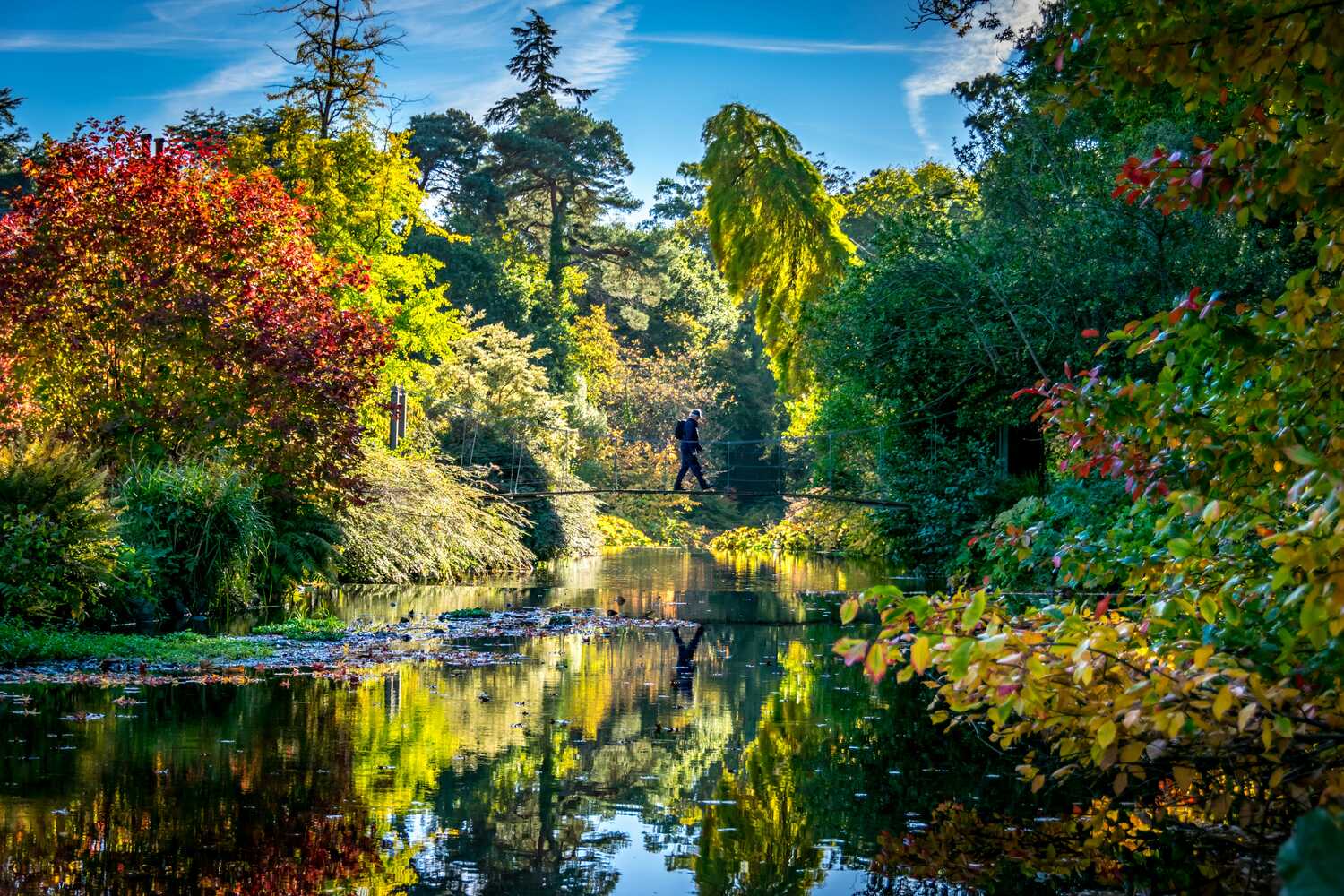
Mount Usher feels like a garden that has grown itself into perfection. You step through the entrance and the noise of the road drops away, replaced by the rush and murmur of the River Vartry and the rustle of leaves overhead. Paths wander rather than march, crossing bridges, ducking under trees and sliding between borders that are lush and loose rather than clipped and formal.
As you walk, you catch glimpses of old stone, wooden footbridges and pockets of bright planting. There is a sense of being guided but never rushed. You can linger on a bench under a mature tree, pause on a bridge to watch the river, or follow a loop that brings you through different moods of light and colour. Cafés and small shops near the entrance mean you can weave food and browsing around your walk. Mount Usher gives you a very gentle, very green reset before you continue deeper into Wicklow.
Avoca sits in a soft, wooded valley where rivers, roads and stories all seem to knot together. You drive down into it and find a village that feels exactly the right size, with white and pastel houses lining the main street and the Avoca River slipping quietly below. The hills rise on both sides, close enough that it feels like the village is being held in a pair of green hands.
The famous handweavers are a natural stop. Inside, you can watch looms at work and run your hands over blankets and scarves that seem designed for Wicklow evenings. Outside, there are short riverside walks and quiet corners where you can hear water bouncing over stones. Pubs and cafés give you easy options to sit and take it all in. Avoca is not a big detour, but it deepens the feel of the route. It shows you Wicklow as valley and village rather than just road between beaches and mountains.
At Avondale you swap villages for full forest. The drive in is lined with tall trees, and once you park you are surrounded by trunks, branches and birdsong in every direction. Paths range from gentle loops near the house to longer routes that drop towards the Avonmore River and climb back onto higher ground. It feels spacious but sheltered, like someone has given you a safe pocket of woodland and told you to take your time.
The historic house sits above it all, a reminder that this landscape has long been shaped by people who cared about trees. Depending on what is open, you can explore the building or focus purely on the park. Elevated walkways and viewpoints give you wide views across the valley, while lower tracks let you walk beside water and under dense canopy. Avondale is an easy place to lose a couple of hours. It bridges the gap between curated gardens and the wilder hills waiting on the horizon.
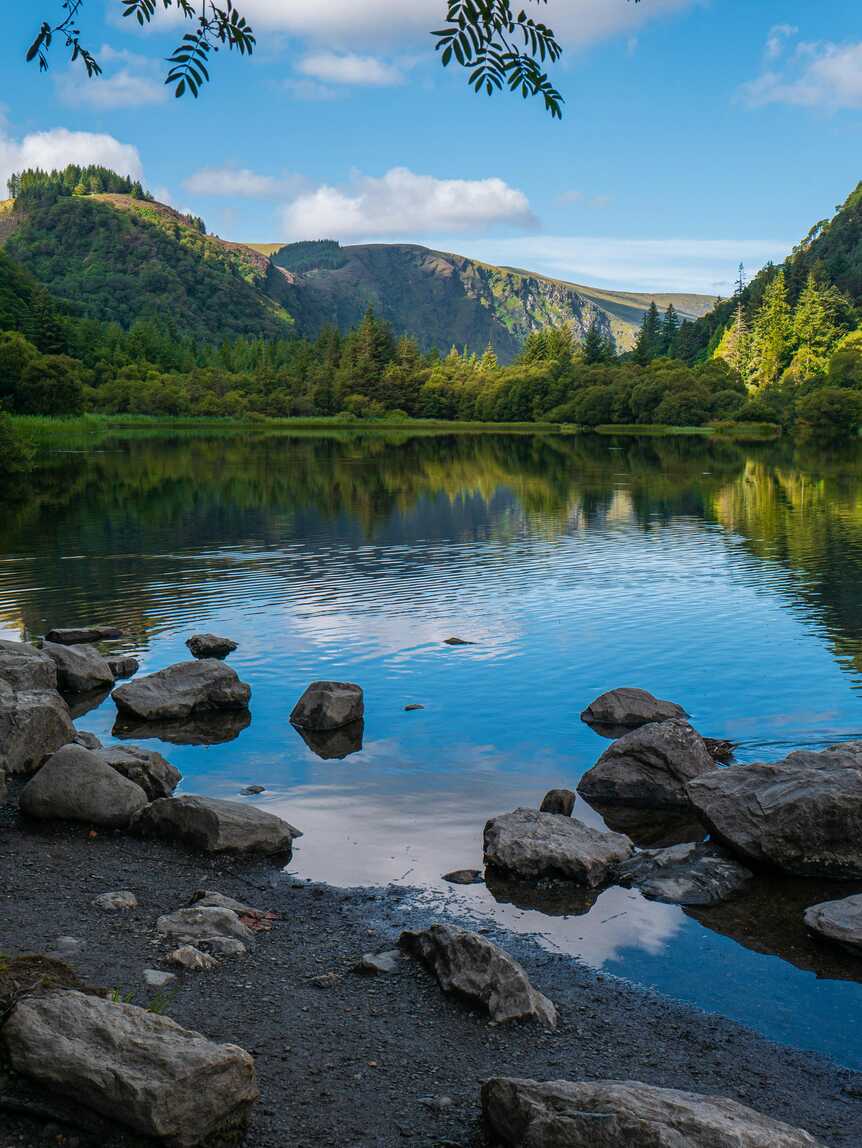
Glendalough feels like the point where landscape and story join up completely. You arrive to find a broad glen where two lakes lie in a line between steep, dark slopes. At the entrance, monastic ruins cluster around a round tower and ancient grave markers. It is busy with visitors and still somehow deeply atmospheric. Stone, lichen and bell towers frame your first views of the valley.
Once you follow the paths towards the lakes the sense of drama builds. Boardwalks and tracks hug the shorelines, bringing you close to still water that mirrors cliffs and trees. Higher trails cut back and forth up the flanks of the valley and reward you with balcony views over both lakes and out towards the lower country beyond. The air smells of peat, pine and damp earth. Glendalough can absorb as much time and energy as you give it. It is one of those stops where the route could almost end and you would still feel satisfied.
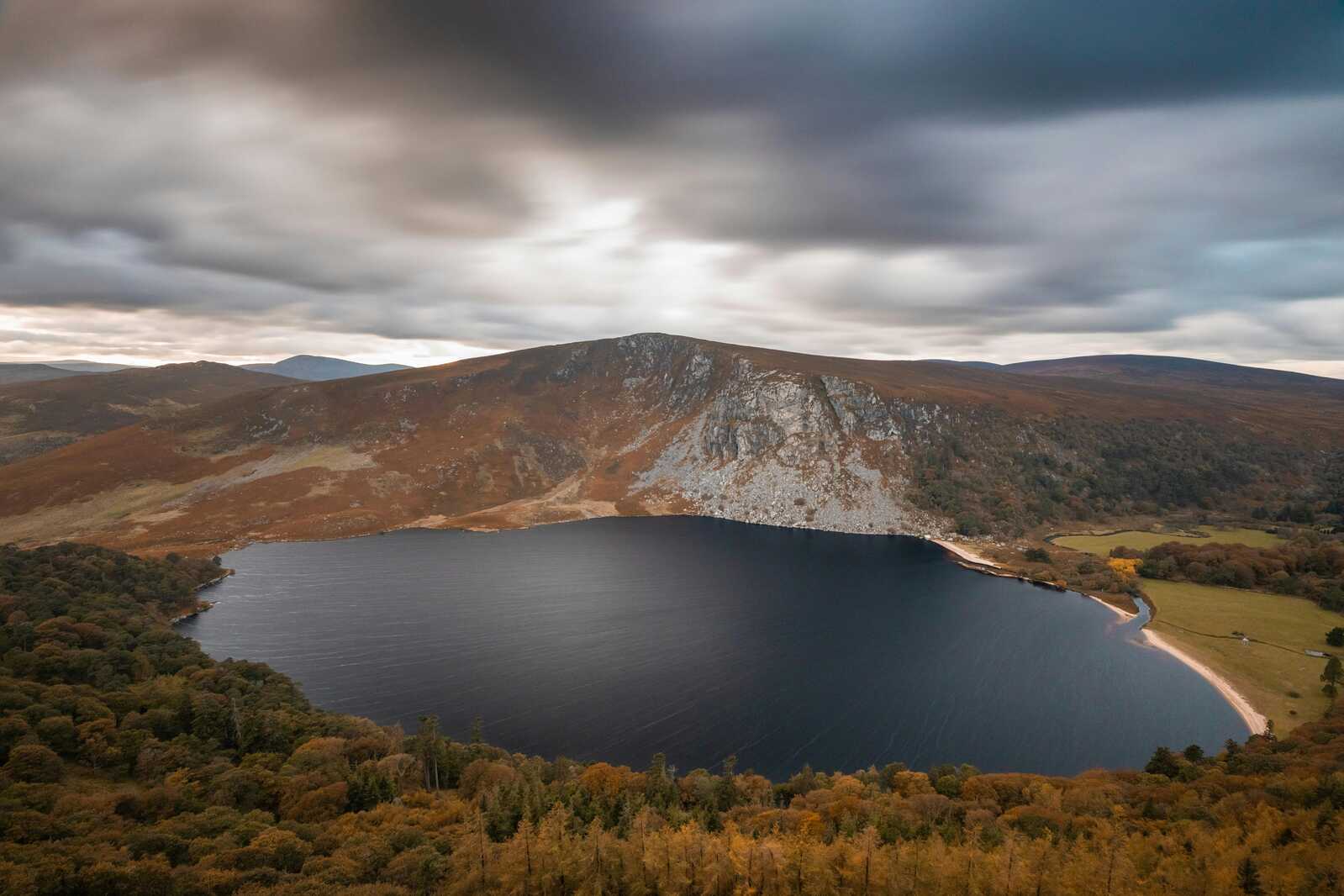
Sally Gap is a crossing rather than a place you stay, but it leaves a strong impression. Roads climb out of wooded valleys and villages until suddenly you are on open, high ground. The trees fall away and it is just bog, heather and rock rolling out under a big sky. Lakes such as Lough Tay and Lough Dan sit in scooped out basins below, dark and still against the brown and green of the hillsides.
At the junction itself you feel that sense of height and exposure keenly. Wind can be sharp even in summer. On clear days you can see ridge after ridge stepping away towards Dublin, Wicklow and beyond. On misty days the road narrows to a ribbon of tarmac disappearing into grey and the land feels mysterious and close. There is little here in the way of facilities, which is part of the appeal. You stop at a lay by, step out, listen, look, and feel how much the character of the route has changed from dunes and gardens to highland plateau.
Glencree folds you back into a smaller, more human scale after the wide openness of Sally Gap. The road drops into a narrow valley where a fast, clear river cuts through rock and forest. The old military barracks and the modern reconciliation centre give the place a quiet, reflective mood, as if the landscape itself is encouraging you to slow down and think.
Paths lead into the trees, where moss and ferns cling to stones and the sound of water is never far away. Bridges cross the river at tight points, and small clearings give you spots to sit and watch the flow. High above, the road you took across the mountains feels a long way off, even though it is only a few bends away. Glencree is a good place to walk off a drive, to sit with a coffee or a sandwich, and to feel how Wicklow’s uplands and valleys knit together.
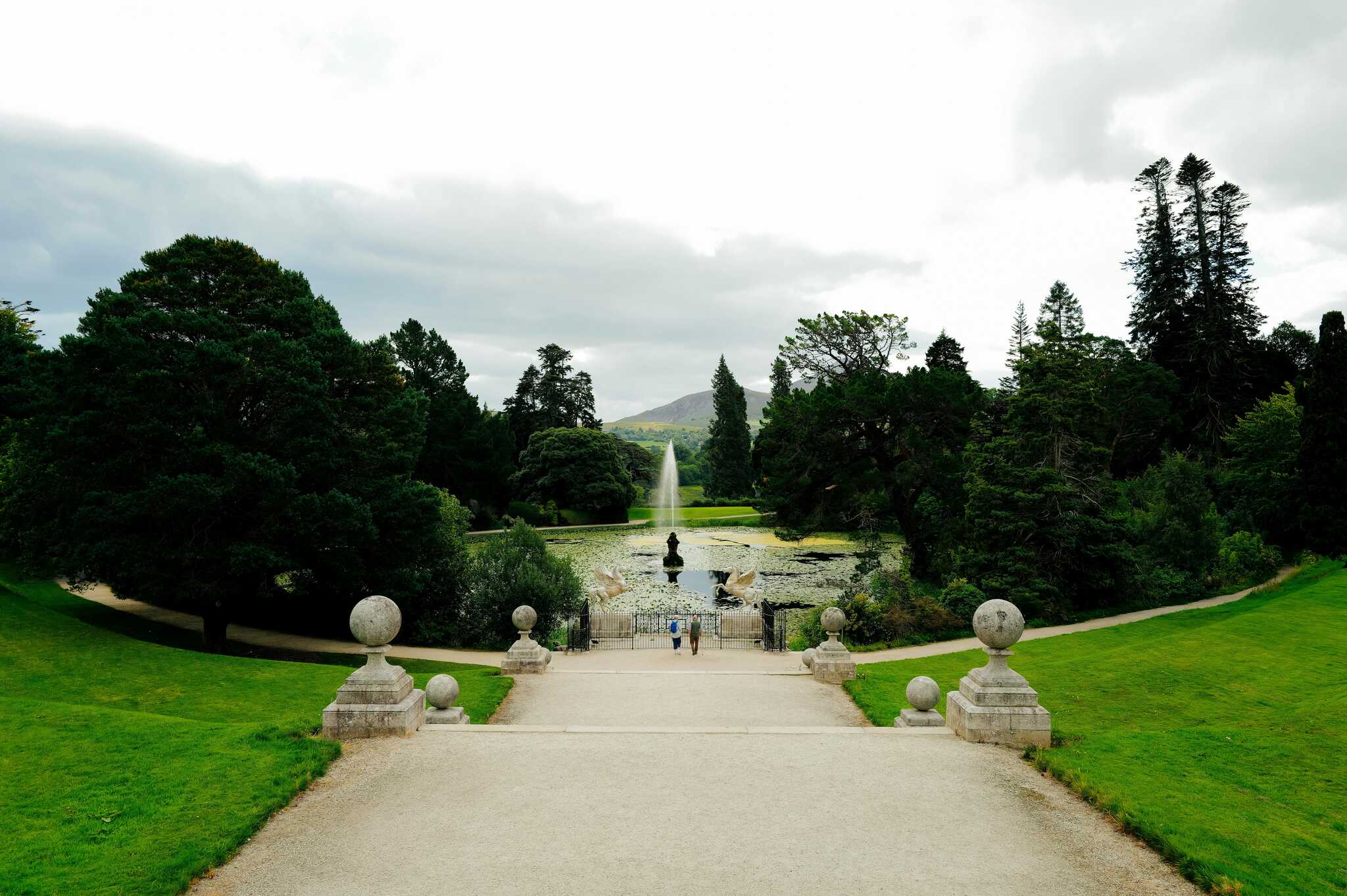
Powerscourt is Wicklow turning the drama up again, but this time in a very deliberate way. The house stands solidly at the head of a great formal garden, terraces stepping down towards a long ornamental lake with the Sugarloaf framed neatly in the background. Everything feels composed. Statues, trees and water features are arranged so that each view feels like a finished picture.
As you walk, the mood shifts between formal and natural. One moment you are on wide gravel terraces looking at clipped lawns. The next you are looping through Japanese gardens with stone lanterns and winding paths, or wandering under tall trees in the walled garden. Inside the house you find shops and places to eat. Outside, you can simply take your time, sit on a bench and let the whole scene soak in. Powerscourt is a highlight of the route near its end, a place where you see how carefully designed beauty and raw landscape can sit right next to each other.
Enniscree Lodge on Wellington Lane feels like a quiet landing place after a full day of moving through Wicklow. You leave the main roads behind and follow smaller lanes that twist through trees and past tucked away houses. By the time you arrive, traffic noise has dropped to a soft background and you are surrounded by gardens, hedges and birdsong. It feels like the countryside even though you are not far from Dublin.
As a stop, it is more about mood than spectacle. This is where you exhale after beaches, forests, high passes and big gardens. You might sit outside with a drink in the evening light, listening to leaves moving and the distant hum of the city, or curl up indoors with maps and notes, planning what comes next. Enniscree Lodge ties the route together neatly. It gives you one last calm, green Wicklow night before you head back into the busier world beyond.
This route feels like a slow sweep up through Wicklow’s gentle coastline into its wooded valleys and deep glens, finishing high on the shoulders of the mountains before you drift back towards civilisation. You begin in Arklow with the Irish Sea right beside you, then slip up to Brittas Bay where the sand and dunes stretch out in long, bright curves. From there you turn inland into a softer, greener world. Mount Usher Gardens, Avoca and Avondale wrap you in trees, rivers and old estates, all dappled light and quiet paths.
Further in, the landscape tightens. Glendalough folds you into one of Ireland’s most evocative valleys, where lakes, monastic ruins and steep hillsides all crowd together. Sally Gap lifts you onto the high, open bogs with wide, heathery views in every direction, then Glencree and Powerscourt bring the drama down again into more sheltered glens and formal gardens. By the time you reach your final stop at Enniscree Lodge, tucked on Wellington Lane, it feels like you have traced a full arc from beaches and dunes through gardens, forests and uplands into a calm, wooded retreat on the edge of Dublin and Wicklow.
In Arklow, start with a walk along the river and harbour, watching fishing boats and small craft move with the tide, then head to the seafront to feel the full sweep of the Irish Sea. Brittas Bay is next and is best enjoyed simply, with a barefoot wander on the sand, a swim if the weather allows, and a climb over the dunes to look back at the long curve of the bay. From there you turn inland for more deliberate, slower experiences. Mount Usher Gardens invites you to take your time among winding paths, bridges and riverside glades, the planting loose and natural rather than clipped and formal.
Avoca is for browsing the famous handweavers, picking up something woollen, then following the river or popping into the village pubs and cafés. At Avondale House and Forest Park you can walk longer loops under tall trees, visit the historic house if it is open, and take in views from high walkways or viewpoints over the Avonmore valley. Glendalough deserves a good chunk of a day: explore the monastic site and round tower, follow the paths around the lower and upper lakes, and, if you have the legs, climb one of the higher trails for a balcony view of the whole valley.
The drive over Sally Gap is an experience in itself, with plenty of safe spots to pull in and admire bog, lake and distant mountain ridges. Glencree offers forest walks, a peaceful visitors centre and the chance to reflect at the old barracks and reconciliation centre. Finally, Powerscourt House and Gardens give you grand terraces, a waterfall a short drive away and one last slow loop through manicured lawns, statuary and long views to the Sugarloaf before you wind down towards Enniscree Lodge for the night.
Along this route you can easily keep yourself fed with a mix of village cafés, garden tearooms and country pubs. In Arklow, the main street and harbour area have simple spots for breakfast rolls, coffee and fish and chips, ideal at the very start or very end of the day. At Brittas Bay you are more in picnic territory, so it is worth stocking up beforehand and eating on the sand or in the shelter of the dunes.
Once you turn inland, Mount Usher and Avoca both offer welcoming cafés where you can sit under trees or in old stone courtyards with soups, salads, home baking and decent coffee. Avoca village has a handful of pubs and restaurants that work well for a relaxed lunch or early dinner, especially if you want something hearty after time in the forest parks. Avondale is a good place for a light lunch or mid-afternoon stop, with simple food attached to the visitors facilities.
Glendalough and the nearby village of Laragh give you a cluster of options, from hotel bars serving solid, traditional plates to small cafés where you can warm up with soup and soda bread after a long walk around the lakes. Later on, Enniskerry near Powerscourt opens up more choice, with bistro-style spots, hotel dining rooms and casual cafés all close together around the village square. By the time you reach Enniscree Lodge on Wellington Lane you are within easy reach of these Enniskerry options, or you can plan ahead and bring something simple back with you if you prefer a quiet evening in.
You can travel this route in a series of short hops, so you have options whether you prefer one base or a few different overnights. Arklow works as a straightforward starting base, with hotels and guesthouses within walking distance of the harbour and seafront. If you want to wake up by the sea, there are also holiday parks and small B&Bs within reach of Brittas Bay, ideal if beach time is your main focus.
Further inland, Avoca and the surrounding countryside offer classic Wicklow guesthouses and farm B&Bs, often with views of the valley and easy access to both Mount Usher and Avondale. This makes a good second night if you want to split the gardens and forests from the higher ground. For a more monastic mood, Glendalough and Laragh have everything from simple hostels to inns and small hotels, all geared towards walkers and pilgrims who want to be on the trails early or out late in the evening light.
Towards the end of the route, Enniskerry is your main hub, with larger hotels, country house stays and cosy village B&Bs handy for Powerscourt, Glencree and the return to Dublin. Enniscree Lodge on Wellington Lane then becomes your quiet final stop, a place to sleep surrounded by trees and birdsong rather than traffic, yet still close to the main routes if you are heading back to the city or on to your next journey.
TopStops is built to be used like a shared guidebook, not a strict itinerary.
Browse the routes to see how others have travelled an area, check the map for regularly recommended stops, and get a feel for the journey with photos, highlights, and quick info on each place. When you’re ready, follow the route yourself or adapt it to your own trip.
If you discover a spot we’ve missed, submit it. The best community suggestions get added to the map, so every route slowly improves with real travellers’ input.
Do you know somewhere we should feature in our route? Message us and we’ll get it added.