









This route feels like a long, gentle glide from inland river town to open sea, then back again into softer river valleys. You begin in Clonmel, watching the Suir slip under bridges with the Comeraghs and Knockmealdowns sitting on the horizon. From there you drift down to Waterford, where Viking history, quaysides and glassmaking sit side by side with a busy modern city. New Ross keeps you on the water, the Barrow flowing past and old ships and quays reminding you how much movement has always happened along this coast.
Then the route leans fully into the sea. Hook Lighthouse pulls you right out to the tip of the Hook Head peninsula, waves working the rocks below one of the oldest operational lighthouses in the world. Fethard and Kilmore Quay bring things down to the scale of small villages, narrow streets, fishing boats and that particular mix of salt, diesel and fish in the air. North of there, Curracloe Beach opens out into miles of sand and dune, before the world tucks in again at Blackwater village and finally Enniscorthy on the River Slaney. By the time you finish, you have followed three different rivers to the sea and back, and felt how the character of the south east shifts with each one.
Clonmel stretches along the River Suir with hills rising quietly behind it, a town that feels properly rooted in its landscape. You arrive across bridges and by long stone walls, with the river moving steadily under you, broad and calm, occasionally ruffled by weirs and stepping stones. The centre is all narrow streets, shopfronts, old churches and a solid clock tower watching over the flow of people. It has the feel of a place that serves a wide rural hinterland and has done so for a long time.
If you walk the riverbank you can watch the light shift on the water and feel how the town sits between lowland and mountain. On clear days the outlines of the Comeragh and Knockmealdown ranges sit on the skyline like a promise of further journeys. Cafés and pubs offer easy pauses, and small side streets lead to quiet corners where you hear more birdsong than traffic. Clonmel is an easy city to settle into at the start of a route. It gives you history, scenery and all the practical bits you might need before you point the car towards the coast.
Waterford wears its age lightly but it is always there in the background. You roll in along the quays with the River Suir widening out beside you, and almost at once you see remnants of city walls, towers and the solid presence of Reginald’s Tower watching the curve of the waterfront. The Viking Triangle and older streets near the river feel tight and intimate, all stone, coloured facades and small museums tucked into corners.
Step away from the older core and the city opens into modern shopping streets, bridges, housing and industry. There is a sense of somewhere that has always been a working port first and everything else second. You can stroll the quays, watch the play of light and tide on the surface of the river, or head into the glassmaking and history museums if you want to peel back more layers. Waterford acts as a hinge on this route. It is large enough to feel like a real city, but compact enough that you can find its edges quickly and see where river, roads and sea all tie together.
New Ross sits on a tight bend of the River Barrow, a place where trade and travel have been turning around for centuries. As you arrive the river is the first thing you notice, wide and tidal, its surface carrying reflections of quayside buildings, masts and cranes. The town rises steeply from the water in a pattern of steps and streets that speak of practical work rather than neat planning. It feels like a port that has simply grown as and where it needed to.
Along the quays, old ships and memorials hint at emigration stories and the long relationship between this corner of Ireland and the wider world. Venture up into the town and you find narrow streets, small shops, old stone churches and the steady pulse of everyday life. From vantage points higher up, the view back over the Barrow and downriver is wide and satisfying. New Ross marks the point where this route truly swings east. It reminds you that not every meeting with the sea has to be at an open beach. Sometimes it is at a muddy tidal quay with a strong sense of human movement.
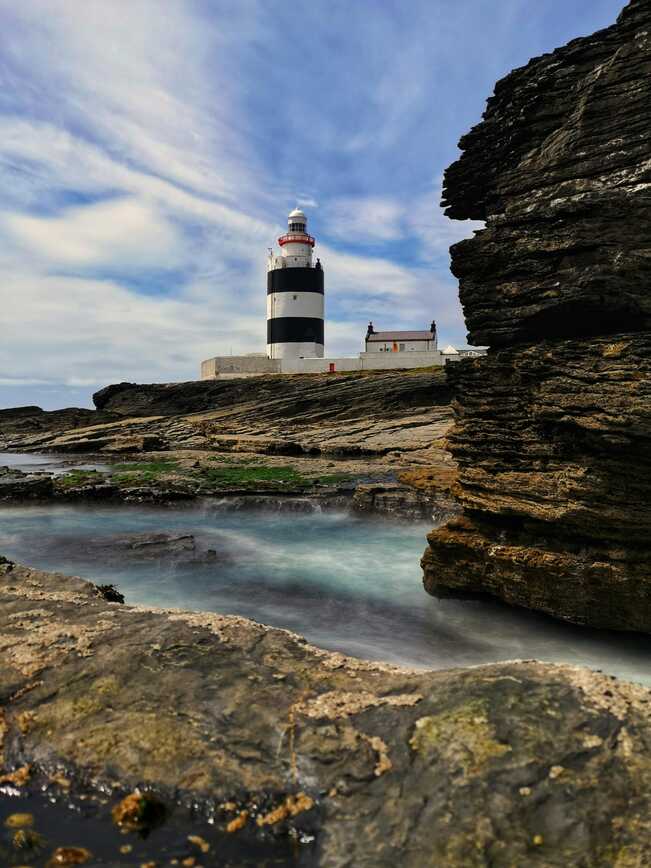
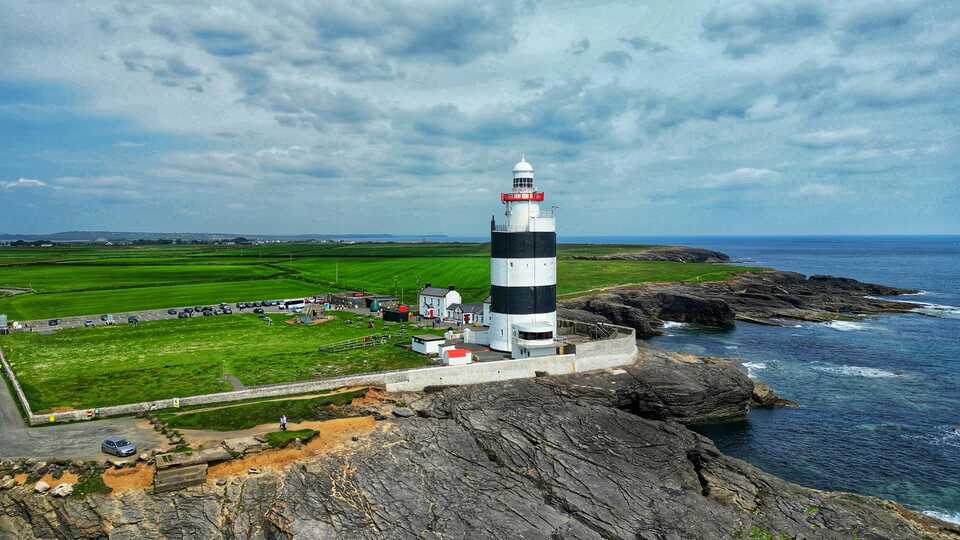
Hook Lighthouse feels like the end of a finger, stretched out into the sea. You drive the final kilometres with water appearing on both sides, fields giving way to rock and low grass, until you reach the squat, banded tower of the lighthouse itself standing on its rough platform of stone. The Atlantic works steadily at the edges here. Waves crash, curl and spray against jagged slabs, sending salt into the air even on calmer days.
Walk around the headland and you can feel the wind in your teeth, hear gulls crying above and the deep, constant thud of water meeting rock. The lighthouse buildings sit solidly among it all, a human anchor in a very elemental scene. Inside, tours and exhibits tell stories of centuries of shipwrecks, warnings and watchfulness. Outside, you can simply lean on a wall or sit on a rock and watch the sea for a while. Hook is a strong turning point in this route. It is where the sense of being on the coast becomes very immediate and physical.
Fethard feels like a quiet village that knows the sea is close without needing to shout about it. Not to be confused with its Tipperary namesake, this Fethard is a modest cluster of streets and houses in south Wexford, with fields and low roads slipping towards the shoreline nearby. The mood is gentle. You are more likely to hear the sound of a tractor than a coach party.
The charm here lies in the small scale. A local shop, a church, a pub, perhaps a few families sitting on low walls chatting in the evening. Short drives from the village take you to coves and inlets where you can walk on sand, pebbles or low grass cliffs, often with only a handful of other people in sight. It is a good place to catch your breath between more obvious attractions. Fethard reminds you that this coast is not only about big sites and long beaches. It is also about small communities that have their backs to farmland and their faces to the sea.
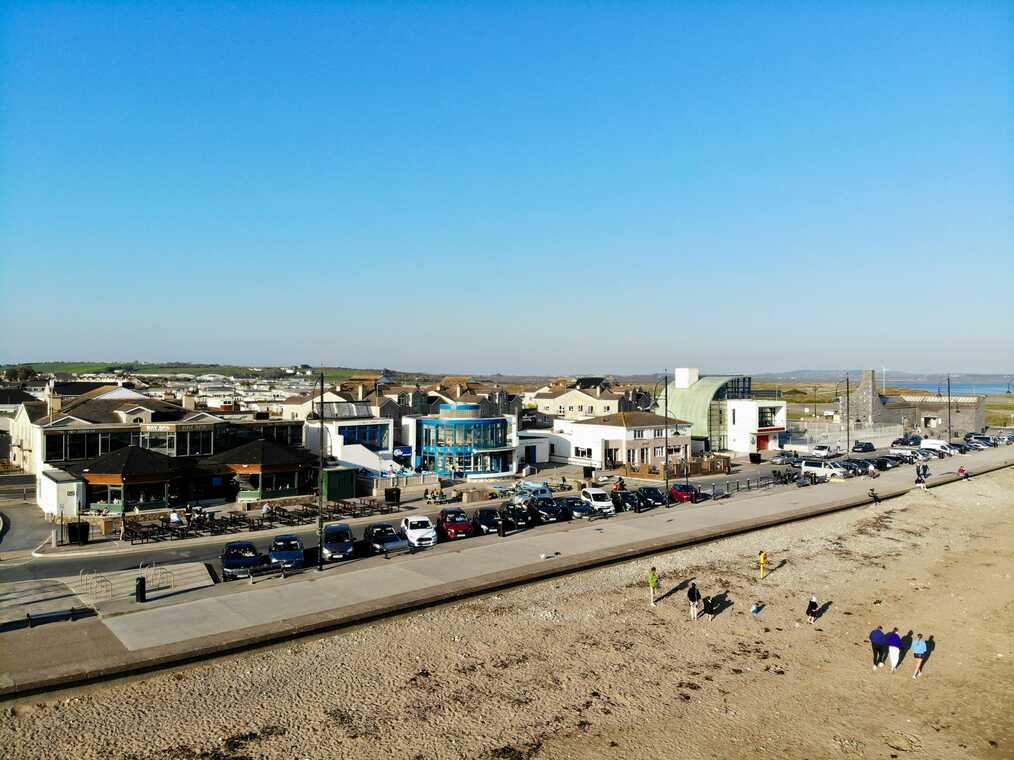
Kilmore Quay is a working harbour that looks almost like a film set when the light hits it right. Whitewashed cottages with thatched roofs line the approach to the water, giving the village a bright, clean look, while the harbour itself is packed with fishing boats, masts, ropes and metal clatter. You can smell salt, diesel and fresh fish as soon as you step out of the car.
Walk the quay and you see crews sorting gear, gutting fish, talking across decks. Seabirds hang in the air above, waiting for scraps. Out beyond the harbour mouth the Saltee Islands sit low on the horizon, a tempting speck for boat trips and bird watching. Short walks along the shore give you views back towards the village, its white cottages glowing against green fields and blue water. Kilmore Quay has that rare mix of postcard charm and real, ongoing work. It feels very alive, very tied to the sea in a practical way.
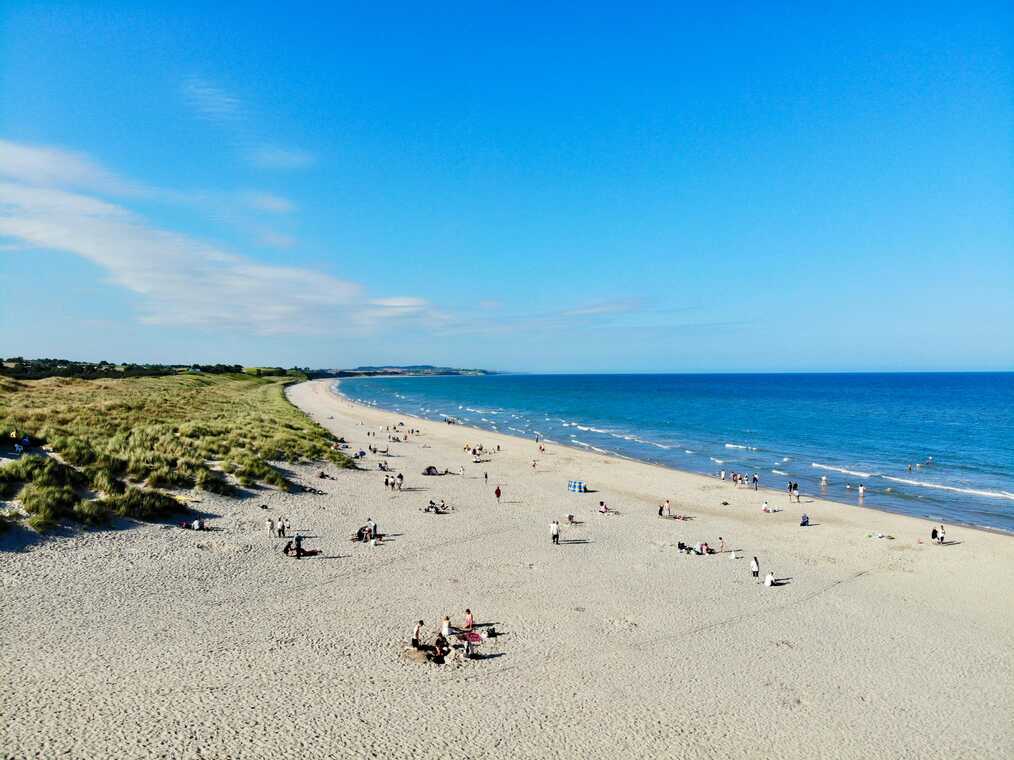
Curracloe Beach seems to go on for ever. You reach it through dunes and pine plantations, then step out onto a wide strip of pale sand that runs for kilometres along the Wexford coast. The sea is usually a steady, rolling presence rather than a roar, and the whole place feels open and relaxed. There is space here for everyone. Families, dog walkers and solitary figures all find their own stretch without crowding each other.
Behind the beach, soft dunes and wooded tracks give you shelter when the wind picks up. Underfoot, the sand is firm and easy to walk on at low tide, turning reflective and glassy as waves slide back. The horizon is a simple line of sea and sky that makes thoughts stretch out whether you mean them to or not. It is easy to see why filmmakers have used sections of this beach to stand in for more distant shores. For this route, Curracloe is the big coastal exhale, the place where you let the inland parts of the journey shake out of your legs.
Blackwater sits slightly inland on a hill, just above the coast, a small village with a strong sense of its own centre. You arrive to find a tight knot of streets and a main junction ringed with houses, shops and pubs. From the right spots you get glimpses of the sea in one direction and rolling farmland in the other. It feels like a place that serves both, equally and quietly.
A short drive from the village brings you to beaches such as Ballyconnigar, where cliffs, sand and the constant reach of the sea give you another taste of the shoreline without the scale of Curracloe. Back in Blackwater itself you can sit in a bar or café and feel the pace drop. Locals know each other. Conversations spill from doorways onto the street. It is a good spot to pause between wide open sand and the more structured river town of Enniscorthy at the end of the route.
Enniscorthy rises steeply from the River Slaney, a town built on a slope with its castle, cathedral and bridges all layered together in the view. You come in along the river and see the water curling past the quays, then look up to find stone towers and tall spires marking the skyline. Streets climb sharply away from the banks, some of them almost like ramps, lined with shops, houses and pubs that have watched a lot of history go by.
Walk along the river and the town feels spread out and relaxed. Cross a bridge and climb a little, and it tightens into older, denser streets. The castle up on its mound adds a sense of age and vantage point. From there you can look back over the Slaney valley and trace the line of the river as it moves through town and away towards the sea. Enniscorthy is a satisfying place to end this route. It has strong character, clear links to the waterways that have shaped the region, and enough life in its streets to make a last evening stroll feel full rather than forced.
This route feels like a river-led sweep through the south east that keeps swapping between inland towns and open, tidal edges. You start in Clonmel on the Suir, with hills on the horizon and a quiet, grounded town centre that still feels like a market hub. Waterford carries that river energy down to the sea, a compact city of quays, Viking streets and glassworks. New Ross puts you on the Barrow, all muddy tidal water, steep streets and memorials to departures for the New World, before you finally break free of riverbanks and head for the pure Atlantic air of Hook Head.
From Hook Lighthouse the journey is all coastal textures. Fethard and Kilmore Quay are small and human scale, their rhythms dictated by boats, weather and tides. Curracloe Beach opens into a long, pale ribbon of sand where you can walk until your thoughts stretch out as far as the shoreline. From there you drift back inland through Blackwater to Enniscorthy on the Slaney, finishing in a town perched over its river with a castle on one side and steep streets on the other. It feels like a complete circuit: three rivers, one lighthouse, a handful of villages and a very easy blend of city, shore and countryside.
In Clonmel, start gently. Walk the riverbank and watch the Suir slide past under old bridges, then cut back into town for a coffee or lunch in one of the local cafés such as Bodega Cafe which leans into fresh, local produce. If the weather is clear, use the town as a springboard for a short drive towards the Comeraghs to get a feel for the wider landscape before you turn south east. In Waterford, focus on the Viking Triangle and the quays. Explore Reginald’s Tower, wander the older streets, and dip into the museums if you want more depth, then stroll along the river to see how the city still orients itself around the water.
New Ross is about stories and viewpoints. Head for the quays, take in the emigration heritage and the replica famine ship if you want the full historical hit, then climb higher into town for wide views back over the Barrow bend. From there you are heading for the edge of the map at Hook Lighthouse, where you can tour the tower or simply do a full loop of the headland on foot, feeling the spray and watching waves explode against the rock. Later stops soften the mood. At Fethard and Kilmore Quay, wander harbours, hunt out small coves and keep an eye on the Saltee Islands sitting low offshore. Curracloe is where you kick off your shoes and walk the long beach, then Blackwater and Enniscorthy pull you back into village and town life, with Enniscorthy Castle and the riverside paths giving you a satisfying final sense of place.
Food tracks the rivers and harbours nicely on this route. In Clonmel you are spoiled for daytime options. Bakeries and cafés such as Hickeys or Bodega Cafe give you proper coffee, good bread and solid breakfasts or brunches, ideal at the very start of the trip. In Waterford, you can lean into the city’s restaurant scene along the quays and in the centre, with well regarded spots like Momo, McLeary’s or Bodega Restaurant offering everything from modern Irish cooking to Mediterranean leaning menus for an evening that feels like a treat.
Further east, eating becomes a little more coastal and casual. Around the Hook peninsula and Fethard, look for local pubs and small restaurants that specialise in whatever is coming off the boats. In Kilmore Quay, you have a choice between classic chipper style seafood at places like Saltee’s Chipper or more sit down dining at The Watermill Restaurant, with its views over the lough, and nearby Mary Barry’s Bar which is known for seafood landed from Kilmore Quay. Curracloe Beach has a couple of easy-going options right by the sand, from surfer style coffee and pizza at Coffee Break in the Surf Shack to seaside treats at The Strand Shop if you just want ice cream, chips and something hot to drink between walks. Back inland in Enniscorthy, hotel bars and town restaurants give you plenty of choice for a final dinner, whether you go for an informal pub plate or something a little smarter by the river.
You can run this route as a single drift with two or three bases, or break it into more hops if you like shorter drives. Clonmel works well as a starting base, with town guesthouses and hotels that let you explore both the Suir valley and the nearby hills before you move on. Waterford is the obvious next anchor, with a range of city hotels and B&Bs within walking distance of the river and the Viking Triangle so you can leave the car parked while you explore on foot and find dinner.
Out on the Hook peninsula and around Fethard you are into country guesthouses, small hotels and self catering places, often down quiet lanes, which suit anyone who wants dark skies and the sound of the sea at night. Kilmore Quay offers a mix of village B&Bs, holiday homes and caravan parks for a more harbour focused stay, while the Curracloe and Blackwater area has holiday parks, cottages and B&Bs near the dunes if you want to wake up within walking distance of the beach.
Enniscorthy makes a strong finish for those who like a bit of comfort. You can choose from well established hotels such as The Riverside Park Hotel on the banks of the Slaney or Treacy’s Hotel just across the bridge, as well as more characterful escapes like Wilton Castle or spa style stays at Monart a short drive away. That mix means you can end the route in whatever way suits you best, from a river view balcony and hotel pool to a quiet country house wrapped in trees.
TopStops is built to be used like a shared guidebook, not a strict itinerary.
Browse the routes to see how others have travelled an area, check the map for regularly recommended stops, and get a feel for the journey with photos, highlights, and quick info on each place. When you’re ready, follow the route yourself or adapt it to your own trip.
If you discover a spot we’ve missed, submit it. The best community suggestions get added to the map, so every route slowly improves with real travellers’ input.
Do you know somewhere we should feature in our route? Message us and we’ll get it added.