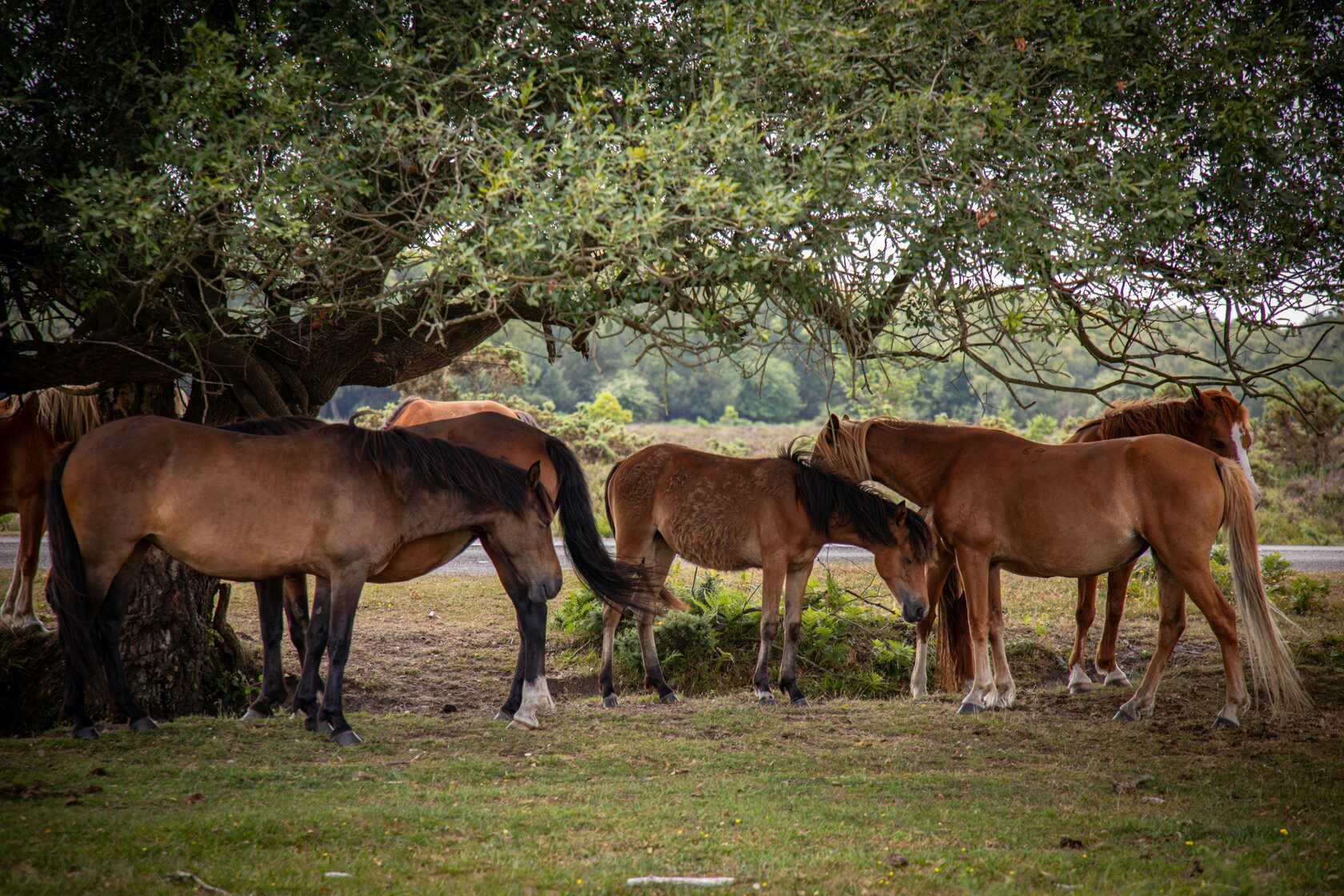










This route feels like a sideways sweep along England’s softer underbelly, where beaches, forest and old market towns all sit within a short drive of each other. You start in Bournemouth with full-on seaside energy big sands, piers and promenades then slip almost immediately into the New Forest, where ponies wander the roads and the light filters green through old woodland. A hop across to the Isle of Wight gives you a self-contained mini-escape of chalk cliffs, bays and promenades, framed by those short ferry crossings that make even a small journey feel like a proper trip.
Back on the mainland, the route turns steadily east along the edge of the South Downs and the Channel. Arundel, Pulborough and Shoreham-by-Sea each give you a different blend of river, meadow and town, before Brighton and Saltdean ramp things up again with pebbly beaches, cliffs and city-by-the-sea buzz. Then you swing inland, away from the water, into older stories: Battle’s quiet fields where 1066 really happened, and Royal Tunbridge Wells with its colonnades, commons and spa-town ease. It’s a journey of short hops and changing textures, where you never drive far, but the mood shifts often enough to keep you curious.
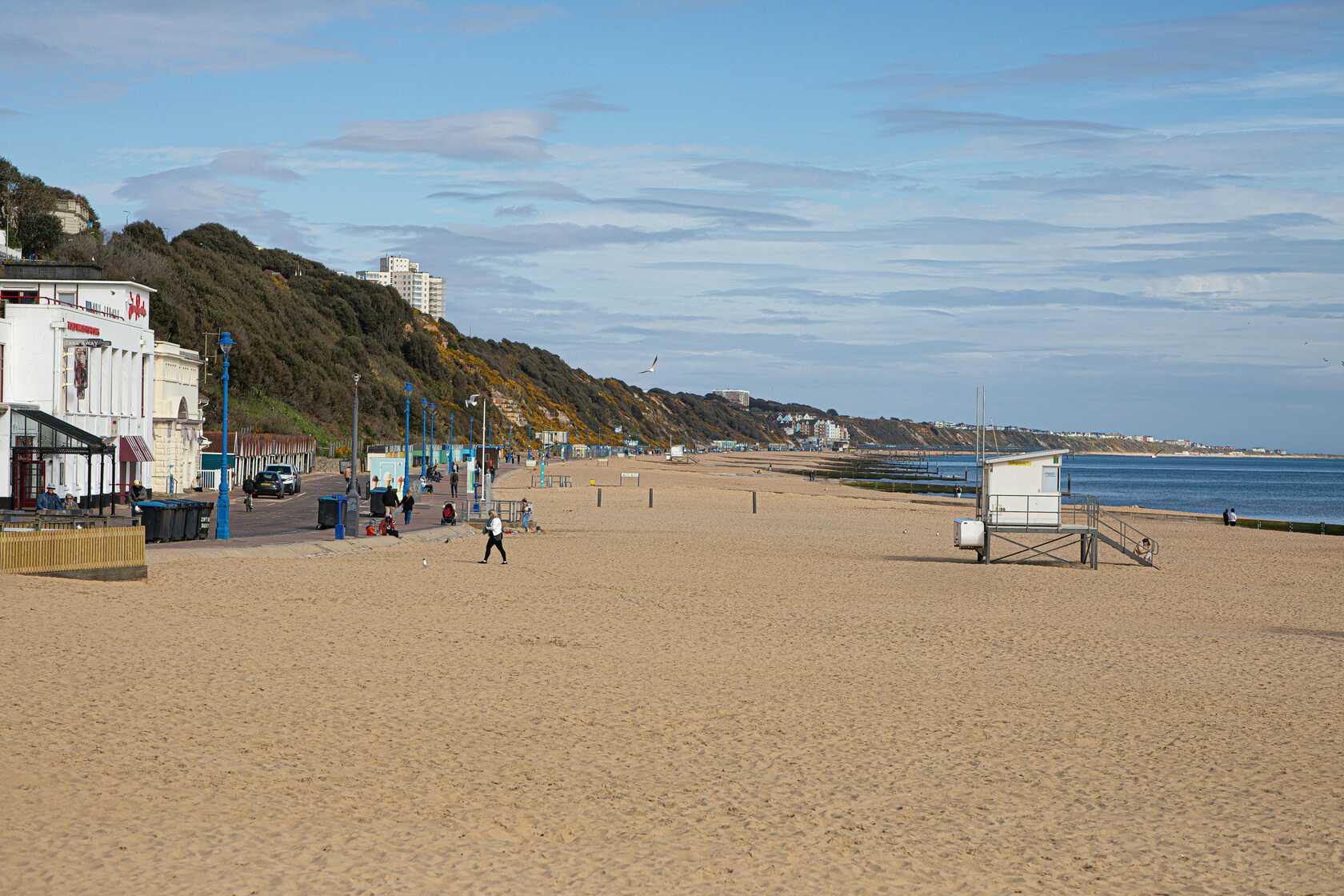
Bournemouth feels like a seaside town that grew up with a bit of swagger. You roll in through leafy suburbs and suddenly the land drops away, revealing long golden sands backed by neat beach huts and piers stretching out into the Channel. From the clifftop gardens you can look down on the curve of the bay, studded with umbrellas and windbreaks, while boats and paddleboarders dot the water. The air smells of sunscreen, coffee and chips, and there’s usually a breeze carrying gull calls up from the beach.
Take the zig-zag paths or cliff lift down and you’re in amongst it – soft sand underfoot, the pier to wander, arcades humming in the background. Behind the front, parks and gardens give you quieter paths under trees, and the town centre has a steady buzz of students, shoppers and office workers. Bournemouth makes a bright, easy starting point: big beach energy, simple pleasures, and the sense that the rest of the coast is just waiting for you to follow it east.
The New Forest feels like someone peeled back a layer of England and left an older version showing through. You leave the main roads and find yourself on unfenced lanes where ponies roam free, cropping verges and wandering across the tarmac with absolute confidence. Heathland, woodland and open glades flick past the windows patches of purple heather, stretches of gorse, sudden stands of tall beeches filtering the light green and gold.
Pull into a car park and step out and the quiet is different here: hooves thudding softly on earth, the rustle of leaves, the occasional distant motorbike on some hidden road. Villages are small clusters of pubs, tea rooms and low cottages, with greens that double as grazing. This was once a royal hunting ground; now it’s common land with a deep web of rights and traditions. As you wind through it, you’re driving in a slow weave between history, habit and a landscape that still feels pleasingly untidy and alive.
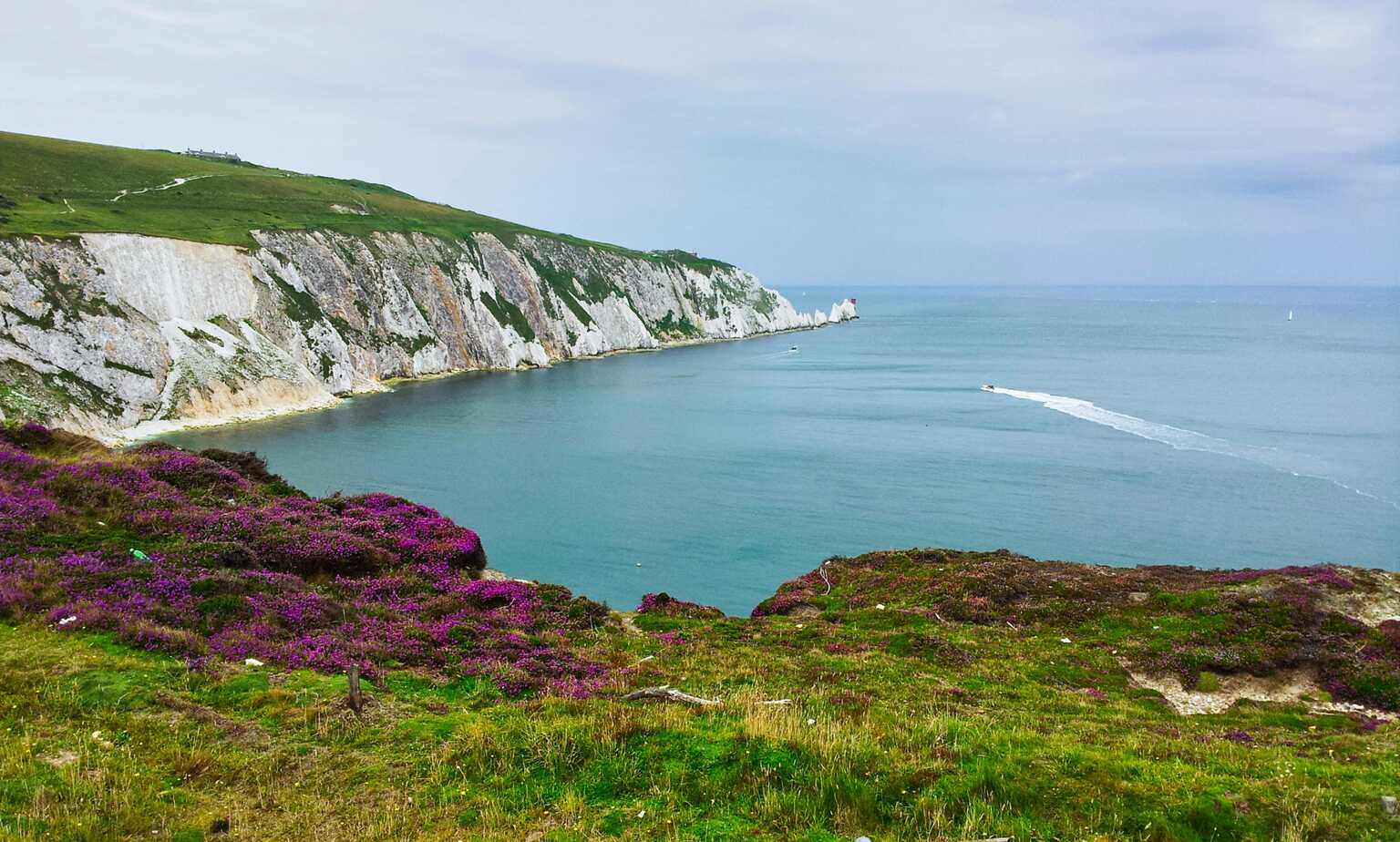
Crossing to the Isle of Wight feels like pressing a small “escape” button. You drive onto the ferry, watch the mainland slip slowly away and then nose into harbours where chalk cliffs, Victorian villas and tight-packed streets share the shoreline. Once ashore, the island reveals itself in loops of coast road and sudden views: pastel seafronts, sandy bays, sharp white cliffs at the Needles, quiet wooded lanes dropping towards hidden beaches.
You can spend a morning watching yachts in Cowes, an afternoon wandering around a thatched village or castle, and still find time for a walk along a wide, wind-brushed shore as the light dips. There’s a faintly nostalgic feel to a lot of it old pier amusements, cliff lifts, promenades lined with railings – but also a sense of somewhere that’s quietly busy with its own everyday life. On this route, the island is a self-contained chapter: familiar and slightly foreign at the same time, framed by short ferry crossings and long sea views.
Arundel rises unexpectedly from the Arun valley like a film set that never got taken down. The castle dominates everything at first glance, towers and battlements stacked above the town, with the cathedral’s spire echoing it from the opposite hillside. You park beside the river and look up to see layers of history sitting neatly against the sky.
Wander the steep streets and you find antique shops, old pubs and narrow passages that suddenly spill out into views of the castle walls. Down by the river, willows trail in the water and boats nose gently at their moorings, while beyond the town the flat water meadows stretch away, often alive with birds. Arundel has that rare mix of fairytale skyline and real, working town – not just a showpiece. It’s an easy place to lose an afternoon, drifting between riverside, town centre and the castle’s broad silhouette watching over everything.
Pulborough feels like a hinge between river, marsh and low rolling hills. You arrive to find a village threaded by roads and rail, but the real character lies just beyond, where the River Arun slides quietly through wide floodplains and the South Downs rise in a gentle wave to the south. On still days, the air is full of birdsong and the distant bleat of sheep; on wetter ones, the river spreads itself into shining, shallow lakes across the meadows.
Nearby nature reserves give you raised boardwalks and hides where you can sit and watch waders, ducks and birds of prey going about their business. From certain viewpoints, church towers and farm roofs punctuate the green, and you get that sense of a landscape that’s been lived in and worked for centuries. Pulborough is a soft, understated stop, more about big skies and quiet footpaths than grand sights, and it eases you nicely from coastal bustle into the slower, greener rhythms inland.
Shoreham-by-Sea sits where river meets sea, a town that feels half working port, half laid-back seaside. You cross the Adur and see boats of all sizes lined up along the banks yachts, fishing vessels, liveaboards with washing strung out to dry. Old warehouses and shipyards share the waterfront with cafés and studios, especially around the old harbour and the pedestrian bridge.
Head towards the seafront and the mood changes again: a long shingle beach, beach huts, and the steady wash of waves under the steady hum of the coast road. Across the river on Shoreham Beach, glass-fronted houses look straight out to sea, while behind you, the Downs rise up as a soft green backdrop. Shoreham has a quietly creative feel – murals, little galleries, a decent market layered over its more industrial roots. It’s an interesting, textured pause on your way to Brighton, with real character if you linger a little off the main drag.
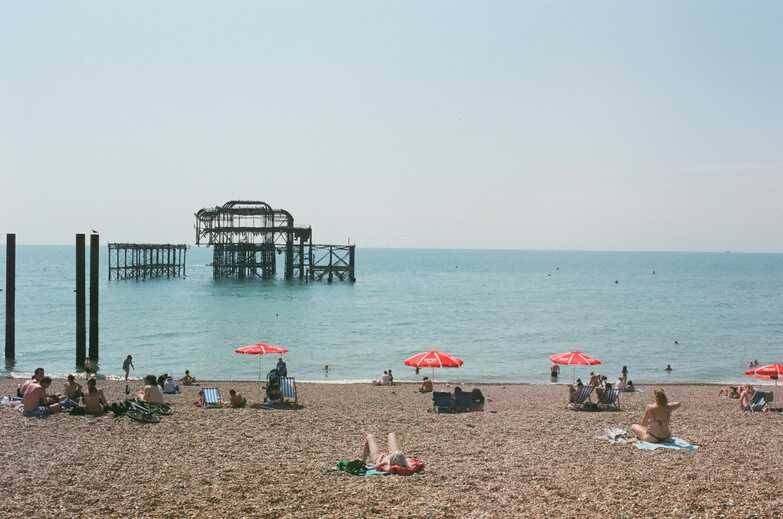
Brighton hits you with full colour almost as soon as you arrive. Terraces of townhouses in faded pastels, the sweep of the seafront, the pier bristling with lights and rides out over the water it’s all there, layered over a stony beach where people sit in clusters as if the pebbles were the most natural seats in the world. The air smells of salt, chips and sugar, and the soundtrack is a blend of gulls, buskers and the distant thump from bars.
Step back from the front and you’re in the Lanes and North Laine, a maze of narrow streets and alleys packed with independent shops, record stores, tiny cafés and pubs squeezed into every corner. Street art blooms on blank walls, and there’s almost always someone dragging a guitar, a shopping trolley or something stranger up the road. Brighton is unapologetically itself eclectic, lively, a touch chaotic. As a stop on this route, it gives you a full hit of city-by-the-sea energy before you angle back out towards quieter clifftops and countryside.
Saltdean feels like Brighton turned down to a more relaxed volume. The coast road runs above, and below it the white chalk cliffs drop to a broad curve of shingle and concrete promenades, with the lido sitting like a beautiful piece of 1930s optimism just inland. The sea wall path runs along the base of the cliffs, giving you a different perspective towering white faces streaked with flint above, the Channel stretching out in front.
Swim in the lido when it’s open, walk the undercliff path, or just sit on the beach with the chalk behind you and the endless horizon ahead. There’s a faintly retro feel to Saltdean curved balconies, clean lines, reminders of when this was a new, modern coastal suburb. It’s close enough to Brighton that you can feel the city’s pull, but distant enough that you also get the simple pleasure of waves, wind and cliff without quite so much bustle.
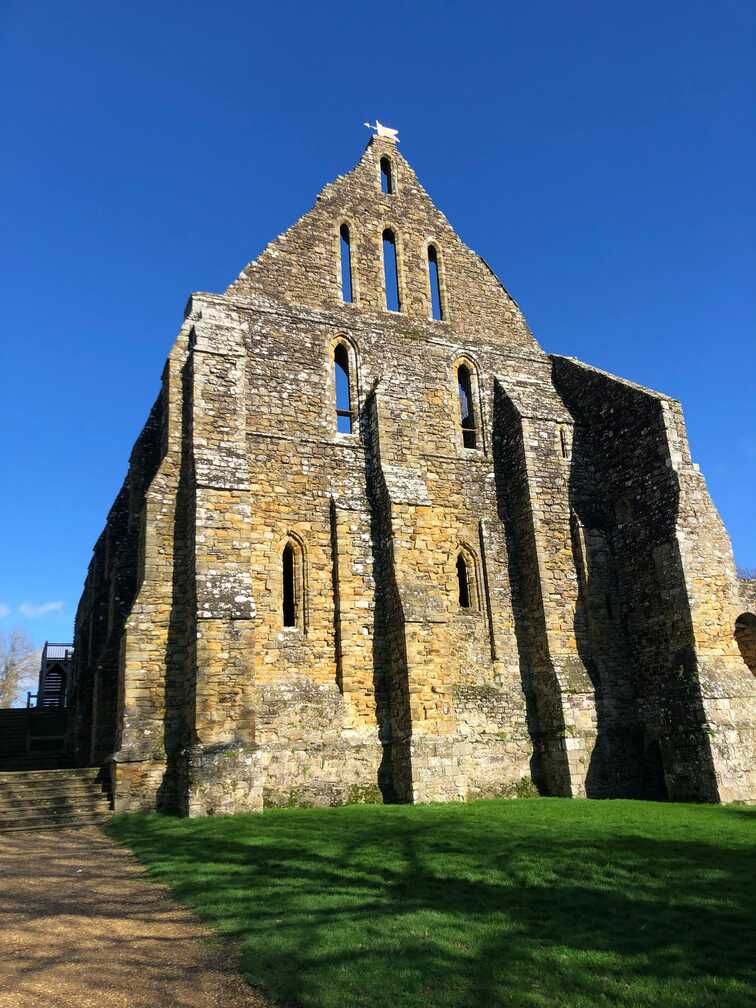
Battle looks, at first glance, like a small, handsome Sussex town with a broad high street and abbey walls running alongside. Then you remember the name and realise you’re standing right next to one of the most famous fields in English history. The ruins of Battle Abbey and the grounds beyond are where 1066 actually happened – not just a date from school, but a real slope of land where two armies met and one era tipped into another.
Walk the battlefield trail and it’s surprisingly peaceful: trees, birds, grazing animals, the gentle rise and fall of the ground giving only the faintest clue to what took place here. Back in the town, tea rooms, pubs and small shops go about their business under the quiet weight of that story. Battle is a place where everyday life and a single, enormous moment in the past sit side by side, and you can move from one to the other in just a few steps.
Royal Tunbridge Wells has the air of a spa town that never entirely stopped expecting visitors. You drive in through wooded suburbs and find yourself in streets lined with tall townhouses, colonnaded walkways and neat parks. The Pantiles, with its elegant, pillared frontage and cobbled parade, still feels like a place made for strolling, seeing and being seen even if these days it’s more about coffee, markets and music than eighteenth-century society gossip.
Beyond that, the town spreads into a mix of shopping streets, little lanes and green spaces, with the common and its rocky outcrops just a short walk away. There’s an easy, slightly genteel buzz: commuters heading for the station, families in the parks, friends meeting under hanging baskets and old brick facades. As the final stop on this route, Tunbridge Wells brings you back from beaches and battles to somewhere leafy, civilised and made for gentle evenings a fitting place to close the loop with a drink on a terrace or a slow wander along the colonnades.
This line tracks the gentler south coast from Bournemouth and the New Forest over to the Isle of Wight, then back through Arundel, the South Downs and the Sussex coast via Shoreham, Brighton, Saltdean, Battle and Tunbridge Wells. It’s a mix of sandy beaches, heath and forest, chalk cliffs and historic towns, with loads of flexibility on how long you linger in each section.
Start with beach time and seafront walking around Bournemouth, then duck into the New Forest for woodland rides, open heath and semi-wild ponies. A hop to the Isle of Wight adds cliff walks around the Needles, beaches like Freshwater and Ventnor, and quieter inland villages and downs. Back on the mainland, Arundel Castle and the wetlands are right on your route, and the Shoreham–Brighton–Saltdean stretch delivers the pier, promenade and chalk-cliff combo. Finish with 1066 history at Battle and a softer spa/shopping end around Tunbridge Wells.
There’s no shortage of food, so it’s more about picking the decent stuff. Urban Reef on Boscombe seafront is a straightforward brunch and sunset spot. On the Isle of Wight, The Garlic Farm Restaurant and the Spyglass Inn at Ventnor give you one inland food stop and one “almost in the sea” pub. Brighton is saturated with options; somewhere like The Salt Room matches the seafront setting. By the time you’re in Battle and Tunbridge Wells you’re in classic market-town pub and restaurant territory – choose by what looks busy.
Camping is simple all the way: coastal sites near Bournemouth, then forest campsites around Brockenhurst, followed by one of the bigger coastal holiday parks on the Isle of Wight. Coming back inland, places like Washington or Blacklands Farm sit neatly between Arundel, Shoreham and Brighton, with CAMC and other parks near Brighton itself and a final night at somewhere like Bedgebury Camping near Goudhurst for the Tunbridge Wells end. Hotels layer easily on top – a clifftop place in Bournemouth, Careys Manor in Brockenhurst for a New Forest spa stop, the Norfolk Arms in Arundel for a castle-side stay, and Hotel du Vin in Tunbridge Wells to finish in town.
TopStops is built to be used like a shared guidebook, not a strict itinerary.
Browse the routes to see how others have travelled an area, check the map for regularly recommended stops, and get a feel for the journey with photos, highlights, and quick info on each place. When you’re ready, follow the route yourself or adapt it to your own trip.
If you discover a spot we’ve missed, submit it. The best community suggestions get added to the map, so every route slowly improves with real travellers’ input.
Do you know somewhere we should feature in our route? Message us and we’ll get it added.