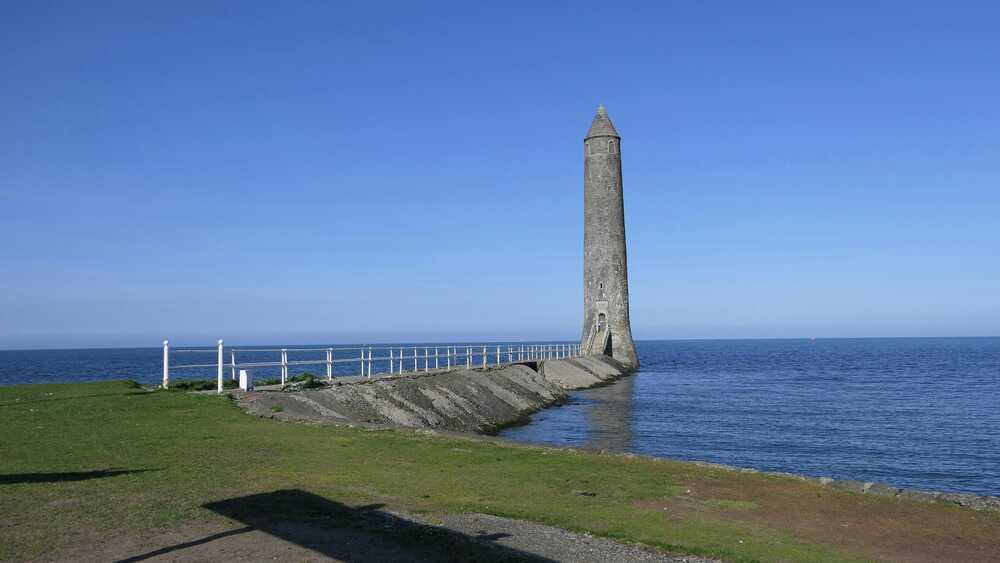










This route feels like a clean sweep up the Antrim coast and out to the very lip of the North, where Northern Ireland almost shakes hands with Donegal. You start in Carrickfergus, with its castle sitting right on the edge of Belfast Lough, then slip onto the coastal road where land and sea run side by side. Islandmagee, Glenarm and Carnlough give you that rhythm of small harbours, green glens and cliff-backed shore, each village a short pause between stretches of open water and rising hills. Then you jump out to Rathlin Island, trading car keys for a ferry ticket and swapping main roads for lighthouses, seabird noise and big Atlantic air.
From Ballycastle onwards, the whole coastline feels like it’s building to something. Bushmills layers in distillery warmth, then the Giant’s Causeway and Dunluce Castle push the drama up several notches – basalt columns under your boots, ruins clinging to a cliff edge with the Atlantic thundering below. Finally you arc west to Magilligan Point, dunes and wide sands facing straight across Lough Foyle towards Donegal. It’s a route of relatively short drives but big scenery, where castles, headlands, islands and myth all stack up along one of the most memorable stretches of coastline on the island.
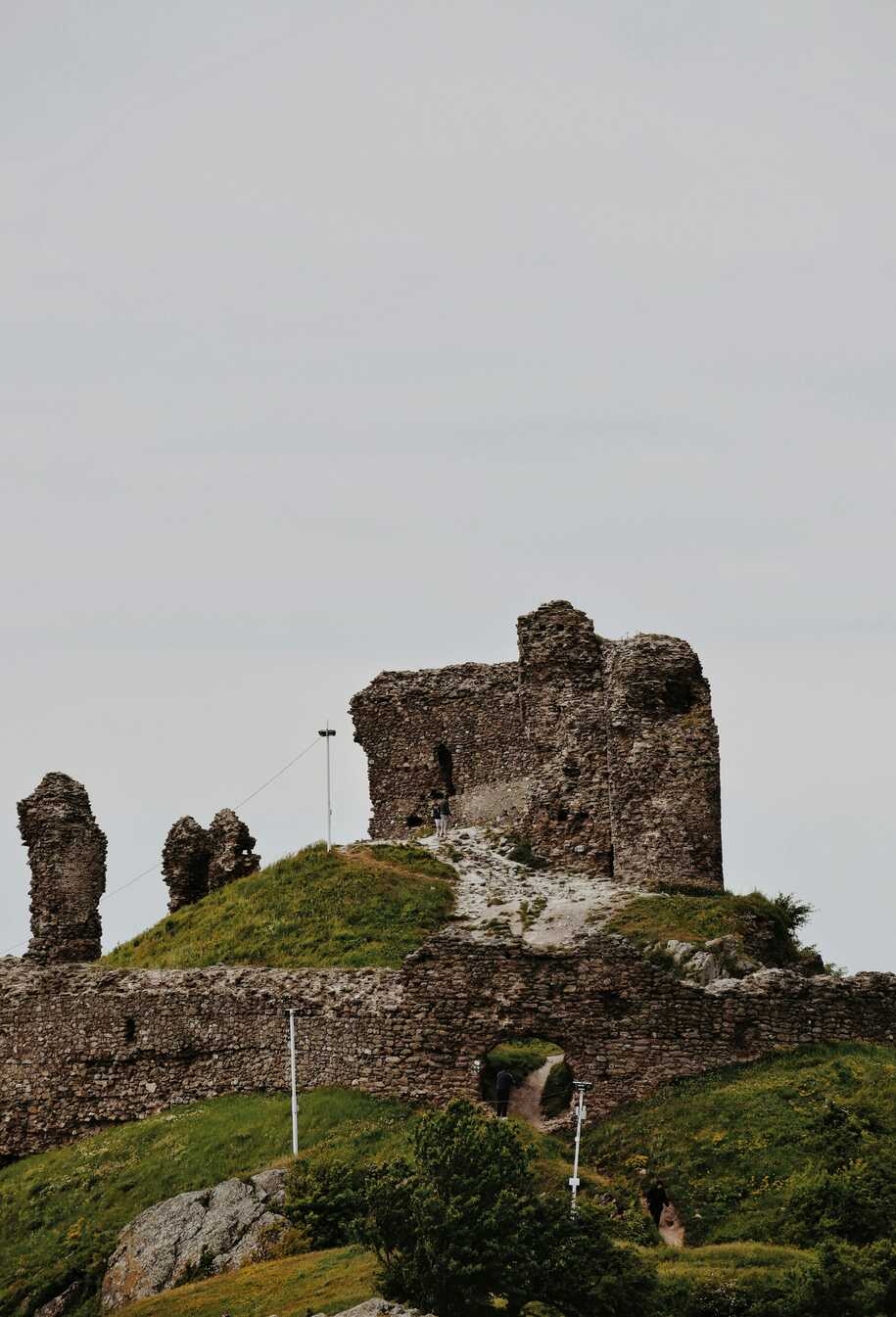
Carrickfergus feels like a town that grew up in the shadow of its castle and never quite lost sight of it. You arrive along the waterfront and there it is, squatting right on the edge of the lough thick stone walls, round towers and battlements almost dipping their toes in the water. Walk the promenade and you can circle it from different angles, watching the stone shift in colour as the light moves over Belfast Lough.
In the streets behind, everyday life carries on: shops, cafés, kids heading home from school, all with that big medieval fortress as a casual backdrop. Down at the marina the mood softens into clinking masts and the slap of hulls against pontoons. Carrickfergus is a good place to ease into this route, enough history to feel substantial, but small enough that you can see most of it on foot before you point the car up the coast.
Islandmagee is a narrow finger of land stretching between Larne Lough and the open sea, and it feels like the wind has free rein over all of it. You drive along quiet roads with water never far from view – sometimes glimpsed through gorse and stone walls, sometimes opening out in wide, glittering sheets. Farmhouses and small clusters of houses dot the landscape, but the real presence is the coastline itself.
Out on the cliffs, the air tastes of salt and spray, and the sound of waves hitting rock rolls up from far below. Whether you’re exploring one of the walks along the edge or just pausing at a lay-by to take in the view, you get that sense of being properly out on a limb. On clear days you can see Scotland’s outline hovering on the horizon, a reminder of how close these channels really are. Islandmagee feels exposed in the best way, a slightly wild prelude to the villages further up the Antrim coast.
Glenarm sits where a narrow glen finally meets the sea, a small harbour town pressed neatly between water and steep green slopes. You roll in past stone walls and trees and suddenly you’re on a short main street with a curve of quay just beyond, boats resting quietly against the harbour wall. The castle and its estate hide behind high walls and old trees, lending the village a slightly grand, sheltered air.
Walk down to the harbour and you can watch the rhythm of local boats coming and going, gulls arguing over scraps and the sea breathing in and out of the entrance. Turn inland and the glen draws your eye, a shaded valley that feels like it runs all the way into the hills. Glenarm isn’t loud about itself; it’s a calm, lived-in stop where you can stretch your legs, grab something to eat and feel like you’ve dipped a toe into both coast and glen at once.
Carnlough curves gently around its little harbour, stone houses and terraces looking straight out over the water. You drive in along the coast road, the sea on one side and cliffs on the other, and then everything narrows into a snug cluster of streets around the quay. Old stone steps and archways lead down to the harbour wall, where fishing boats and small pleasure craft rock in the swell.
There’s a nostalgic feel here – sturdy bridges, an old hotel frontage, the sense of a place that’s seen plenty of traffic over the years but never outgrown its scale. Mountains rise quietly behind, their slopes folding back into the glens, while the sea in front stretches out towards the Mull of Kintyre on clear days. Carnlough is one of those villages that rewards a slow wander, a coffee by the harbour and a few minutes just watching the light change on the water.
Rathlin Island feels like stepping sideways into a quieter rhythm. You leave the car behind in Ballycastle, take the boat across, and watch the mainland shrink as the island’s low, undulating form grows ahead. Once ashore, the pace drops immediately: narrow roads, scattered houses, and long views over fields where sheep graze above steep cliffs.
Head out towards one of the lighthouses and the drama ramps up. Sheer drops, stacks, and in season, huge gatherings of seabirds crowded onto ledges, their calls and wingbeats filling the air. On still days, the sea can look almost oily-smooth far below; on rough ones, you feel the Atlantic flexing its muscles against the rock. Rathlin has stories layered into it donning wrecks, legends, kings in caves but mostly it offers space: big skies, clean air and the feeling of being surrounded by sea in every direction.
Ballycastle feels like a natural hinge on the north coast, a town that looks both inland to glens and outwards to islands and headlands. You arrive to find a broad seafront, beach and harbour framed by wooded hills and the imposing bulk of Fair Head off to one side. The harbour is busy without being frantic. Fishing boats, the Rathlin ferry, people wandering the pier with ice creams in hand.
The town centre rises just behind, a mix of shopfronts, pubs and cafés that give you plenty of reasons to pause. On good days, the view out over the water takes in Rathlin and, beyond it, the faint line of Scotland. On wilder days, waves slam into the harbour walls and the wind charges straight up the bay. Ballycastle works as both base and brief stopover a place where you can refuel, sleep, or simply stand on the front and decide which direction to chase the horizon next.
Bushmills is a small town with a big name, thanks to the whiskey that’s been flowing from here for centuries. Drive in and you’ll see the distillery’s white buildings and pagoda roofs sitting confidently beside the river, the smell of malted barley sometimes hanging in the air. Tours and tastings are easy to find if that’s your thing, but even if you’re just passing through, the place has a distinct, quietly industrious character.
The streets themselves are modest – stone and render, shopfronts and pubs with the river cutting a neat line at the edge. Bushmills also works as a gateway: Giant’s Causeway and Dunluce Castle are both just a short hop away, making this a convenient little hub where you can sleep, eat and sip something warming after a day on the cliffs. It feels like a town that knows exactly what it’s about, without feeling like a theme park.
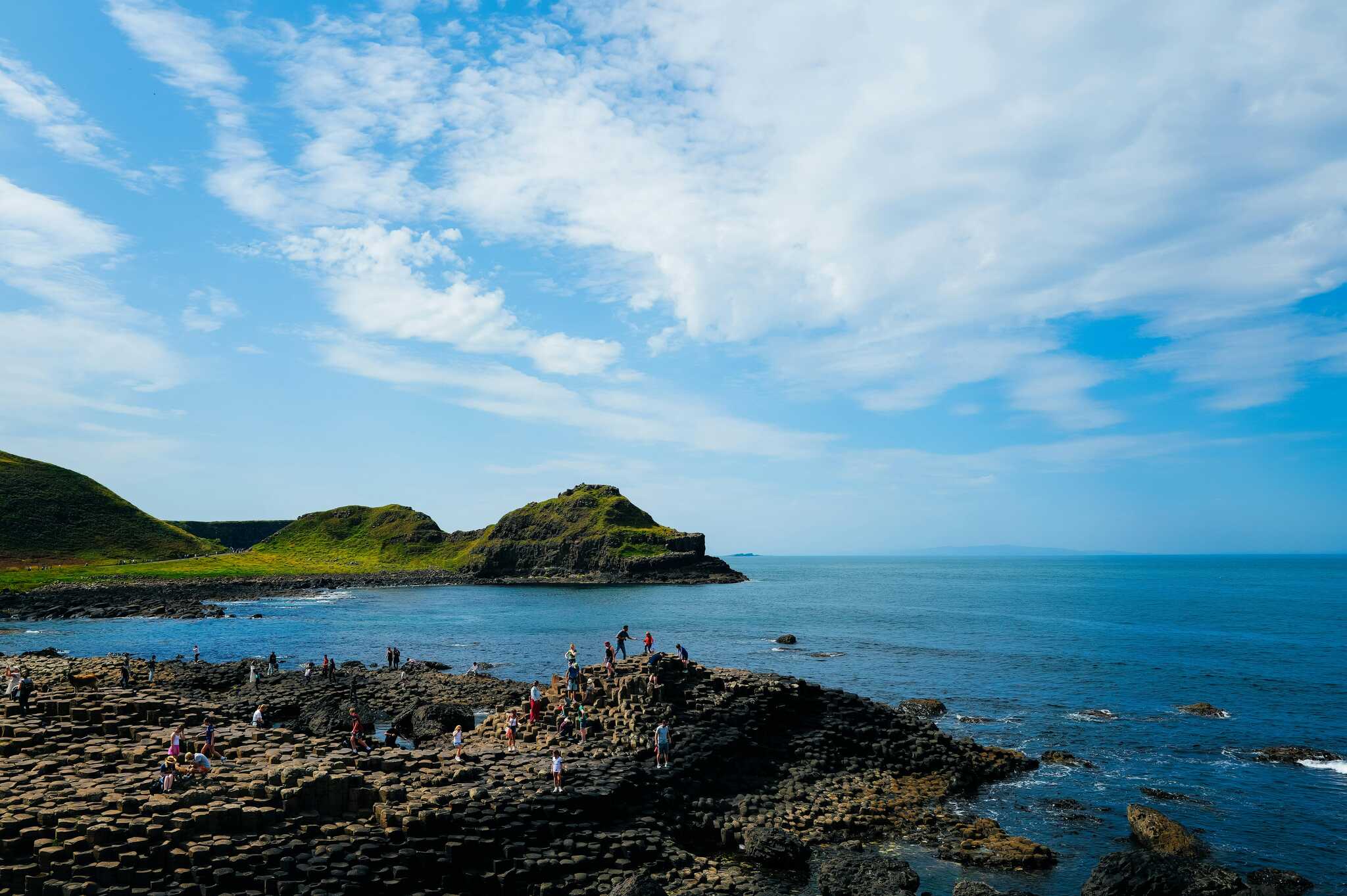
The Giant’s Causeway is one of those places that lives up to the photos. You walk down from the visitor centre and the coastline rises around you, cliffs and headlands folding towards the sea, until the basalt columns appear at your feet – thousands of hexagonal stones stacking and stepping into the water like some vast, half-finished staircase. On dry days, they ring under your boots; on wet ones, they gleam dark and slick, reflecting pieces of sky.
Stand out near the waterline and you can feel the Atlantic breathing against the rock, waves surging and pulling back through the gap-toothed edge of the formation. Look up and the cliffs loom, green and brown and scored with darker bands of lava. You can take it as pure geology or lean into the stories of Finn McCool building bridges to Scotland; either way, it’s hard not to feel a bit awed by the scale of it all.
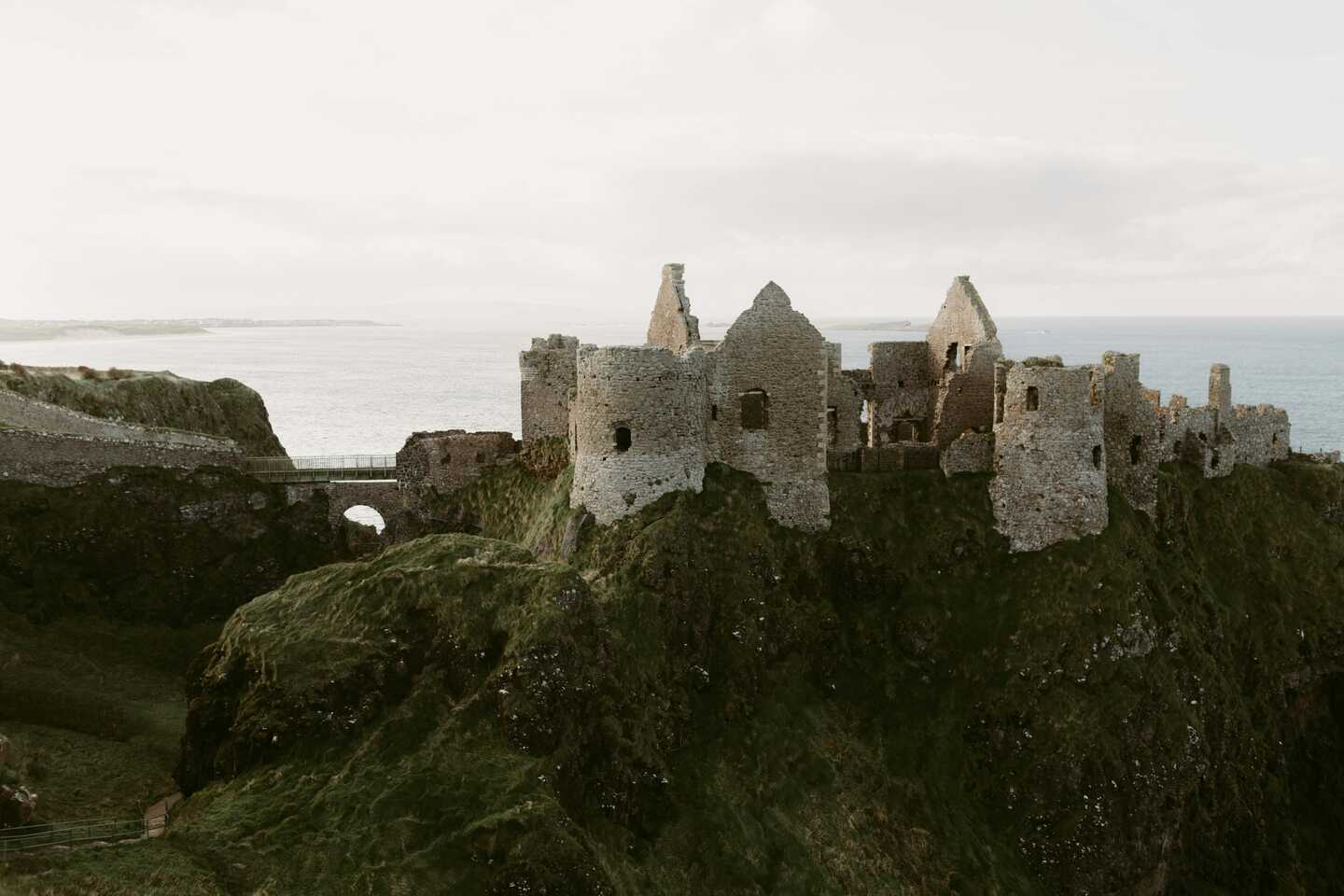
Dunluce Castle seems to cling to its headland by sheer willpower. You approach along the coast road and suddenly there it is, a broken crown of stone perched on a sheer rock outcrop, the sea gnawing at the cliffs below. A narrow bridge links the mainland to the ruins, and crossing it, with waves thudding in hidden caves beneath you, feels like stepping into someone else’s story.
Inside the walls, rooms and courtyards open onto sudden, dizzying views of water and rock. Bits of the castle have already fallen into the sea over the centuries, adding to its slightly haunted reputation, and the wind whistles through empty windows with plenty of space for ghost tales. On a clear day the light is almost too bright on the waves; on a grey one, the whole place feels like it’s suspended between cloud and foam. Dunluce is ruin as pure atmosphere – dramatic, precarious and unforgettable.
Magilligan Point feels like the end of a chapter. You drive out past wide, flat dunes and military ranges to a point where the land finally runs out in a spit of sand and stone at the mouth of Lough Foyle. A small ferry shuttles back and forth to Greencastle in Donegal, linking two counties across the water, while a stout Martello tower stands watch nearby, a leftover from older worries about invasion.
The beach stretches away in a long, pale curve, backed by dunes and big sky. On clear days, you can see straight across to the hills of Inishowen, their shapes shifting with the light. The wind often has real force here, pushing waves into fast, foaming lines along the shore. It’s a place of movement - tides, ferries, migrating birds but also of simple stillness if you park up, step out and just stand for a while at the edge of the lough, looking across to the next part of Ireland waiting on the far side.
This route hugs one of the most dramatic shorelines in Ireland from Carrickfergus up past Islandmagee, Glenarm and Carnlough, then on to Ballycastle, Rathlin Island, Bushmills and the Giant’s Causeway, finishing at Magilligan Point. You get a constant mix of sea cliffs, small harbours, glens cutting inland and big Atlantic views, with very little dead mileage. It works well as a slow coastal crawl where you stop often, walk a bit, then roll on to the next viewpoint.
Start with a quick explore of Carrickfergus Castle and the harbour before heading round Islandmagee for sea views and cliff top stops at places like the Gobbins path area if you want something more involved. The coastal villages of Glenarm and Carnlough are easy coffee and photo breaks, with short walks along the front or up into the glens. Around Ballycastle you can either spend time on the beach and headlands or take the ferry to Rathlin Island for seabirds, lighthouse walks and a much quieter feel.
From there the route turns into pure postcard territory. The Giant’s Causeway gives you the basalt columns and a full visitor centre if you want the full story. Dunluce Castle is an easy add on, with ruined walls perched on a headland above the sea. At the far end Magilligan Point gives you a final wide open beach with mountain views across Lough Foyle.
You can graze your way along this coast. Carrickfergus and Larne look after early food stops, with harbour side pubs and cafés. In the middle section small cafés and inns in Glenarm, Carnlough and Cushendall work well for lunches without going off route. Ballycastle has enough choice for a decent evening meal or two, including places along the seafront that work well after a day on Rathlin. Near Bushmills you have distillery dining options and several pubs and restaurants in the village, so it is a solid base for dinner after the Causeway. Portstewart, Portrush and Coleraine are close enough to pick up more mainstream bars, bakeries and chip shops if you want something livelier.
Camping and park ups are easy to thread along the line. There are coastal holiday parks and small sites between Carrickfergus and Larne, simple touring parks around Glenarm and Carnlough, and a good spread of caravan sites near Ballycastle and along the Causeway Coast towards Bushmills and Portrush. Magilligan and Benone round things off with large beachside sites that sit right on your exit point.
If you prefer a bed, you can treat Ballycastle or Bushmills as multi night bases and day trip from there. Seafront guesthouses in Ballycastle and Portstewart give you easy evening walks, while traditional inns in Glenarm, Cushendall or Portballintrae work well if you prefer shorter hops and a different village each night.
TopStops is built to be used like a shared guidebook, not a strict itinerary.
Browse the routes to see how others have travelled an area, check the map for regularly recommended stops, and get a feel for the journey with photos, highlights, and quick info on each place. When you’re ready, follow the route yourself or adapt it to your own trip.
If you discover a spot we’ve missed, submit it. The best community suggestions get added to the map, so every route slowly improves with real travellers’ input.
Do you know somewhere we should feature in our route? Message us and we’ll get it added.