









This route feels like walking your fingers slowly along the hem of Cornwall, stitch by stitch. You start in Looe and Polperro, where rivers squeeze into tiny harbours and cottages huddle close, then drift west through Fowey and Mevagissey’s working quays, all ropes, nets and narrow lanes. St Austell and Truro give you brief inland pauses clay hills and cathedral spires – before you slip back out to the softer folds of the Roseland, Restronguet’s quiet creeks and Falmouth’s big, busy harbour. The coast path is never far away, always promising another view of inlets, headlands and open water.
Further on, the cliffs sharpen. Mullion and Kynance Cove bring that wild Lizard drama serpentine rock, white sand, impossible-blue sea before you swing into the wide cradle of Mount’s Bay. Marazion, Penzance, St Michael’s Mount and Mousehole add their mix of harbours, causeways and storybook streets, and then the landscape strips back to raw edges: Minack’s cliffside stage, Sennen’s clean surf bay and, finally, Land’s End. By the time you get there, it doesn’t feel like a single tick-box stop, but the natural full stop to a whole chain of coves, creeks and small harbours you’ve collected along the way.
Looe wraps itself around its river like it never quite decided whether it wanted to be a harbour or a high street, so it became both. You roll in and follow the water, houses stacked up the hillsides, fishing boats resting against the quays and narrow streets threading between old pubs and pasty shops. The tide runs fast here, pulling the river taut as it pushes in and out, reflections of coloured fronts rippling on the surface.
Cross the bridge and wander the lanes of East Looe, where alleyways slip suddenly down to the beach and old lime-washed cottages lean towards each other. Gulls patrol the rooftops, the air smells of salt and vinegar, and somewhere a radio plays in an open window. This is very much a working town as well as a holiday one, and that mix gives it life: kids crabbing off the harbour wall, sailors sorting ropes, visitors queuing for ice cream as the evening light settles over the water.
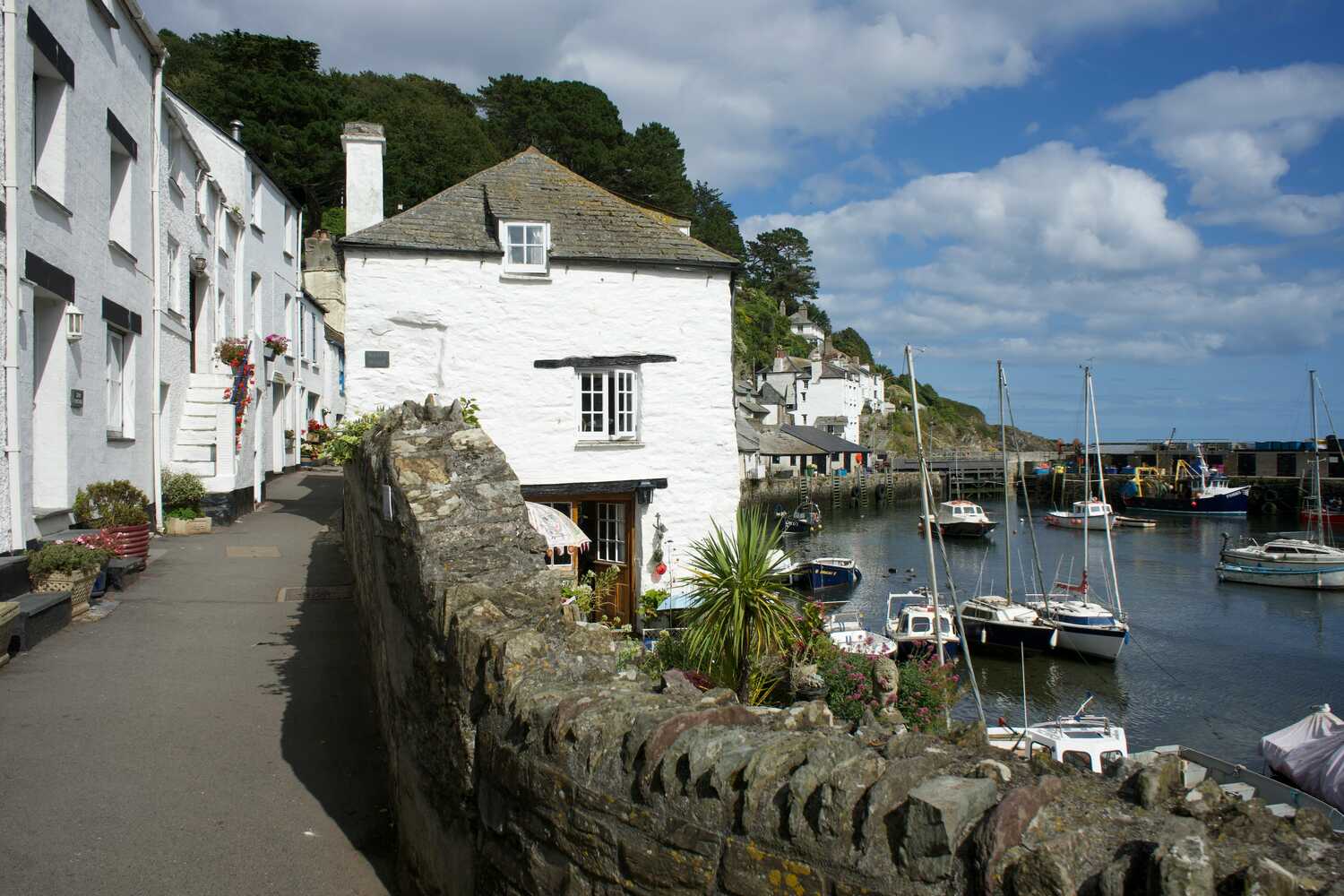
Polperro feels like it’s been poured carefully into a narrow valley and left to set. You park above the village and walk down on foot, the road curling between high whitewashed cottages and flowered window boxes until the valley suddenly opens into a tiny, perfect harbour. Fishing boats sit snug behind stout walls, nets and pots piled in useful heaps, and the sound of water echoes off cliffs on either side.
At the seaward end, Polperro Beach is a pocket of sand and shingle tucked under dark rock. When the tide’s out you can clamber among pools and boulders; when it’s in, the waves slap right up to the harbour mouth. Smuggling stories cling to this place – secret routes through caves, barrels landed by moonlight and as you look back at the huddled houses you can easily imagine flickers of lanterns on stormy nights. It’s an intimate, sheltered stop, best savoured slowly with bare feet, sea air and something hot in your hands.
Fowey feels like a town that has always had its eye on the water. Steep streets drop from the top road down to a deep, sheltered estuary where yachts, fishing boats and ferries all share the tide. You wander along the narrow main street, brushed by delivery vans that somehow squeeze through, passing old inns, little shops and doorways that seem only a few strides from the quays.
Down on the waterfront, you can hear the clink of rigging and the soft slap of the river against stone steps. Ferries buzz back and forth to Polruan, and further out, larger ships sometimes lie at anchor, loading china clay just as they have for decades. The wooded hillsides on both sides of the estuary give everything a tucked-away, storybook feel no wonder writers have been drawn here. You may sit with a drink at a harbourside table or take a short boat trip, watching the town rise in layers behind you as the estuary widens and rolls away to the sea.
Mevagissey is all about its harbour. You drop into town on a steep, twisty road and suddenly find yourself at the edge of a double harbour, inner and outer walls cradling boats that bob in whatever space the tide allows. Fishing gear lies in bright tangles ropes, buoys, nets and the air is thick with the mingled smells of salt, diesel and fried fish.
Walk out along the harbour wall and the town rearranges itself behind you into a jumble of slate roofs and painted fronts, stacked up the hillside. Ahead, the sea opens out in a wide arc, the line between blue water and blue sky sometimes barely there. Waves slap and suck at the stone below your feet, and gulls loaf on the wall’s edge, eyeing any dropped chips. It’s an easy place to lose track of time: just you, a shifting sky, and the feeling of standing between the tight shelter of the harbour and the open pull of the Channel.
Tucked just back from the harbour, a place like 4 Coastguard Station Mall feels like a small anchor in the middle of Mevagissey’s maze. Narrow lanes twist around it, steps climbing unexpectedly between houses, glimpses of water flashing between gaps in the rooftops. From a doorway or small window here, you’re close enough to hear the harbour without seeing it the thud of boots on the quay, the low murmur of voices, the creak of boats settling as the tide drops.
It’s the sort of bolthole that makes this fishing village feel lived-in rather than just visited. Washing lines zigzag overhead, flowerpots cluster on windowsills, and you sense how generations have ducked in and out of these alleys on their way to boats, pubs and shops. As a base or brief stop, it puts you right inside the pattern of the place: a few steps to the harbour wall, a few more to the clifftop path, and always that faint salt tang in the air.
St Austell sits a little back from the sea, a proper Cornish town with its roots sunk in china clay rather than beaches and harbours. You roll through streets that feel more workaday than picture-postcard shops, schools, terraces with white clay tips rising like strange, pale hills on the horizon, reminders of the industry that shaped this whole area.
It’s not a glossy stop, but that’s part of its role in your route. St Austell is where you might stock up on supplies, find a supermarket or garage, and feel the weight of real local life humming along behind the tourist flow. From here, lanes spool off towards fishing villages and gardens, coasts and coves, but the town itself is a useful pause: a chance to reset your bearings, grab a coffee among locals going about their day, and remember that Cornwall is more than just its beaches.
Once you cross towards the Roseland, everything seems to soften. Lanes narrow under leafy tunnels, high hedgebanks shelter little farms and hamlets, and glimpses of creeks and open sea flash between trees. Villages gather around small squares and churches, with whitewashed walls, slate roofs and often a pub that feels like the heart of things.
You might park near a slipway and watch small boats potter in and out with the tide, or climb onto the coast path to see how the headlands step out into the Channel in a series of green and gold fingers. This stretch of coast feels gentler than the wilder north: more folded, more intimate, full of tucked-away beaches and sheltered inlets. It’s a place to slow right down, let conversations stretch, and watch the light change over water that is almost always somewhere in sight.
Driving into Truro, you see the cathedral spires lift above the rooftops before you notice much else. For a relatively small city, the cathedral has a striking presence three towers of pale stone rising above streets of shops and townhouses, like a fragment of a much bigger metropolis set down in Cornwall.
Park up and walk towards it and the everyday sounds of Truro buses, market chatter, deliveries slide into the background as the building fills your view. Inside, the hush is thick and cool, coloured light sliding down from stained glass windows onto flagstones worn by a century of footsteps. Step back outside and you’re straight into narrow streets, independent shops, cafés and the flow of local life. On this route, Truro is a brief urban interlude: a chance to look up, let your eyes follow the lines of buttresses and towers, and then slip back to the car with the echo of bells still in your ears.
Restronguet Creek feels like the sea exhaling inland. You follow small lanes that become ever more tentative, hedges brushing your mirrors, until suddenly the trees open and there it is: a long, calm finger of water reaching back from the Carrick Roads, fringed by woodland and old stone walls dropping straight into the tide.
Boats lie at their moorings, some afloat, some settled on the mud when the water pulls away. The sounds are small and precise a halyard tapping, a curlew calling, the soft suck of water at the shore. This is one of those places where time seems to thin out. You walk a short stretch of footpath, maybe stop at a pub perched absurdly close to the creek, and just watch the tide turn. The wider world feels a long way off, even though it really isn’t.
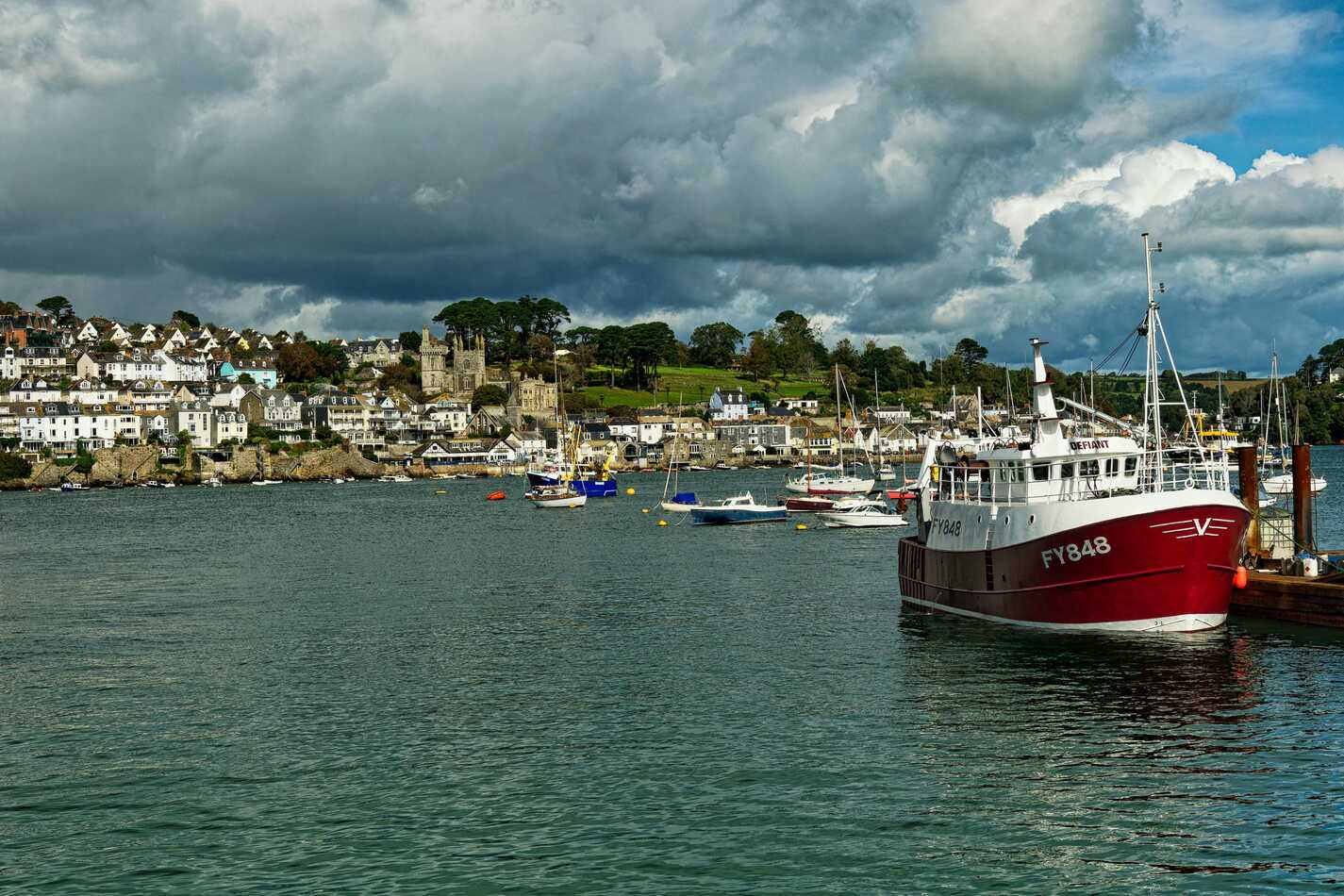
Falmouth spreads itself along one of the world’s great natural harbours, and you feel that as soon as you arrive. Streets slope down towards the water, a long run of quays, piers and pontoons sprouting boats of every size fishing vessels, ferries, tall ships, yachts from far-off places. The air smells of salt, coffee, engine oil and sometimes fresh paint from a boatyard job being finished in the open.
You wander the town’s spine of shops, bars and galleries, ducking down side alleys that spill you onto the waterfront. Ferries nip back and forth to St Mawes and across the estuary, their white wakes sketching quick lines on the deep, sheltered water. Students, sailors, families and locals all weave around each other, giving Falmouth a lively, slightly bohemian feel. It’s a port that looks outwards, and as you stand on a quay watching the light slide across the harbour, you can feel that pull towards elsewhere even as this stop gives you everything you need right here.
Mullion Cove feels like a pocket of shelter carved out of a stubborn stretch of coast. You wind down a steep road to find a tiny harbour clamped between high, dark cliffs, stout stone walls shouldering the worst of the Atlantic. Old net lofts and cottages watch from the slope above, and on rough days you can see spray flinging itself over the outer wall in bursts of white.
At low tide, the harbour floor shows its scars and secrets rock, weed, old mooring rings and you can pick your way out onto the walls to peer down into clear, green water. The air smells strongly of salt, seaweed and damp stone. Beyond the entrance, jagged rocks break the surface, a reminder of why this refuge was needed in the first place. It’s an atmospheric little stop: dramatic, compact and very Cornish, where the sea feels close and powerful on all sides.
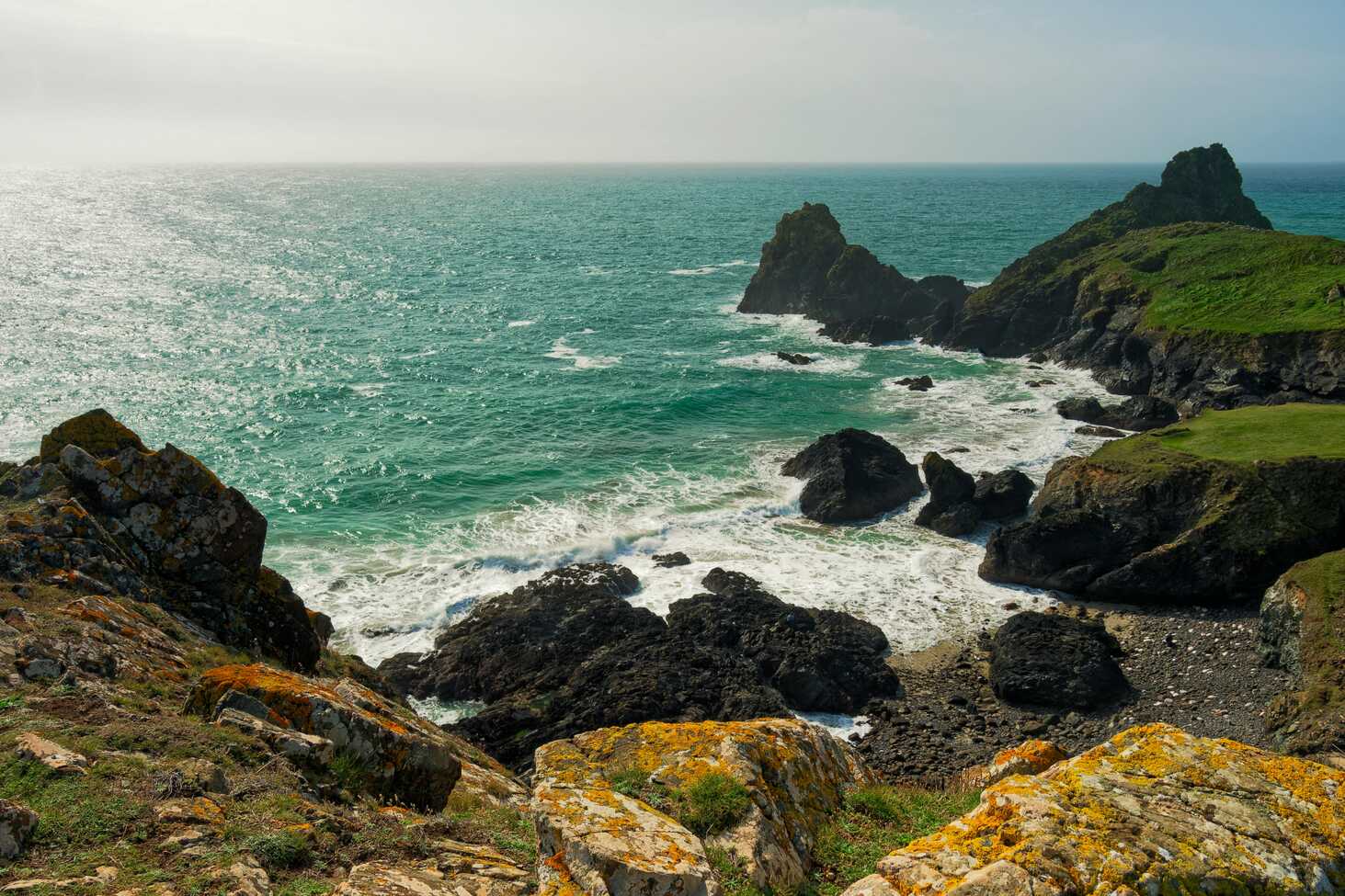
Kynance Cove is the sort of place that makes you question your own photographs. You park on the high ground and walk down towards what, on a good day, looks like an almost impossibly vivid postcard white sand, turquoise water, and dark, twisted stacks of serpentine rock rising straight from the shallows. At low tide, the beach opens into a maze of pools, caves and channels; at high tide, the sea rushes right up to the cliffs with barely any sand left.
The path down is part of the experience, views widening with each turn as the cove slowly reveals itself. The water here can be crystal clear, with waves folding over themselves in smooth, glassy curls. It’s popular, yes, but there’s enough drama in the landscape that you can still find your own angles, whether that’s a quiet perch on the cliffs or bare feet in wet sand as foam swirls around your ankles. Kynance is a highlight on any Cornish route, the kind of stop that embeds itself in your memory of the whole trip.
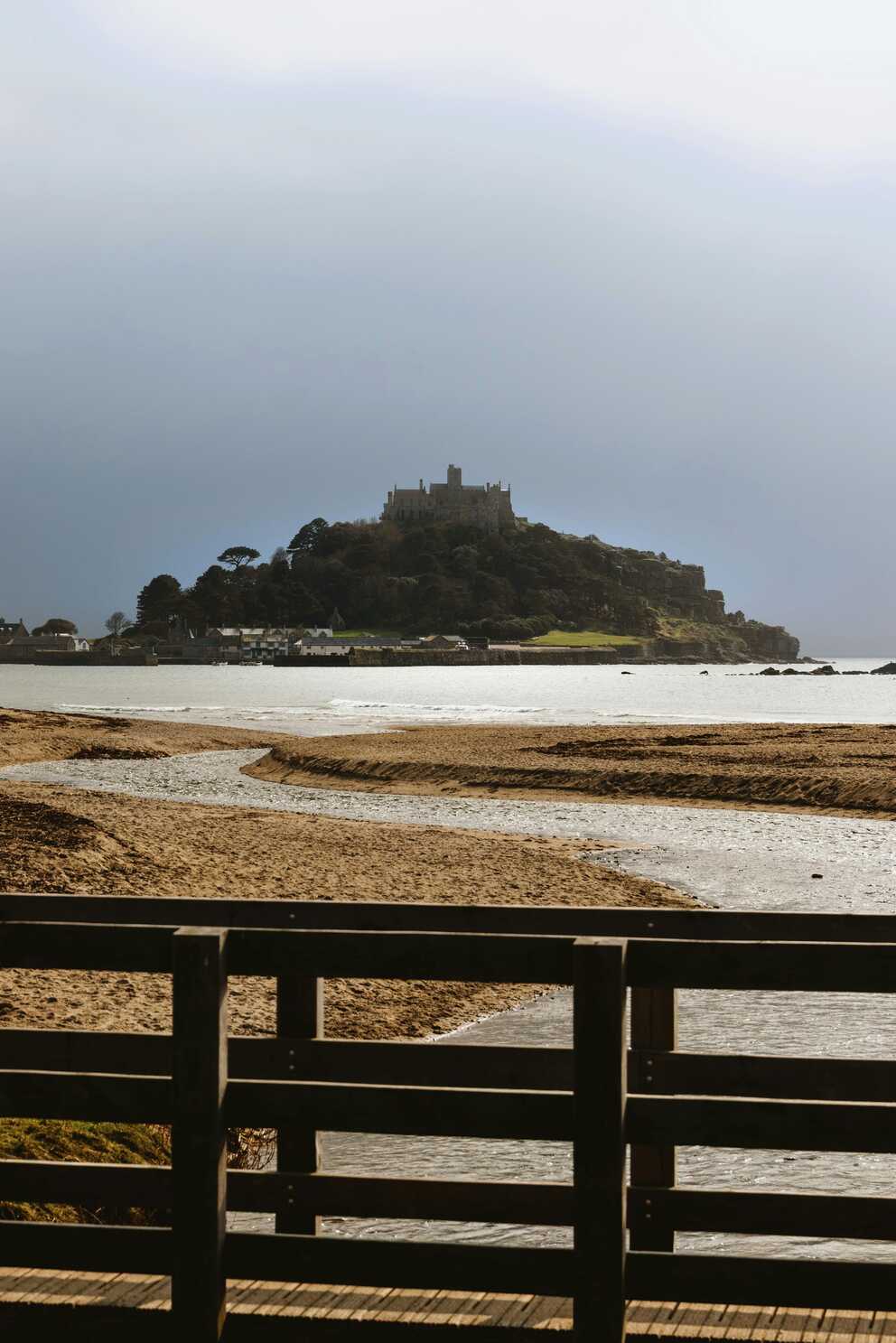
Marazion spreads out along a curve of sand with one of the most famous views in Cornwall right in front of it. You park on the seafront and there it is: St Michael’s Mount rising from the bay, a rocky island crowned with castle and gardens, its causeway snaking back to the shore when the tide allows. The town itself is modest galleries, cafés, old cottages but everything seems to orient towards that island.
Walk the beach and you’ll see the Mount shift slowly as the light changes, reflections rippling in wet sand, small boats bobbing in its shadow when the tide is in. When the sea pulls back, people pick their way across the cobbled causeway, shoes in hand, chatter carried on the wind. Marazion is both gateway and place in its own right: somewhere to sit on a low wall with chips, watch kite-surfers scud across the bay and feel the steady push and pull of the tide deciding when the island is reachable.
Penzance has the feel of a town that’s seen a lot come and go and decided to get on with things anyway. You approach along a sweeping promenade that faces Mount’s Bay, palm trees nodding in the salty air, the open-air lido gleaming on the seafront like a 1930s postcard brought to life. Behind, the streets climb in a grid of terraces, quirky shops, galleries and pubs stitched together in a way that feels both faintly bohemian and quietly practical.
Down by the harbour, ferries to the Isles of Scilly sit alongside fishing boats and work vessels, and there’s that particular smell of rope, diesel and fish that only real ports have. Murals and old signwriting catch your eye as you wander, and you get the sense of a place that’s always been just far enough from the rest of the country to do things its own way. As a stop on your route, Penzance is a good place to pause, restock, and feel that you’ve truly reached deep West Cornwall.
St Michael’s Mount looks almost unreal at first a storybook island rising from the bay, crowned with a castle that seems to have grown out of the rock itself. You watch it for a while from Marazion’s shore, the causeway revealing itself stone by stone as the tide retreats, then set off on foot, the sea whispering away on either side of you. By the time you climb up into the cluster of buildings at the base of the mount, the mainland already feels a little further away.
The path winds upwards through terraced gardens and courtyards, giving you shifting views back across Mount’s Bay: Penzance curving around one side, open water and the sweep of the coast on the other. Inside the castle, rooms are layered with centuries of family life, maritime history and religious echo. Outside again, gulls wheel overhead and waves slap at the rocks far below. Whether you dig into every story or simply enjoy the climb and the view, visiting the Mount adds a little touch of myth and ceremony to your journey.
Mousehole feels like a harbour drawn with a very fine pen. The road narrows, stone cottages close in, and then you’re suddenly looking down into a tiny, near-perfect granite harbour, boats resting on sand at low tide like toys in a bowl. Narrow alleys curl around the edge, washing lines criss-cross courtyards, and doorways open almost straight onto cobbles polished by generations of feet.
On still days, the water in the harbour is a clear, soft green; on rougher ones, waves punch at the outer wall while inside remains calm. This is a place with deep roots fishing, storms, loss and resilience and you feel that in the weathered stones and the quiet pride of the place. In winter, the famous Christmas lights turn the harbour into a glowing basin of colour; in summer, it’s all warm stone, flowers in pots and the gentle clatter of cutlery from tiny cafés. It’s an intimate, atmospheric stop where you can sit on the harbour wall and feel the whole village clutching close around the curve of the bay.
The Minack Theatre looks like it’s been carved by hand into the very edge of the world. You walk through a simple entrance and suddenly the landscape drops away into a stone amphitheatre clinging to the cliff, rows of grass-topped seats curving down towards a stage framed by nothing but sky and sea. On a clear day, the water below is impossibly blue, waves rolling into Porthcurno’s white sand far beneath your feet.
Even when there’s no performance, the place hums with story. You can almost see actors silhouetted against sunsets, hear lines carried away on the wind. Flowers spill from rock crevices, carved inscriptions mark out rows, and gulls drift lazily between tiers. Sit on a step, feel the roughness of the stone under your hands, and you’ll understand why someone went to the trouble of building a theatre here of all places. It’s drama in its purest form landscape as set, weather as lighting, the Atlantic as ever-present soundtrack.
Sennen Cove feels like a place that knows exactly what it’s about: one long arc of sand, one small cluster of buildings, and the Atlantic doing its thing without much fuss. You wind down the road and the beach suddenly opens in front of you, pale gold and wide, with waves rolling in clear and clean. Lifeboat station, slipway, a few cafés and a pub everything’s tucked neatly along the back of the beach as if trying not to get in the way of the view.
On busy days, the shallows are full of swimmers and beginner surfers wobbling to their feet, while further out more confident riders carve along bigger sets. On quieter ones, it can feel almost empty, just a few figures and dogs tracing the water’s edge while clouds stack up over the horizon. Climb a little way up the coast path and you can look back along the curve of sand to the cliffs beyond, Land’s End just around the corner. It’s an easy, satisfying place to breathe deeply and let the salt sink into your skin.
Returning to Land’s End at the close of this route feels different from arriving fresh. You’ve followed the coast, dipped in and out of coves and harbours, and now you’re back at the place where the map simply stops. The signpost and visitor village are still there, but you know now how many smaller, quieter places sit behind this well-known name.
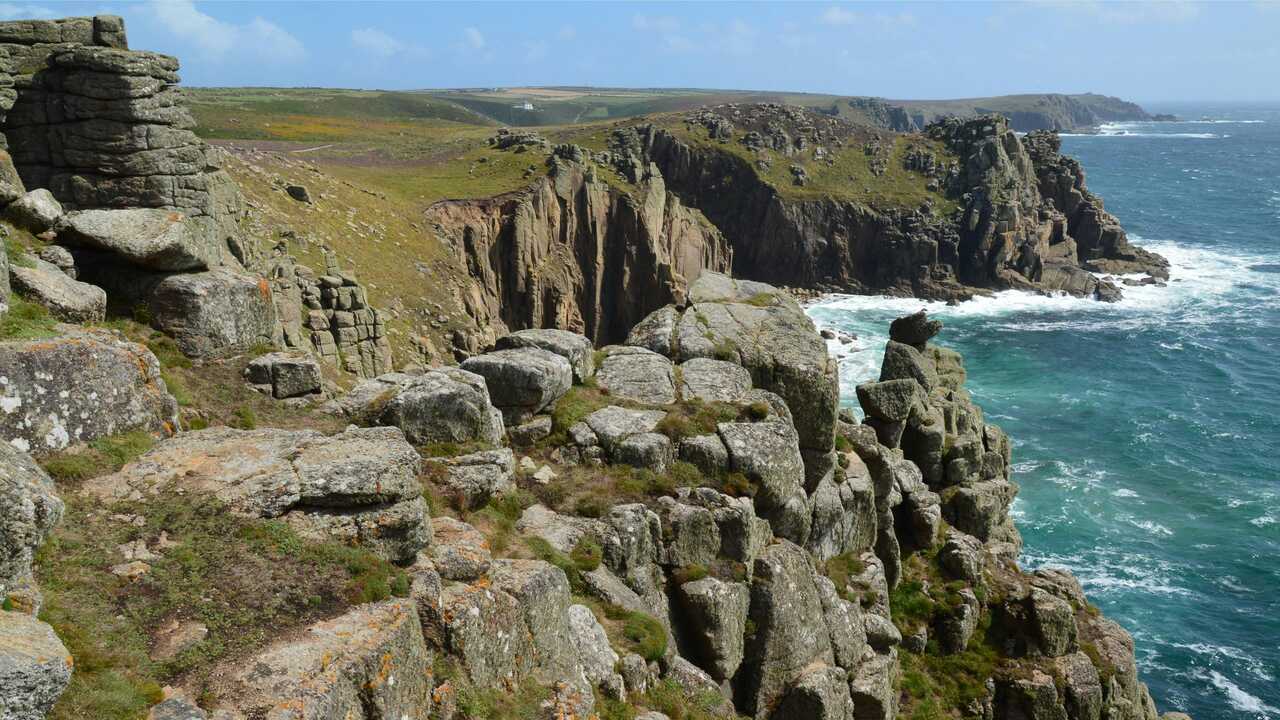
Walk out past the bustle to where the cliffs drop sheer into the sea, waves exploding against jagged rocks, long fingers of foam streaming back with the pull of the tide. Out to the west, on a clear day, you might pick out the Isles of Scilly as faint smudges on the horizon. The wind is often strong enough to lean into, bringing with it the scent of salt, gorse and distant rain. Standing here at the end or the beginning, depending on how you look at it – you can trace your route back along the coast in your mind, each cove and harbour another notch on the edge of the country.
South Cornwall is more sheltered and estuary-focused than the north coast, and this route leans into that – Looe and Polperro, Fowey and Mevagissey, St Austell and the Roseland, Truro and Restronguet Creek, Falmouth and the Lizard, then Marazion, Mousehole, Penzance, Porthcurno and Land’s End. Expect fishing harbours, tidal creeks, sub-tropical gardens and some of the best small-scale coastal landscapes in the country.
Early on you’ve got the classic Looe–Talland–Polperro stretch of the South West Coast Path, short on distance but big on ups and downs. Fowey and Mevagissey are wander-and-ice-cream towns with ferries, harbour walls and short walks to headlands. Inland from St Austell, the Eden Project is an obvious all-weather half-day. The Roseland is slower and gentler – creeks, small beaches and footpaths between St Mawes and St Just in Roseland. Around Falmouth and Restronguet Creek you can mix harbour time, short boat rides and woodland walks. The Lizard, Kynance and Mullion give you the big postcard coves, and the final Penzance–Mousehole–Minack–Sennen–Land’s End sweep is all about cliff paths, coves and sunsets.
Polperro and Fowey are the first real food clusters – harbourside pubs plus somewhere like Sam’s in Fowey for burgers, seafood and cocktails. Further west, The Hidden Hut above Porthcurnick works as a “barefoot lunch” stop if you hit the opening times. Falmouth has loads of choice; the Chain Locker and The Greenbank cover you for pub-with-a-view. Newlyn and Mousehole are where you point the compass if you want serious seafood – Mackerel Sky Seafood Bar in Newlyn and The Old Coastguard in Mousehole justify planning a night around them.
Camping is strung all along the route: Tencreek or Trelawne between Looe and Polperro, Polruan Holidays above Fowey, Heligan camping near Mevagissey, Meadow Lakes between St Austell and Truro, Trethem Mill on the Roseland, Tregedna Farm around Falmouth and Mullion Holiday Park on the Lizard. Towards Land’s End, Treen Farm and Trevedra Farm sit perfectly above Porthcurno and Sennen. For hotels, Talland Bay Hotel and Fowey Hall cover the early section, The Greenbank works in Falmouth, and The Old Coastguard in Mousehole is the obvious final treat if you’d rather end in a harbour village than right at Land’s End itself.
TopStops is built to be used like a shared guidebook, not a strict itinerary.
Browse the routes to see how others have travelled an area, check the map for regularly recommended stops, and get a feel for the journey with photos, highlights, and quick info on each place. When you’re ready, follow the route yourself or adapt it to your own trip.
If you discover a spot we’ve missed, submit it. The best community suggestions get added to the map, so every route slowly improves with real travellers’ input.
Do you know somewhere we should feature in our route? Message us and we’ll get it added.