









This route feels like a slow climb from everyday County Durham into big skies, wild hills and one of the most dramatic stretches of English coastline. You start in Ushaw Moor and Durham, moving from former pit village to that tight loop of river, castle and cathedral perched above the Wear. From there you push west into the North Pennines, where villages like Stanhope sit small against wide, open moorland and high, weather-beaten roads. Then you swing north into Northumberland National Park, following old Roman lines and clear rivers through a landscape that feels spacious, quiet and surprisingly empty.
Turning back towards the sea, the whole mood shifts from moor to fortress. Alnwick Castle gives you storybook towers and riverside parkland; Bamburgh lifts a vast castle onto a rock above miles of sand; Seahouses drops you into a working harbour alive with boats and frying fish. Holy Island folds in tides, monasteries and that strange half-detached feeling of somewhere you can only reach at certain hours. By the time you roll into Berwick-upon-Tweed, with its great walls and border-town character, it feels like you’ve traced a complete arc from coal and cloisters to castles, causeways and the very edge of England.
Ushaw Moor sits quietly in the green fringe west of Durham, a village shaped by coal and countryside in roughly equal measure. You roll in along modest streets, terraced houses stepping up the hill, then find yourself close to old railway lines now turned into footpaths and cycleways, threading through trees and over old bridges. It feels like the edges of the village are always trying to blur back into fields and woodland.
From here, you’re well placed to follow the lines of the old Deerness Valley Railway Path, where birdsong and the crunch of gravel under your boots replace any sense of traffic. On still days, smoke from chimneys hangs in the air, and you catch that particular mix of woodsmoke and damp earth that always seems to cling to former pit villages. Ushaw Moor isn’t a postcard stop so much as a grounded starting point – somewhere that gives you a sense of everyday life in County Durham before you swing into the historic drama of the city itself and the wildness of the hills beyond.
Durham appears suddenly and dramatically, its cathedral and castle riding a wooded peninsula above a tight loop of the River Wear. You approach through normal city streets and then the view opens: towers and buttresses rising out of trees, stone bridges arching over slow, brown water. Park lower down and walk up, and you feel the climb in your legs as cobbled lanes wind past old colleges, bookshops and quietly humming cafés.
In the cathedral close, everything calms. The cloisters hold cool shadows and echoes of footsteps; inside the nave the columns rise massive and pale, guiding your gaze straight up. Out on the river path, rowers cut neat lines through the water while ducks drift in their wake and the cathedral looms above the trees like something from a painting. Durham mixes student energy, deep religious history and everyday bustle in a very compact space. It’s the sort of city you can cross in twenty minutes and still feel like you’ve stepped through several centuries on the way.
By the time you reach Stanhope and the North Pennines, the landscape has stretched itself out into long, high moors and deep, looping dales. Stone cottages cluster around the main street, and then it’s quickly back to open country dry-stone walls marching up grassy slopes, old mine workings tucked into folds of hillside, burns cutting brown, peaty lines through the fields. This is an Area of Outstanding Natural Beauty that often feels surprisingly empty.
Drive up onto the tops and the views widen into big, sky-dominated panoramas, where clouds throw moving shadows across the heather and the wind has real weight to it. On some days you’ll see more sheep than cars. Villages like Stanhope act as small anchors – a pub, a church, a green, the sense of human scale against all that openness. You might park up, follow a track out onto the moor and hear nothing but wind, grouse and your own boots on the gravel. It’s a stretch of upland that feels honest and unvarnished, a high, quiet middle chapter in your route.
Northumberland National Park opens out in a way that feels almost continental with big skies, long ridges and a sense of space that’s hard to find elsewhere in England. You roll in on roads that get narrower but not necessarily busier, passing scattered farms, small stone villages and sudden bursts of woodland. Then you’re up on the open hills, where the horizon seems to fold away into layer after layer of soft, rounded tops.
Here, the stories run deep: Roman lines along Hadrian’s Wall, old drovers’ routes, reivers and border skirmishes. You might park near one of the Wall forts, where tumbled stone and tight-bonded masonry still cling to the crags, and look out over a landscape that hasn’t changed shape all that much since legionaries were posted here. Elsewhere, clear rivers like the Coquet and the Alwin run in green valleys between the moors, fringed with alder and oak. It’s a park that rewards slow driving and frequent stops, the kind of place where you keep pulling over just to stand at a gateway, breathe in the peat and heather, and let your eyes travel.
Alnwick Castle rises out of the town like a textbook idea of what a castle should be: high curtain walls, round towers, battlements and a sweep of green lawns in front. You come in through Alnwick’s streets, stone buildings, archways, little shops and then slip into the castle grounds, where the mood shifts from market town to movie set. Parts of it have genuinely been both fortress and Hogwarts, and you can feel that blend of real and cinematic history in the courtyards.
Walk the walls and you get views over the River Aln, out to farmland and the dark line of distant hills. Inside, staterooms carry deep-pile history, portraits, polished wood, the sense of generations watching from their frames. Step back outside and the castle lawns and neighbouring gardens give everything a softer edge: fountains, sculpted hedges, children running mock sword-fights under stone towers. Alnwick sits neatly between spectacle and substance, a place where you can geek out on history, films or just enjoy the sheer theatricality of it all before heading back towards the coast.
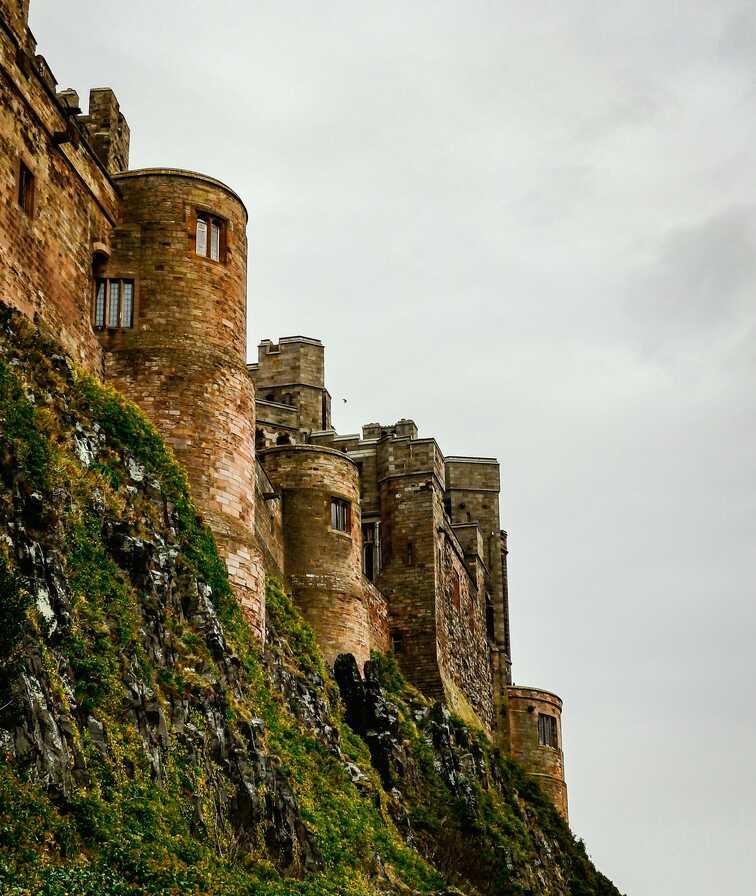
Bamburgh Castle feels like it was dropped onto its rock by some giant hand. Driving up the coast, you catch glimpses of it ahead – a long, solid silhouette riding a basalt outcrop above an enormous sweep of sand. Park in the village and look up from street level and it dominates everything, stone walls and towers running the length of the ridge, the sound of the sea a constant backdrop.
Down on the beach, the castle sits high above you, reflected in wet sand when the tide pulls back. The wind comes in fresh off the North Sea, carrying the smell of salt and marram grass, while waves run up the broad, flat beach in endless white lines. It’s easy to imagine longships offshore or beacon fires on the headland; this place has been important for a very long time. Today, it’s both museum and landmark, but you don’t have to go inside to feel its presence - just walk the sand, watch the light move across the stone and the water, and let the scale do its work.
Seahouses is a working harbour first and a resort second, and that’s exactly what gives it life. You drive in and almost immediately see the boats sturdy, practical craft moored along the quays, many painted with names and numbers rather than fancy graphics, ready to head out to the Farne Islands. The smell of frying fish, diesel and salt hits you as soon as you step out of the car.
Along the front, ticket boards advertise puffin trips and seal cruises, while queues form outside fish-and-chip shops that locals will tell you are absolutely the best. Gulls wheel and shout above the harbour, hopeful for dropped chips. If you board a boat, the town drops away behind you and the islands rise ahead, sharp-edged and crowded with birdlife in season. Back on dry land, you can stroll the small beach, follow the coast path, or just sit on a harbour wall and watch the tide wrap itself around the harbour walls. Seahouses feels like a place that earns its keep from the sea every day.
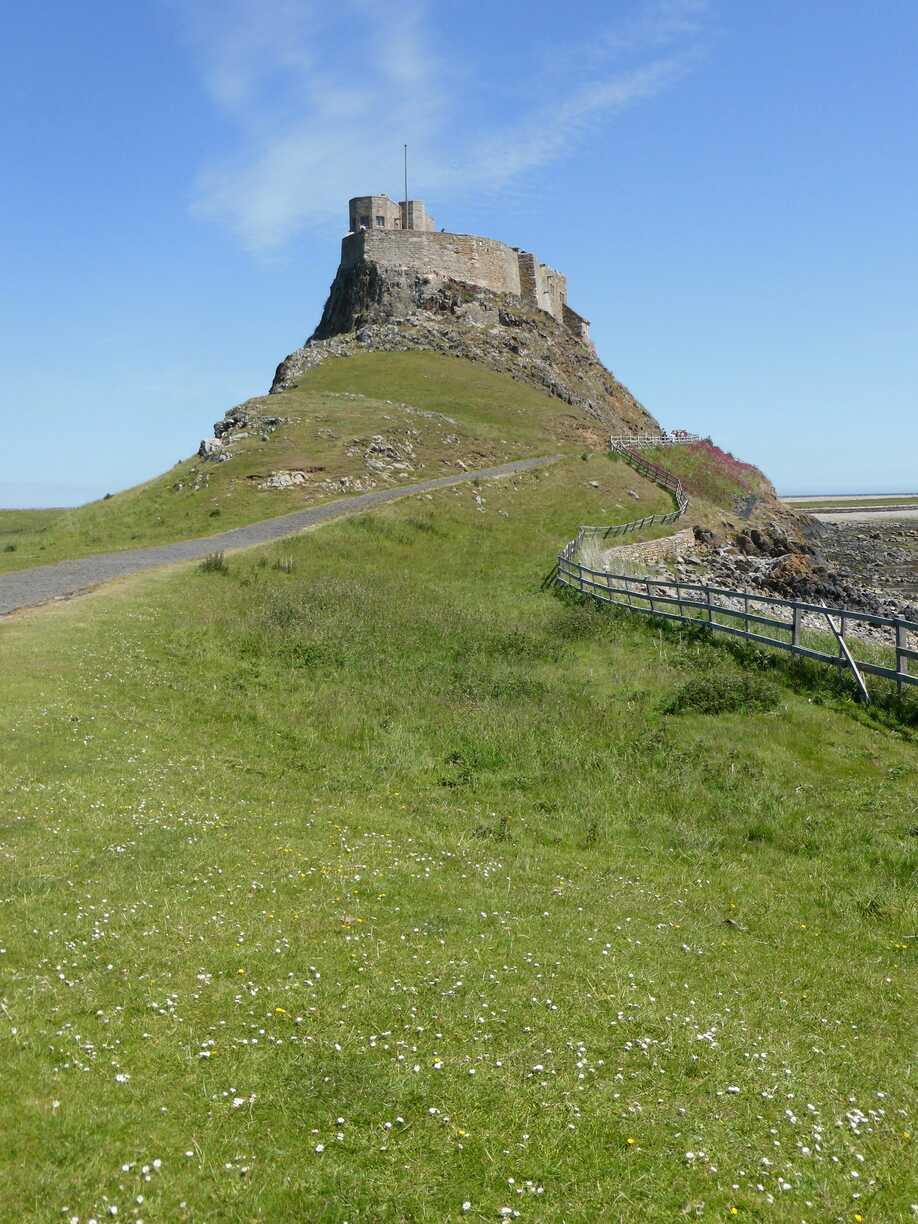
Holy Island, or Lindisfarne, is reached on a causeway that the tide regularly swallows, and that simple fact changes the feel of everything. You time your crossing, drive out over wide, shining sands, and arrive on an island that knows it will be cut off again in a few hours. The first thing you notice is the quiet sense of enclosure: low stone houses, a small village street, and then the castle perched high on its whaleback rock, watching the North Sea.
Walk up to the priory ruins and you’re standing where early medieval monks once lit beacons of learning and worship, only to face Viking raids that crashed straight into the history books. The air smells of salt, seaweed and grass; wading birds stitch across the mudflats on the edges of your vision. When the tide is in, the island feels self-contained, with the mainland a distant smudge; when it’s out, the causeway lies exposed again, a reminder that this is a place balanced neatly between land and sea, solitude and connection.
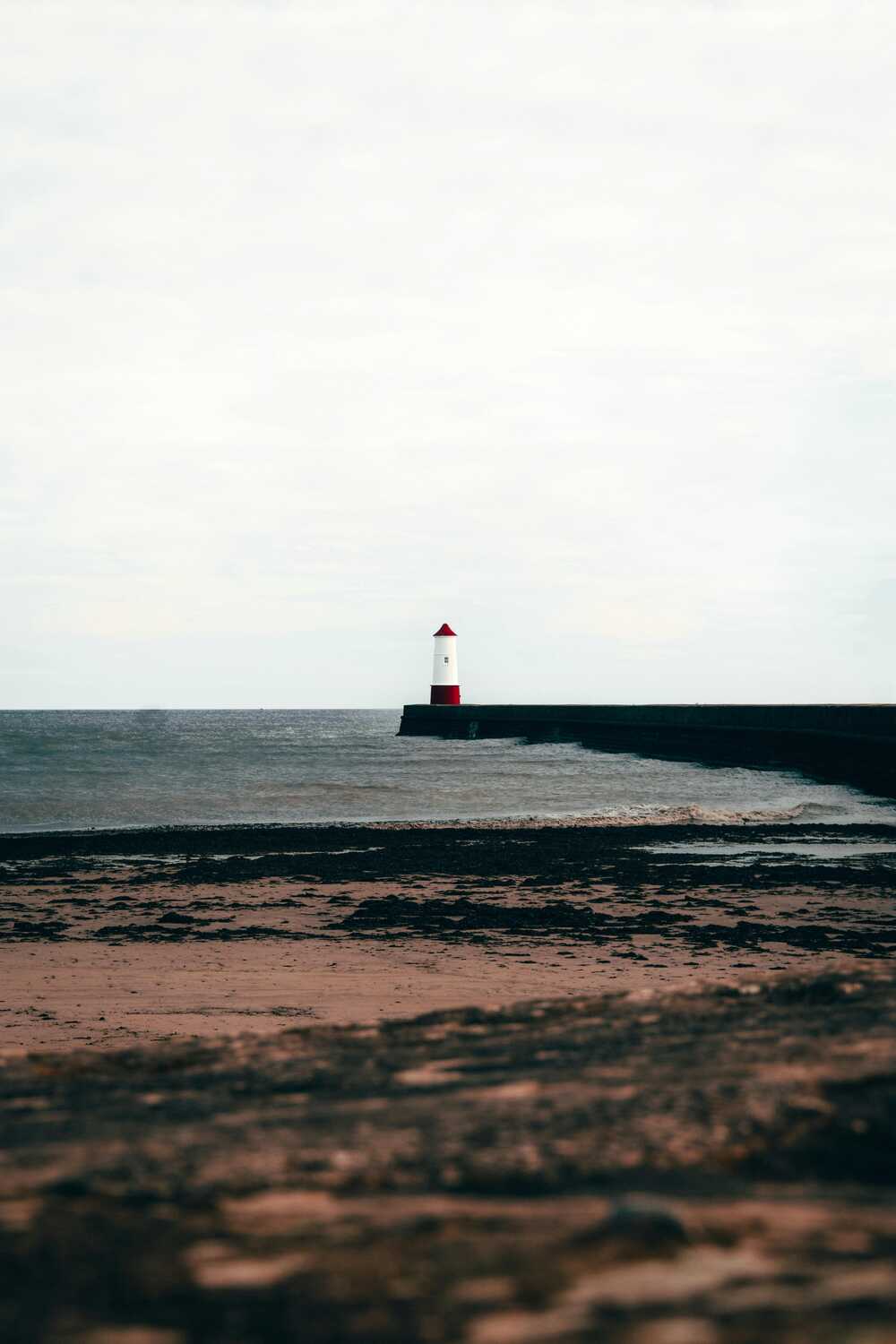
Berwick-upon-Tweed sits right on the edge – last town in England, first town from Scotland, depending on your direction and its history reflects that. You arrive to find massive bastioned walls wrapped around a compact town centre, the kind of fortifications that tell you this place has changed hands more than once. The Tweed rolls broad and calm below, crossed by a sweep of bridges old and new, their arches stacking elegantly against the water.
Walk the walls and you get sea views on one side, river and rooftops on the other, the wind carrying the cries of gulls and the occasional train rumble over the viaduct. Inside the walls, the streets are a mix of Georgian and Victorian fronts, small shops and pubs, suddenly opening out into glimpses of the river or the sea. There’s a slightly off-centre feel to Berwick – not quite English, not quite Scottish – that makes it intriguing. As an endpoint, it works perfectly: a border town with a strong sense of place, looking out to the North Sea and back over the route you’ve just driven.
This route climbs from the Durham outskirts through the North Pennines and Northumberland National Park before breaking out to the heritage coastline between Alnwick, Bamburgh, Seahouses, Holy Island and Berwick-upon-Tweed. You get a neat contrast between empty, high moorland roads and huge east-coast beaches with castles parked on the skyline – perfect if you like big horizons and fewer crowds.
Start around Durham for a quick cathedral-and-river fix before heading west into the North Pennines for wide moorland views and quiet lay-bys. Once you enter the National Park there are short hill walks and dark-sky viewpoints almost everywhere. On the coast, Alnwick Castle gives you the full “film set” castle hit, while Bamburgh Castle is all about the silhouette above the sand. Seahouses is your jumping-off point for boat trips to the Farne Islands, and Holy Island works best if you time the causeway for a quieter early or late visit.
Durham covers early food and coffee. Once you hit the coast, aim for Alnwick, Seahouses, Bamburgh and Warkworth – expect proper fish and chips, seafood shacks and a few smarter bistros. Inland and coastal villages are full of stone inns and country pubs, so it’s easy to roll up, park nearby and eat without hunting around too much.
Overnights are easy to space: small farm sites in the North Pennines, then coastal campsites near Alnwick or Embleton, and a cluster of holiday parks and CL/CS-style sites around Bamburgh, Seahouses and Beadnell. Near Holy Island and Berwick you’ll find more certified locations and larger parks if you want full facilities. For hotels and B&Bs, Durham and Alnwick work well as anchors, with classic coaching inns in Rothbury, Bamburgh and Berwick giving you walkable evenings.
TopStops is built to be used like a shared guidebook, not a strict itinerary.
Browse the routes to see how others have travelled an area, check the map for regularly recommended stops, and get a feel for the journey with photos, highlights, and quick info on each place. When you’re ready, follow the route yourself or adapt it to your own trip.
If you discover a spot we’ve missed, submit it. The best community suggestions get added to the map, so every route slowly improves with real travellers’ input.
Do you know somewhere we should feature in our route? Message us and we’ll get it added.