








This route follows the Wye as it slowly gathers stories, from bookshops and castle walls to ruined abbeys and a cliff top fortress. You begin in Hay on Wye, where shelves spill out of old buildings and the river slides quietly past the edge of town. From there you drift to Hereford’s cathedral and orchards, then into the quieter folds of the Golden Valley around Abbeydore, Ewyas Harold and Kilpeck. Here, hedgerows, farm tracks and small stone churches set the pace, and it feels natural to drive slowly and look twice at the landscape.
Further south the valley grows deeper and more dramatic. Ross on Wye sits above a long bend in the river, a classic market town with wide views. Monmouth gathers roads and rivers together among wooded hills, before the route narrows into the steep sided Wye Valley itself. Llandogo and Tintern feel tucked into the trees beside the water, with Tintern Abbey rising roofless and complete in its incompleteness. You finish in Chepstow, where the castle clings to the rock above the tidal Wye. By the end, you have traced a graceful, almost continuous river line from upland edge to the point where salt water starts to take over.
Hay on Wye feels like a town built out of words. You arrive to find bookshops in old chapels, courtyards and crooked houses, shelves spilling out onto pavements and signs inviting you to rummage. The castle, part ruin, part restored, sits just above it all, reminding you that stories here long pre-date the paperbacks.
Walk down to the river and the mood softens further. The Wye moves past in slow, confident curves, trees leaning over its surface and pebbled beaches appearing where the water bends. Canoes slide quietly by, and the hills rise in gentle folds beyond. You can spend hours drifting between shops, cafés and riverbank without ever feeling rushed. Hay is a perfect place to start this route: a little bit dreamlike, slightly eccentric and firmly rooted in its setting.
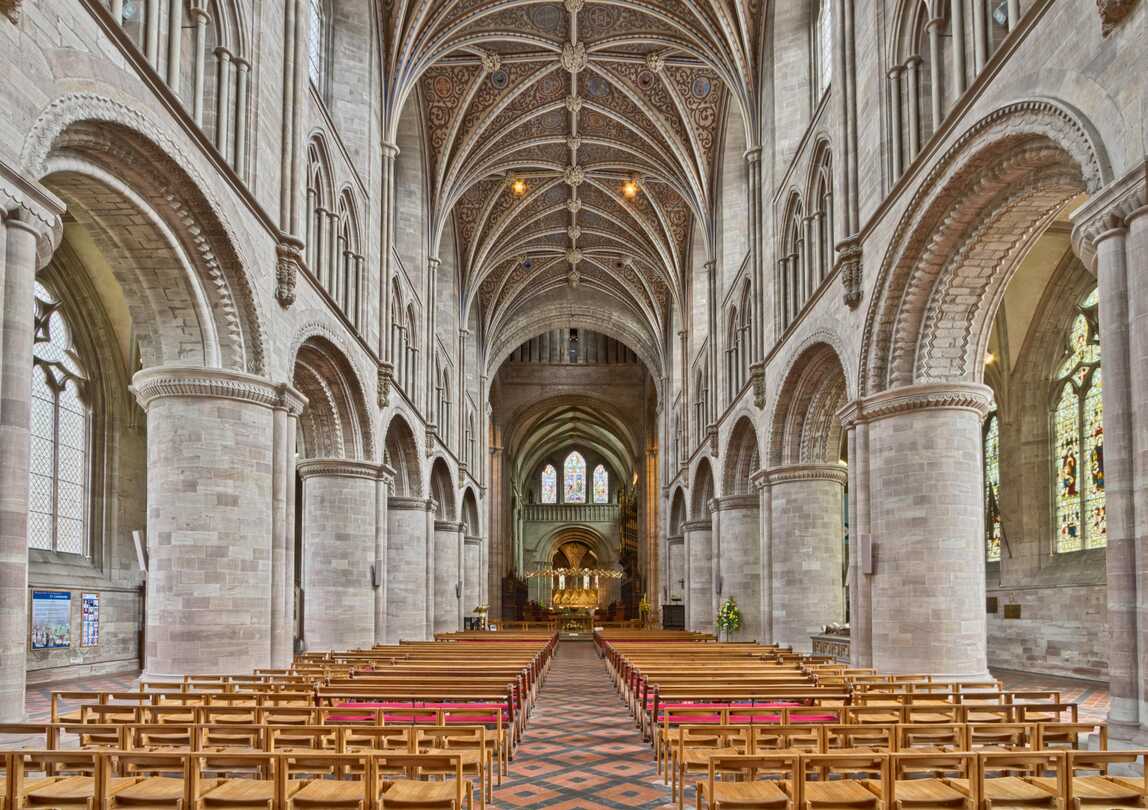
Hereford gathers around its cathedral and the broad, calm run of the Wye. You cross the old stone bridge and the view opens to the cathedral’s tower rising above trees and rooftops, solid and steady against the sky. Inside, the Mappa Mundi and chained library add a sense of deep time, proof that people here have been trying to map and make sense of the world for centuries.
Beyond the cathedral close, the town blends old and new. Black and white timbered buildings sit beside more modern fronts, and small lanes peel off the main streets into quieter corners. A stroll along the river path lets you step out of the bustle quickly, with ducks, rowers and the soft rush of water for company. Hereford feels like a working county town that happens to have a remarkable church at its heart, and it gives you a satisfying mix of history, everyday life and open space.
Abbeydore lies in the quiet folds of the Golden Valley, where lanes narrow, hedges thicken and the sound of traffic drops away. You reach it along roads that seem to twist between fields and scattered farms, then suddenly the abbey church appears, big and unexpected in such a rural setting. Its stone walls and tall windows give the place a sense of calm authority.
Spend a little time walking the churchyard and nearby lanes and you notice small details: the smell of damp earth, distant sheep, the way the hills close gently around you. There is very little here in the way of cafés or shops, which is part of the charm. Abbeydore is more about atmosphere than activity, a place to pause, breathe and feel the weight of history sitting quietly in a green valley.
Ewyas Harold is a modest village with a slightly grand name, strung along a crossroads where two valleys meet. Houses, a few shops and a pub gather around the main street, and behind them the land rises into wooded slopes and fields. It feels like the kind of place where people know each other and the pace stays steady through the year.
Walk up towards the motte and bailey castle mound and you get a sense of older importance. From the top, the view runs over patchwork fields and hedges, and you can see why someone once chose this spot to watch the approaches. Back down below, footpaths lead into orchards and along streams, giving you short, gentle walks without needing to plan anything complex. Ewyas Harold is a quiet hinge in this route, a soft step between the abbey at Abbeydore and the carved stone of Kilpeck.
Kilpeck feels almost like a hamlet wrapped around a single remarkable building. You arrive to find a small cluster of houses and a lane that leads you to the church, low and sturdy in its churchyard. At first glance it looks like a simple Norman structure. Then you notice the carvings: strange beasts, human figures and intricate patterns curling around the south door and under the eaves.
Spend time circling the building and details keep emerging, each stone head and motif hinting at stories that have never been fully pinned down. The setting adds to the effect. Fields stretch away, hedgerows buzz with birds, and the only regular sounds are wind and distant cattle. Kilpeck is not a long stop, but it is an unforgettable one. The church sits in your mind afterwards, a pocket of mystery in a very ordinary rural landscape.
Ross on Wye sits high above a bend in the river, its spire and rooftops looking down on water, meadows and wooded banks. You drive in through modern edges, then the old centre gathers around the Market House and a web of narrow streets. The town has a neat, slightly old fashioned charm, with plenty of independent shops and cafés that give it a lived in feel.
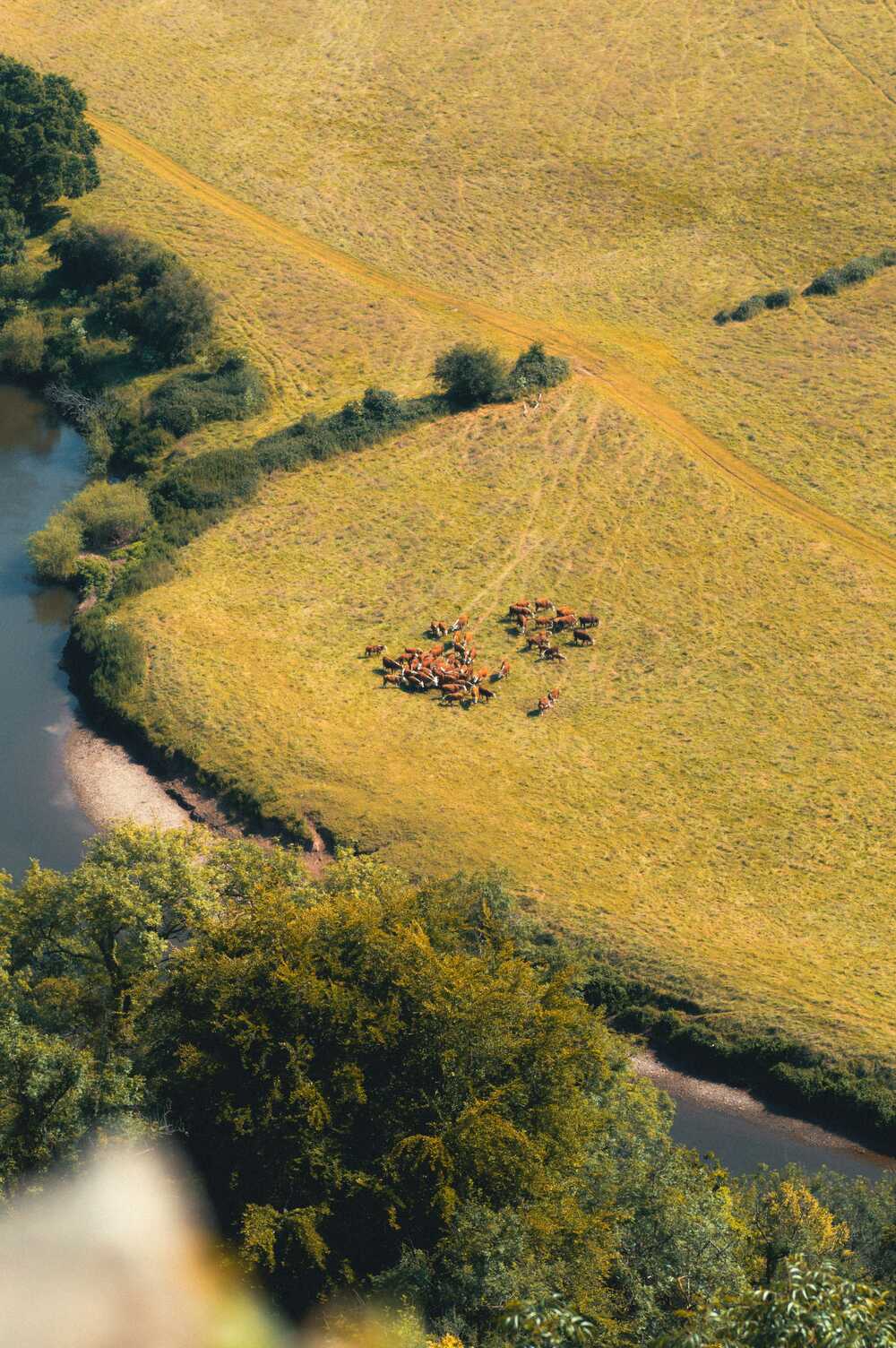
Walk up to the Prospect, the viewpoint above the river, and the whole valley opens out beneath you. The Wye loops away, grey or green depending on the light, and tree covered slopes fold into the distance. It is easy to see why Ross is often called a gateway to the Wye Valley. From here, the river starts to feel more like a main character than a backdrop, and you sense yourself being drawn down into its deeper reaches.
Monmouth gathers three rivers together in a shallow bowl of hills. The Wye, Monnow and Trothy all converge nearby, and the town spreads comfortably between them. You enter past the Monnow Bridge, with its gatehouse still standing over the water, and then the streets open into a mix of Georgian fronts, older stone buildings and small modern touches.
The town feels lively but not frantic. Cafés, pubs and shops line the main drag, and side streets lead up towards leafier slopes and views back over the roofs. If you climb to a higher vantage point, you see how wooded hills wrap around the whole place, holding it in a soft green curve. Monmouth makes a natural pause on this route, a chance to stock up, wander a proper town centre and feel the valley growing steeper as you head towards Llandogo and Tintern.
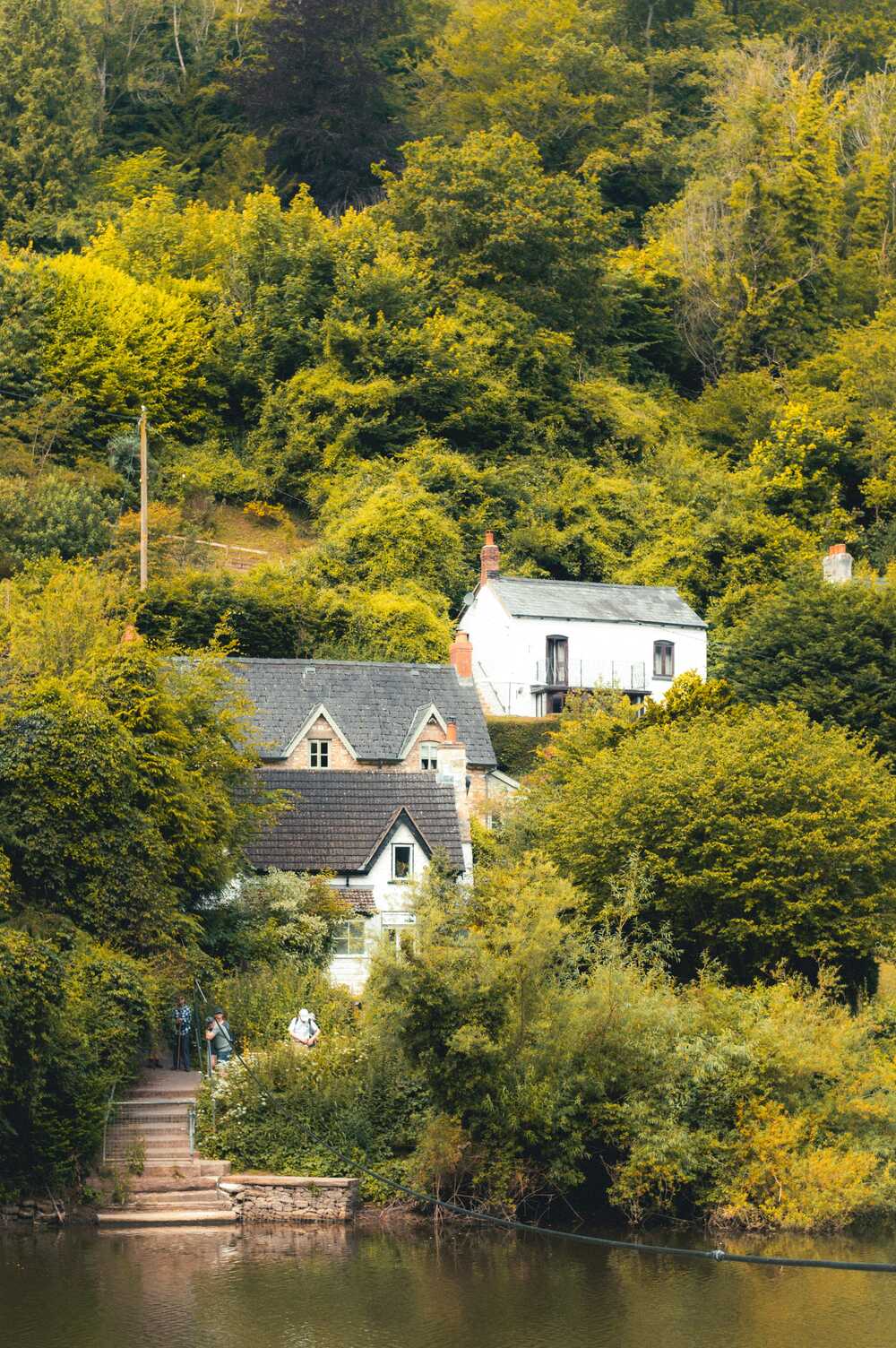
Llandogo clings to the steep side of the Wye Valley, its houses stacked above one another among trees, all facing the slow, brown sweep of the river. The road threads through at the bottom, and from there steep lanes and paths rise quickly, delivering you to sudden views between branches and rooftops. It feels like a place balanced carefully between hillside and water.
Down by the river, old boatbuilding and trading history hangs in the air. You can walk sections of the Wye Valley path, weaving between woods and viewpoints that look along the gorge. The sound here is all birds, leaves and the quiet movement of the river below. Llandogo is a softer, more hidden stop than Ross or Monmouth, and it prepares you well for the deeper sense of stillness at Tintern just down the valley.
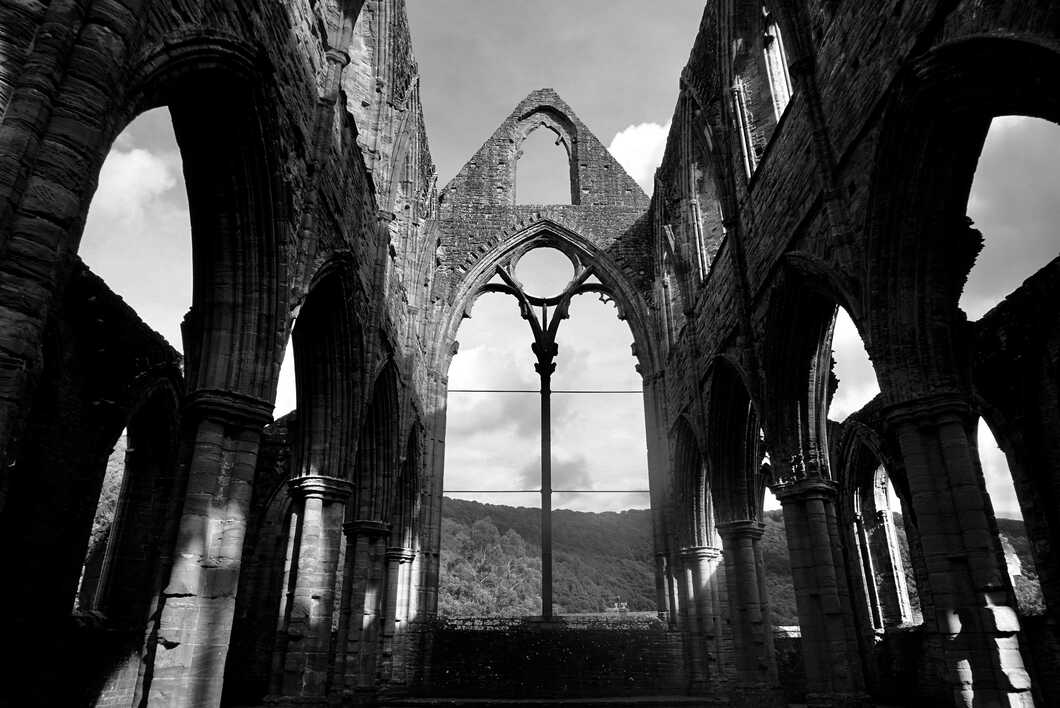
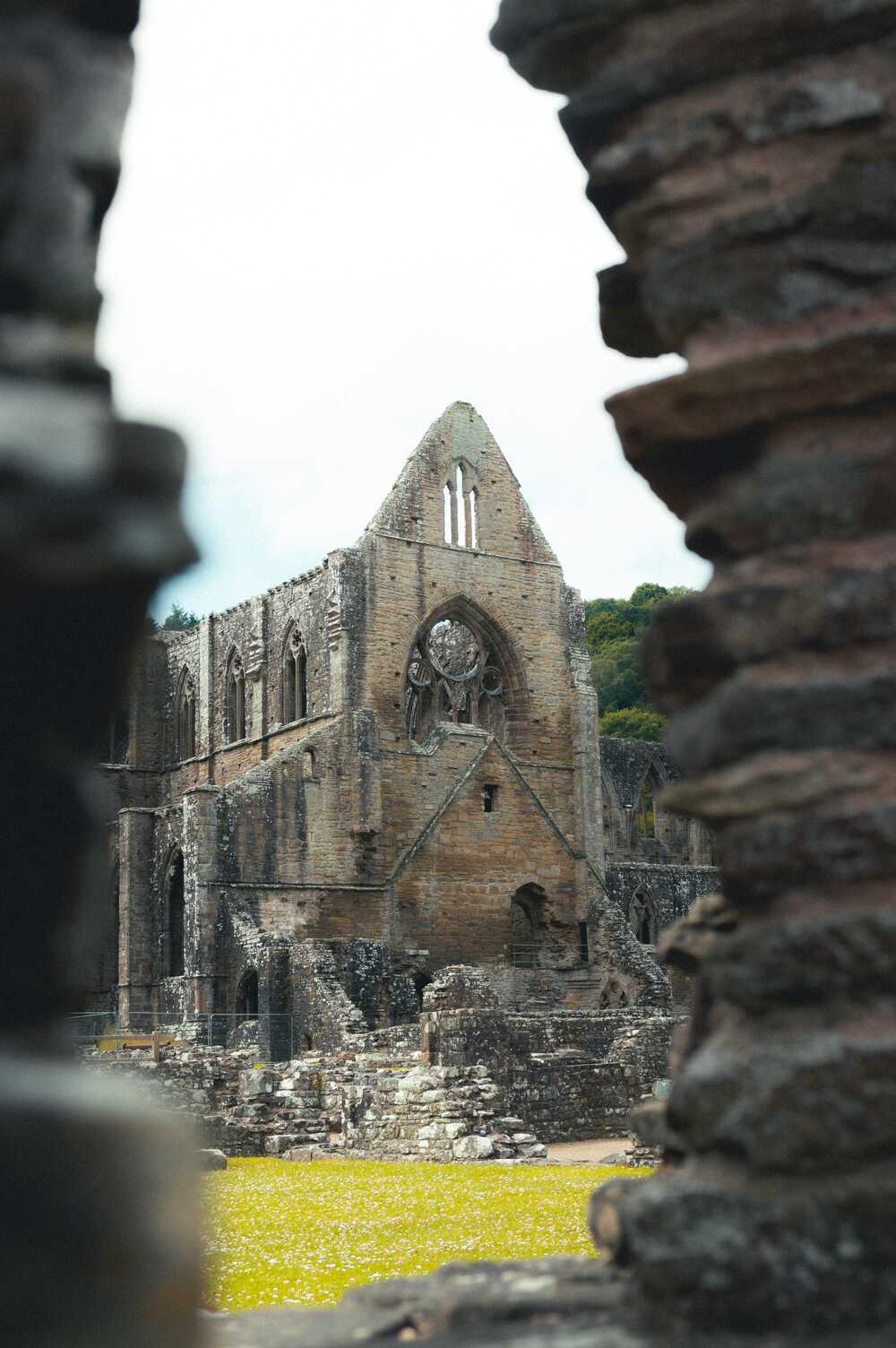
Tintern sits where the Wye bends under high, wooded slopes, and the abbey rises beside it like a stone skeleton full of space and light. You arrive and the ruins appear almost at once, tall windows open to the sky, arches and pillars framing fragments of forest and cloud. Walking the grounds, you feel both the weight of age and a surprising lightness where the roof is gone.
The river slides past behind, sometimes wide and reflective, sometimes narrower and more secretive depending on the tide. Cottages, pubs and cafés thread along the road, squeezed between water and hillside. Paths climb steeply into the trees, and from the Devil’s Pulpit and other viewpoints you can look back down on the whole scene, abbey and river laid out together. Tintern is one of those places where you are happy to linger, just watching the light move across stone and leaves.
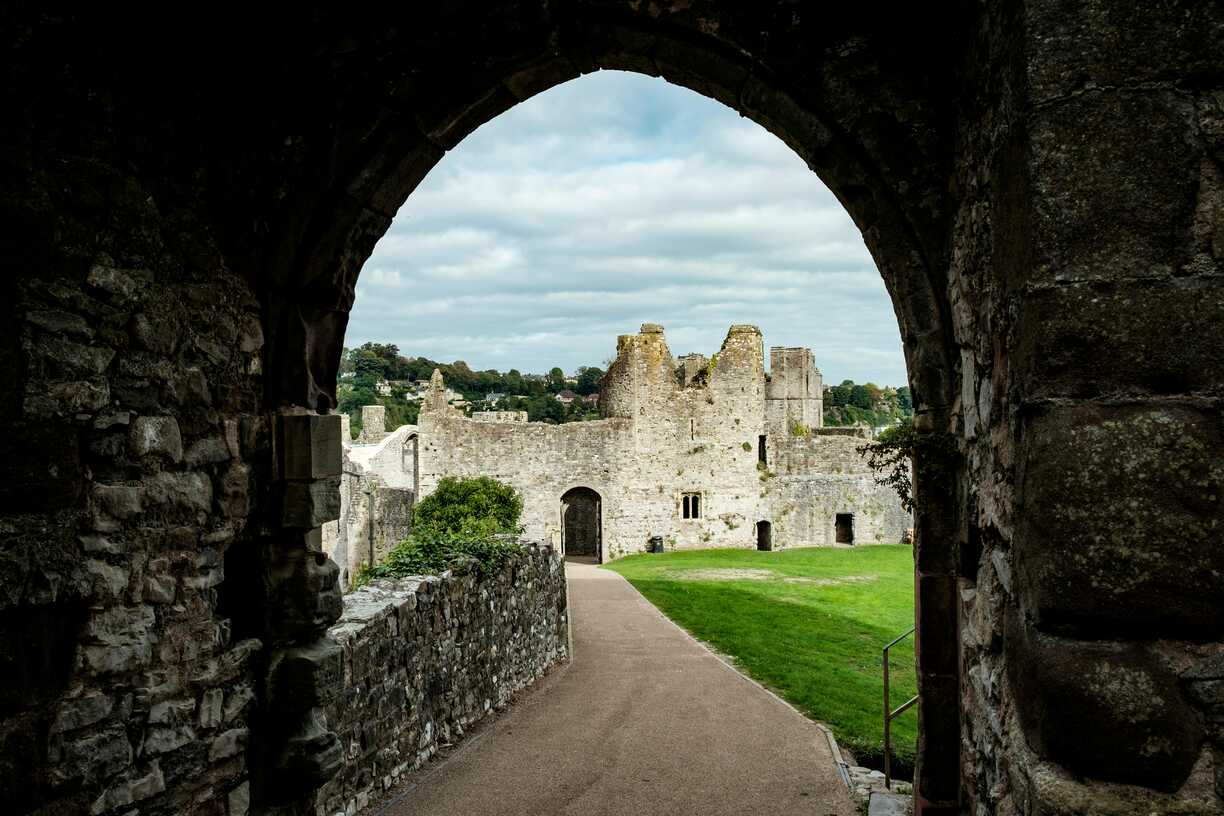
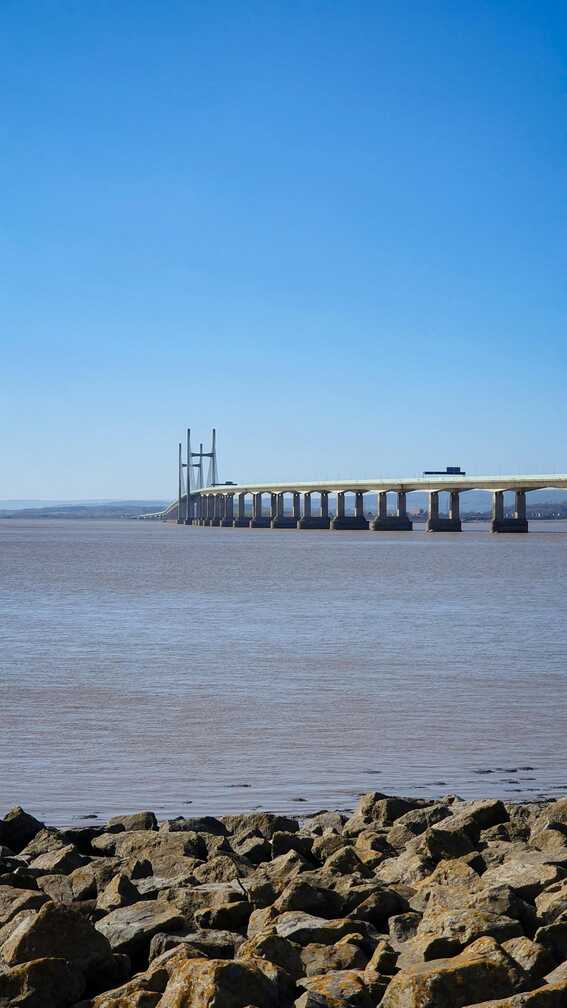
Chepstow holds the final word on the Wye. Its castle clings to a limestone cliff directly above the river, walls and towers dropping almost to the water, the whole structure angled towards the narrow gap where the valley opens into the Severn estuary. Standing on the battlements, you can see the river as a tidal, shifting thing, mud and water trading places as the hours pass.
Below the castle, the town runs along terraces and streets that climb away from the quay. Shops, pubs and houses occupy old buildings with a slightly rough edged charm, and you can feel the long history of border and trade in the layout. Walking the bridge and the riverside, you sense the route coming to a natural end. The Wye has widened and changed character, and so has the landscape around it. Chepstow gives you stone, tide and a clear full stop, while still leaving you close enough to the sea to start imagining whatever journey might come next.
This route follows the River Wye as it carves a soft border between England and Wales. You start in Hay on Wye, the famous town of books, where shelves spill out onto pavements and the river slides quietly past castle walls. From there you drift through Hereford’s cathedral and orchards, the quiet lanes of the Golden Valley around Abbeydore, Ewyas Harold and Kilpeck, and into a landscape of rolling fields, hedgerows and small stone churches.
Further south, the valley narrows and deepens. Ross on Wye sits high above a long bend in the river, a classic market town often called a gateway to the Wye Valley. Monmouth gathers three rivers together and folds streets and bridges into the hillsides around them. From Llandogo the scenery turns more dramatic until you reach Tintern, where the roofless abbey rises beside the Wye in one of the most atmospheric scenes in Britain. You finish at Chepstow, with its castle clinging to a cliff above the river, knowing you have followed the Wye from book town to tidal water.
In Hay on Wye, lose yourself in the bookshops first. Drift from second hand browsers to specialist shelves, then walk up to Hay Castle and down to the river for a feel of the town’s setting. In Hereford, make time for the cathedral, where the Mappa Mundi and chained library give you a glimpse into medieval minds, before a short walk along the Wye to stretch your legs.
The Golden Valley calls for slower exploration. At Abbeydore, Ewyas Harold and Kilpeck, seek out the small churches and quiet lanes that make this area feel hidden. Kilpeck’s church is especially rewarding if you enjoy carvings and stone detail. Ross on Wye invites you to wander up to the Prospect for a classic view over the river, then maybe join the Wye Valley Walk for a gentle section along the water.
Monmouth is a good place to park and stroll. Look for the Monnow Bridge, explore the main streets and, if you have time, head up to the Kymin for a far reaching view back over the town and hills. Further down the valley, Llandogo and the woods above it offer fine walking, with viewpoints back along the river. At Tintern, walk the abbey grounds slowly, then follow the path up to the Devil’s Pulpit if you want a big, high view of the ruins and river in one frame. Finish in Chepstow with a circuit of the castle and a wander through the old streets above the Wye.
Hay on Wye has a good spread of cafés and small restaurants, many tucked between bookshops, so it is easy to combine browsing with coffee and cake. You can also find simple riverside spots for lunch if the weather is kind. Hereford offers a broader choice, from relaxed independents around the cathedral quarter to more modern places in the centre, plus traditional pubs serving local cider and hearty dishes.
In the Golden Valley, you are looking more for country inns and village pubs. Around Ewyas Harold and Kilpeck you will find low ceilinged bars, fires in season and menus built on straightforward comfort food. Ross on Wye steps things up again with a mix of tearooms, riverside pubs and small restaurants, good for both daytime stops and unhurried dinners.
Monmouth gives you plenty of options clustered around the main streets, from coffee spots and bakeries to bistros and pubs, all within easy walking distance of the river. Tintern has a handful of pubs, cafés and tea rooms strung along the valley, ideal for a meal with abbey or river views. Down in Chepstow you can round things off with a choice of restaurants and traditional pubs close to the castle and town centre, making it easy to park once and settle in for the evening.
If you want to take this route slowly, Hay on Wye makes a lovely first base. You will find characterful B and Bs, small hotels and self catering places within walking distance of the shops and river, which means you can leave the car parked while you explore. Hereford offers more conventional hotel options, handy if you prefer a slightly larger town with easy rail links.
For a quieter experience, look for farm stays or guesthouses in the Golden Valley around Abbeydore or Ewyas Harold. Waking up to hills, fields and birdsong sets a very gentle tone for the day. Ross on Wye works well as a central base, with a good choice of inns, guesthouses and small hotels perched above the river.
Further downstream, Monmouth gives you another cluster of town based options, useful if you like having shops and restaurants on the doorstep while still being in striking distance of walks. Around Tintern there are cottages, small hotels and rural B and Bs threaded through the valley, many with views of woods or water. Chepstow at the end provides familiar chains alongside independent inns, some within sight of the castle walls. You can easily shape the trip as a series of one night hops, or choose one or two of these places as hubs and explore the rest in day loops.
TopStops is built to be used like a shared guidebook, not a strict itinerary.
Browse the routes to see how others have travelled an area, check the map for regularly recommended stops, and get a feel for the journey with photos, highlights, and quick info on each place. When you’re ready, follow the route yourself or adapt it to your own trip.
If you discover a spot we’ve missed, submit it. The best community suggestions get added to the map, so every route slowly improves with real travellers’ input.
Do you know somewhere we should feature in our route? Message us and we’ll get it added.